Rare ‘Sandalwood Leopard’ Spotted for the First Time in Karnataka
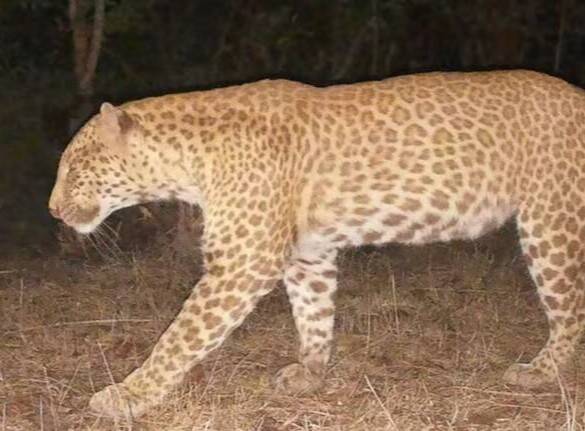
In a groundbreaking discovery, researchers in Karnataka have identified an ultra-rare leopard colour morph in the Vijayanagara district, marking a significant milestone in the field of wildlife conservation. This extraordinary sighting is only the second confirmed instance of such a big cat in India and the first in the state of Karnataka. The remarkable animal, dubbed the ‘Sandalwood Leopard’ by conservationists, boasts a stunning pale reddish-pink coat adorned with light-brown rosettes, setting it apart from its more common counterparts.
The pioneering discovery was made by renowned wildlife scientist Sanjay Gubbi, who has been at the forefront of conservation efforts in Karnataka. Gubbi’s tireless work in documenting and protecting the state’s rich biodiversity has led to numerous significant findings, and the spotting of the Sandalwood Leopard is arguably one of the most exciting discoveries in recent years.
The Sandalwood Leopard’s unique appearance is a result of a rare genetic variation, which affects the production of melanin, the pigment responsible for skin and hair color. This genetic anomaly is extremely rare, occurring in less than 1% of the leopard population, making the Sandalwood Leopard a truly exceptional creature. The pale reddish-pink coat, combined with the light-brown rosettes, gives the leopard an otherworldly appearance, as if it has been painted by the brushstrokes of nature itself.
The sighting of the Sandalwood Leopard has sent shockwaves of excitement throughout the scientific community, with many experts hailing it as a major breakthrough in the field of wildlife conservation. The discovery not only highlights the incredible diversity of India’s wildlife but also underscores the importance of preserving and protecting the country’s natural habitats.
Karnataka, with its rich biodiversity, has long been a hub for wildlife enthusiasts and conservationists. The state is home to numerous protected areas, including national parks and wildlife sanctuaries, which provide a safe haven for a wide range of species, including the majestic leopard. The spotting of the Sandalwood Leopard in Vijayanagara district is a testament to the state’s commitment to conservation and its efforts to safeguard the natural world.
The discovery of the Sandalwood Leopard also raises important questions about the genetic diversity of leopards in India. Further research is needed to understand the origins of this rare colour morph and how it has evolved over time. Scientists will also be keen to study the behavior and habitat of the Sandalwood Leopard, to gain a deeper understanding of its ecological role and how it interacts with its environment.
As news of the Sandalwood Leopard spreads, it is likely to capture the imagination of people around the world. The leopard’s striking appearance, combined with its rarity and elusive nature, makes it an irresistible subject for wildlife enthusiasts and photographers. However, it is essential to remember that the Sandalwood Leopard is a wild animal, and its safety and well-being must be the top priority.
Conservation efforts are crucial to protecting the Sandalwood Leopard and its habitat. The Karnataka government, in collaboration with wildlife experts and conservation organizations, must work to ensure that the state’s protected areas are adequately funded and managed. This includes providing support for anti-poaching initiatives, habitat restoration, and community-based conservation programs.
In conclusion, the spotting of the Sandalwood Leopard in Karnataka is a remarkable discovery that highlights the incredible diversity of India’s wildlife. The discovery is a testament to the dedication and hard work of conservationists, scientists, and researchers who are working tirelessly to protect and preserve the natural world. As we continue to learn more about this extraordinary creature, we must also recognize the importance of conservation and the need to safeguard the Sandalwood Leopard’s habitat and future.
About the Author