Indian gig economy strikes back, exposing a broken model
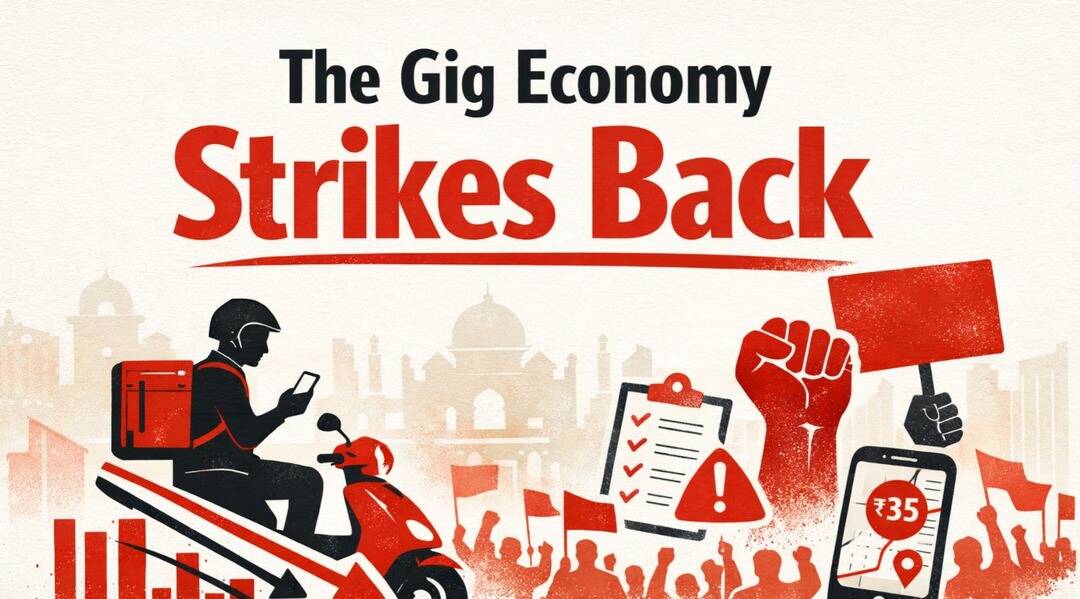
The Indian gig economy, which has been touted as a symbol of innovation and progress, is facing a major crisis. In December, around 40,000 delivery workers joined nationwide strikes, disrupting 50–60% of orders in several cities. The workers, who are the backbone of the gig economy, cited low and unstable pay, strict app control, and weak protections as the reasons for their strike. This massive protest has brought to light the dark underbelly of the gig economy, exposing a broken model that prioritizes growth and profits over the well-being of its workers.
The gig economy, which includes companies like Zomato, Swiggy, and Uber, has grown exponentially in India over the past few years. These companies have created a vast network of delivery workers, who are classified as independent contractors rather than employees. This classification allows companies to avoid providing benefits, job security, and fair wages to their workers. As a result, delivery workers are left to fend for themselves, with little to no protection from the companies they work for.
The strike, which was organized by various worker unions and associations, highlighted the plight of delivery workers in India. Workers complained about the low pay, which can be as low as Rs 10 per delivery, and the unstable nature of their work. Many workers reported that they were forced to work long hours, often exceeding 12 hours a day, without any overtime pay or benefits. The strict app control, which dictates every aspect of their work, including the routes they take and the time they take to complete deliveries, was also a major point of contention.
The strike also brought to light the issue of weak protections for delivery workers. Many workers reported that they were not provided with any safety gear, such as helmets or reflective jackets, and were forced to work in hazardous conditions. The lack of job security was also a major concern, with many workers reporting that they were terminated without notice or explanation.
The strike has sparked a heated debate about the future of the gig economy in India. Companies have defended their business model, citing the flexibility and convenience it offers to workers. However, workers argue that this flexibility comes at a cost, and that they are being exploited by companies that prioritize profits over people.
Politicians have also weighed in on the issue, with some calling for greater regulation of the gig economy. The Indian government has announced plans to introduce new laws to protect the rights of gig workers, including minimum wage guarantees and social security benefits. However, the implementation of these laws remains to be seen, and workers are skeptical about the government’s ability to enforce them.
The strike has also highlighted the widening gap between convenience and fairness in India’s digital jobs. While companies like Zomato and Swiggy have made it convenient for consumers to order food and other essentials online, they have done so at the expense of their workers. The pursuit of growth and profits has led companies to prioritize convenience over fairness, leaving workers to bear the brunt of the consequences.
The Indian gig economy strike is not an isolated incident. Similar protests have taken place in other countries, including the United States and the United Kingdom. These protests demonstrate that the gig economy is a global phenomenon, and that workers around the world are facing similar challenges and struggles.
In conclusion, the Indian gig economy strike has exposed a broken model that prioritizes growth and profits over the well-being of its workers. The strike has highlighted the need for greater regulation and protection of gig workers, and has sparked a debate about the future of the gig economy in India. As companies and politicians grapple with the consequences of the strike, it remains to be seen whether they will prioritize the interests of workers or continue to pursue a model that is fundamentally unfair.
The strike has also raised questions about the role of technology in the gig economy. While technology has enabled companies to create vast networks of workers and to manage their work with ease, it has also created new challenges and inequalities. The use of algorithms to manage worker productivity and the lack of transparency in payment structures are just two examples of how technology can be used to exploit workers.
Ultimately, the Indian gig economy strike is a wake-up call for companies, politicians, and consumers. It highlights the need for a more equitable and sustainable model of work, one that prioritizes the well-being of workers and the environment. As we move forward, it is essential that we prioritize fairness and convenience, and create a gig economy that works for everyone, not just a select few.
Source: https://ascendants.in/industry_events/indian-gig-economy-strikes-platforms-policy/
About the Author