Rare ‘Sandalwood Leopard’ Spotted for the First Time in Karnataka
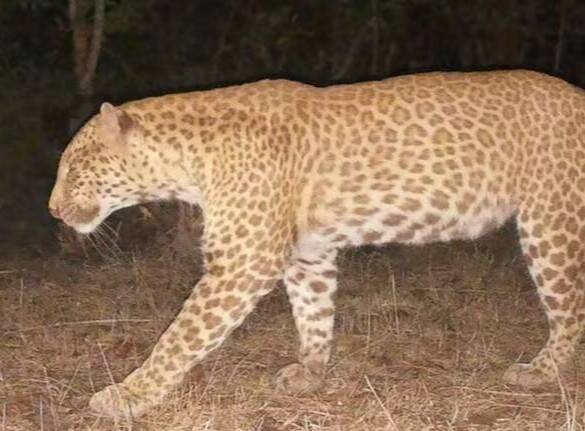
In a groundbreaking discovery, researchers in Karnataka have documented an ultra-rare leopard colour morph in Vijayanagara district, marking a significant milestone in the field of wildlife conservation. This extraordinary sighting is only the second confirmed recording of such a big cat in India and the first in the state of Karnataka. The animal, aptly named the ‘Sandalwood Leopard’ by conservationists, boasts a stunning pale reddish-pink coat with light-brown rosettes, setting it apart from its more common counterparts.
The remarkable discovery was made by renowned wildlife scientist Sanjay Gubbi, who has been instrumental in documenting and conserving India’s rich biodiversity. Gubbi’s tireless efforts have shed light on the importance of preserving India’s natural heritage, and this latest finding is a testament to his dedication to the field.
The Sandalwood Leopard’s distinctive coat is a result of a rare genetic variation, which is estimated to occur in less than 1% of the leopard population. This unique colour morph is often referred to as “strawberry” or “rosy” due to its distinctive pale reddish-pink hue. The light-brown rosettes that adorn the leopard’s coat add to its striking appearance, making it a truly one-of-a-kind specimen.
The sighting of the Sandalwood Leopard in Karnataka’s Vijayanagara district has sent shockwaves of excitement throughout the scientific community. This region is known for its rich biodiversity, with a wide range of flora and fauna calling the area home. The discovery of this rare leopard colour morph highlights the importance of preserving and protecting India’s natural habitats, which are home to a vast array of unique and endangered species.
The documentation of the Sandalwood Leopard is a significant breakthrough, as it provides valuable insights into the genetic diversity of leopards in India. This information can be used to inform conservation efforts, ensuring that these majestic creatures continue to thrive in their natural habitats. The discovery also underscores the need for continued research and monitoring of India’s wildlife, as there may be many more secrets waiting to be uncovered.
The state of Karnataka is home to a significant population of leopards, with estimates suggesting that there are over 1,000 individuals roaming the state’s forests and grasslands. However, the Sandalwood Leopard is an extreme rarity, with only one other confirmed sighting in India. This makes the discovery in Karnataka all the more remarkable, and conservationists are eager to learn more about this enigmatic creature.
As news of the Sandalwood Leopard spreads, it is likely to capture the imagination of the general public, inspiring a new wave of interest in wildlife conservation. The discovery serves as a reminder of the awe-inspiring beauty and diversity of India’s natural world, and the importance of preserving it for future generations.
In conclusion, the sighting of the rare Sandalwood Leopard in Karnataka is a momentous occasion, marking a significant milestone in the field of wildlife conservation. The discovery of this ultra-rare colour morph is a testament to the incredible diversity of India’s natural world, and highlights the need for continued research and conservation efforts. As we marvel at the beauty of this extraordinary creature, we are reminded of the importance of protecting our planet’s precious biodiversity.
About the Author