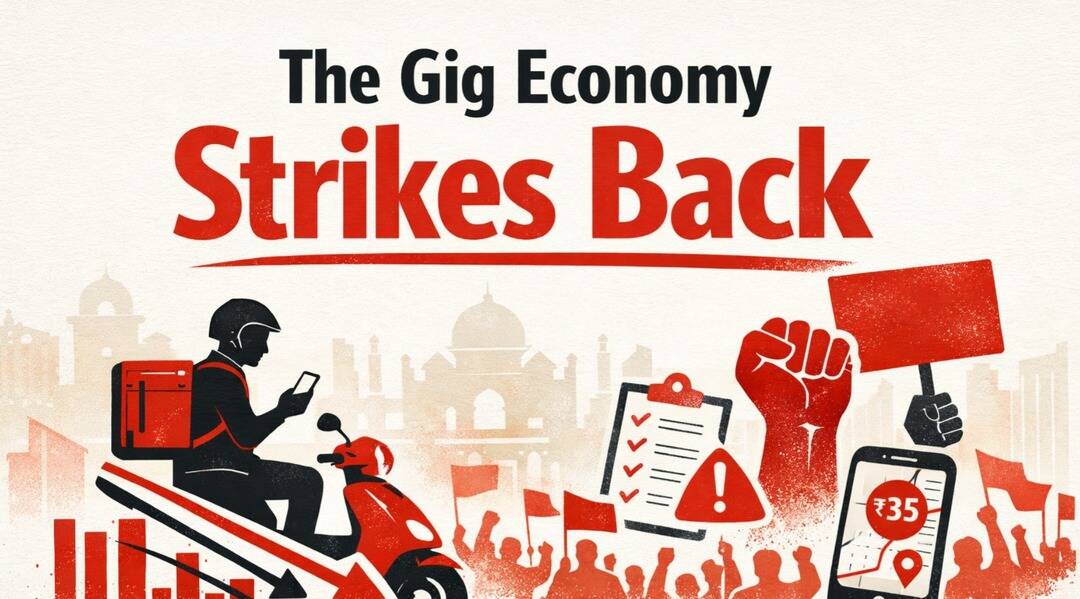
Indian gig economy strikes back, exposing a broken model
The Indian gig economy, which has been booming in recent years, has hit a roadblock. In December, around 40,000 delivery workers joined nationwide strikes, disrupting 50–60% of orders in several cities. The workers, who are the backbone of the gig economy, cited low and unstable pay, strict app control, and weak protections as the reasons for their protests. As companies defend their growth and politicians intervene, the protests highlight a widening gap between convenience and fairness in India’s digital jobs.
The gig economy, which includes companies like Zomato, Swiggy, and Uber, has been growing rapidly in India. These companies have created millions of jobs for delivery workers, drivers, and other freelancers. However, the workers have been complaining about the poor working conditions, low pay, and lack of benefits. The strikes, which were organized by the workers themselves, are a culmination of their frustrations and demands for better treatment.
The workers are demanding a hike in their pay, which they claim is too low to sustain themselves. They are also demanding more control over their work, including the ability to choose their own routes and timings. The workers are also seeking better protections, including insurance and medical benefits. The companies, on the other hand, are defending their model, claiming that it provides flexibility and opportunities for workers to earn a decent income.
However, the workers argue that the flexibility is a myth. They claim that they are forced to work long hours, often for 12 hours a day, without any breaks or rest. They are also forced to meet strict targets, which can be difficult to achieve. The workers are also penalized for not meeting their targets, which can result in a reduction in their pay or even termination of their contracts.
The strikes have highlighted the broken model of the gig economy. The companies are making huge profits, but the workers are not getting a fair share. The workers are the ones who are doing the hard work, but they are not getting the benefits. The companies are using the workers to make money, but they are not providing them with the necessary protections and benefits.
The government has also intervened in the matter, with some politicians supporting the workers’ demands. The government has announced plans to regulate the gig economy, including providing better protections for workers. However, the companies are resisting the move, claiming that it will stifle innovation and growth.
The strikes have also highlighted the widening gap between convenience and fairness in India’s digital jobs. The gig economy has made it convenient for consumers to order food and other services online, but it has come at a cost. The workers are paying the price for the convenience, with low pay, long hours, and poor working conditions.
The Indian gig economy is not an isolated case. The gig economy is a global phenomenon, with millions of workers employed in various sectors. However, the Indian case is unique, with the sheer size of the market and the number of workers involved. The strikes in India are a wake-up call for the companies and the government to take notice of the workers’ demands and provide them with better protections and benefits.
In conclusion, the Indian gig economy strikes back, exposing a broken model. The workers are demanding better pay, more control over their work, and better protections. The companies are defending their model, but the workers are not buying it. The government has intervened, but the outcome is still uncertain. One thing is clear, however: the gig economy needs to be regulated, and the workers need to be protected. The convenience of online ordering and other digital services cannot come at the cost of workers’ rights and dignity.
The Indian gig economy is a complex issue, with multiple stakeholders involved. The companies, the workers, and the government all have a role to play in resolving the issue. However, the workers’ demands are legitimate, and they need to be addressed. The strikes are a call to action, and it is time for the companies and the government to take notice.
As the Indian gig economy continues to grow, it is essential to ensure that the workers are treated fairly. The companies need to provide better pay, benefits, and protections to the workers. The government needs to regulate the gig economy, ensuring that the workers are protected and their rights are respected. The consumers also have a role to play, by supporting companies that treat their workers fairly and with dignity.
In the end, the Indian gig economy strikes back, exposing a broken model. The workers are fighting for their rights, and it is time for the companies and the government to take notice. The convenience of digital services cannot come at the cost of workers’ dignity and rights. It is time for a change, and it is time for the Indian gig economy to be reformed.
News Source: https://ascendants.in/industry_events/indian-gig-economy-strikes-platforms-policy/
About the Author