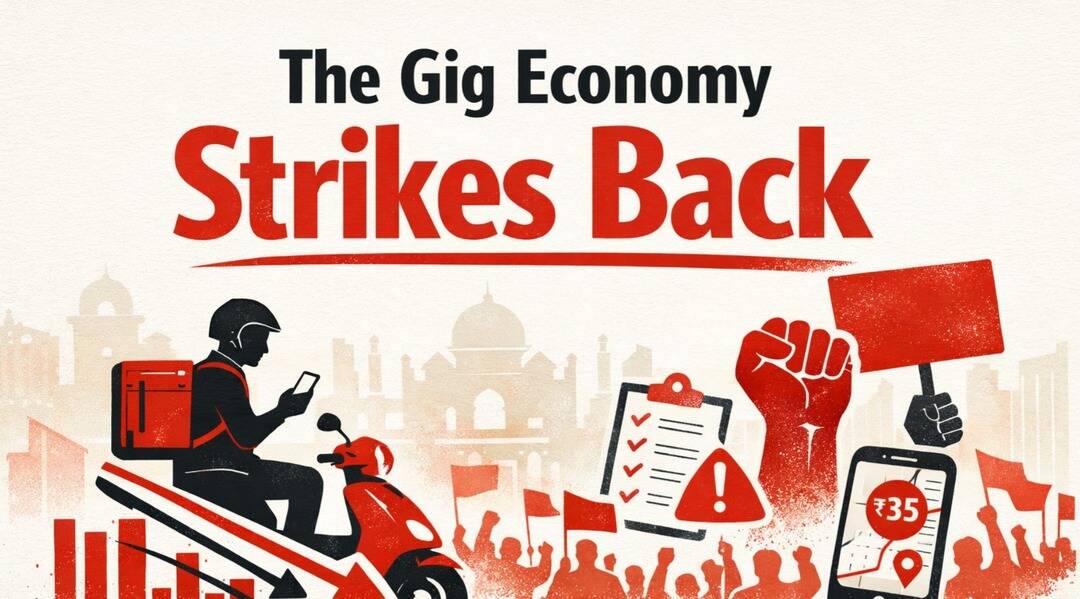
Indian gig economy strikes back, exposing a broken model
The Indian gig economy, which has been hailed as a revolutionary force in the country’s job market, is facing a major crisis. In December, around 40,000 delivery workers from various food delivery and e-commerce platforms joined nationwide strikes, disrupting 50-60% of orders in several cities. The workers, who are the backbone of the gig economy, cited low and unstable pay, strict app control, and weak protections as the reasons for their protest. As companies defend their growth and politicians intervene, the protests highlight a widening gap between convenience and fairness in India’s digital jobs.
The gig economy, which includes companies such as Zomato, Swiggy, and Uber Eats, has grown exponentially in India over the past few years. These platforms have created millions of jobs for delivery workers, who are classified as independent contractors rather than employees. However, the workers have been complaining about the poor working conditions, low pay, and lack of benefits. The strikes, which were organized by various worker unions, are a culmination of these grievances.
One of the main reasons for the strikes is the low pay. Delivery workers are paid on a per-delivery basis, which can range from ₹20 to ₹50 per delivery. However, the workers have to bear the cost of fuel, maintenance, and other expenses, which can eat into their earnings. Moreover, the platforms have been reducing the pay per delivery over time, making it difficult for the workers to make a living. For example, Zomato, which was paying ₹50 per delivery a few years ago, now pays around ₹20-30 per delivery.
Another reason for the strikes is the strict app control. The platforms use algorithms to manage the delivery workers, which can lead to unfair treatment. For example, workers who do not accept a certain number of deliveries per hour can be penalized or even deactivated from the platform. This can lead to a situation where workers are forced to work long hours without breaks, just to meet the targets set by the platform. Moreover, the platforms do not provide any benefits, such as health insurance or pension, to the workers.
The weak protections for workers are also a major concern. The platforms do not provide any job security to the workers, who can be deactivated from the platform at any time. Moreover, the workers are not entitled to any benefits, such as paid leave or overtime pay. This can lead to a situation where workers are exploited by the platforms, without any recourse.
The strikes have highlighted the widening gap between convenience and fairness in India’s digital jobs. On the one hand, the gig economy has created millions of jobs and has made it convenient for consumers to order food and other products online. On the other hand, the workers who are the backbone of this economy are struggling to make a living. The platforms, which have made millions of dollars in profits, have failed to provide fair wages and benefits to the workers.
The government has also intervened in the matter, with some politicians calling for greater regulation of the gig economy. The Ministry of Labour and Employment has announced plans to regulate the gig economy, including providing social security benefits to workers. However, the details of the plan are still unclear, and it remains to be seen how effective it will be in addressing the concerns of the workers.
The companies, on the other hand, have defended their growth and have argued that they provide flexible and entrepreneurial opportunities to the workers. However, the workers have disputed this claim, arguing that they are not treated as partners, but rather as exploited labor. The companies have also announced plans to increase the pay and benefits for the workers, but the details of these plans are still unclear.
In conclusion, the Indian gig economy strikes back, exposing a broken model. The strikes have highlighted the poor working conditions, low pay, and lack of benefits for the delivery workers. The companies, which have made millions of dollars in profits, have failed to provide fair wages and benefits to the workers. The government has intervened in the matter, but it remains to be seen how effective the regulations will be in addressing the concerns of the workers. As the gig economy continues to grow, it is essential to address the concerns of the workers and to create a more equitable and sustainable model.
The Indian gig economy is at a crossroads, and it remains to be seen how it will evolve in the future. Will the companies prioritize profits over people, or will they work towards creating a more equitable and sustainable model? Will the government regulate the gig economy effectively, or will it succumb to the lobbying power of the companies? The answers to these questions will determine the future of the Indian gig economy and the millions of workers who are dependent on it.
As the debate around the gig economy continues, it is essential to remember that the workers are not just statistics or algorithms, but human beings who deserve fair treatment and respect. The Indian gig economy strikes back, exposing a broken model, and it is time for the companies and the government to take notice and work towards creating a more equitable and sustainable model.
News source: https://ascendants.in/industry_events/indian-gig-economy-strikes-platforms-policy/
About the Author