Indian gig economy strikes back, exposing a broken model
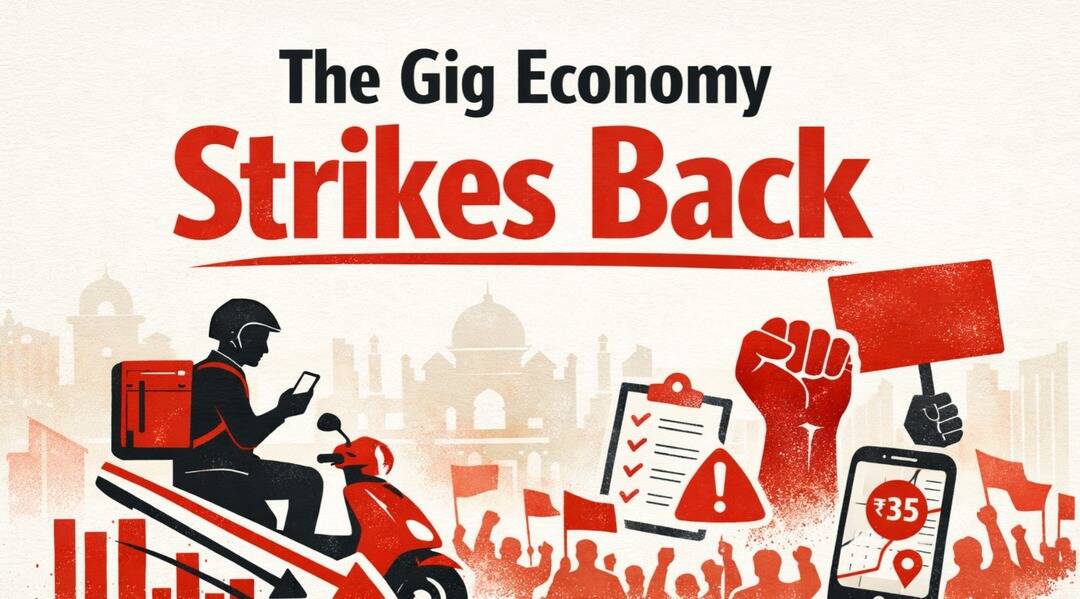
The Indian gig economy, once hailed as a revolutionary force that would bring flexibility and opportunity to millions of workers, is striking back. In a wave of protests that swept across the country in December, around 40,000 delivery workers joined nationwide strikes, disrupting 50–60% of orders in several cities. The workers, who toil behind the scenes to bring food, groceries, and other essentials to our doorsteps, cited low and unstable pay, strict app control, and weak protections as the reasons for their discontent.
As the strikes brought the gig economy to a grinding halt, companies were forced to defend their growth models, and politicians intervened to try and broker peace. But beneath the surface of the protests lies a more fundamental issue – a widening gap between convenience and fairness in India’s digital jobs. The gig economy, which was supposed to be a panacea for the country’s unemployment woes, has instead exposed a broken model that prioritizes profit over people.
At the heart of the issue is the way gig economy platforms operate. Companies like Zomato, Swiggy, and Uber promise flexibility and autonomy to their workers, but in reality, they exert strict control over every aspect of their work. Workers are forced to adhere to rigid schedules, navigate complex algorithms that dictate their earnings, and deal with harsh penalties for minor infractions. The result is a system that is fundamentally unfair, where workers are treated as mere cogs in a machine rather than human beings with dignity and rights.
One of the primary grievances of the striking workers is the low and unstable pay. Despite the soaring valuations of gig economy companies, the workers who power these platforms struggle to make ends meet. Earnings are often meager and unpredictable, with workers forced to work long hours for minimal pay. The situation is exacerbated by the fact that many gig economy platforms operate on a “gig-by-gig” basis, where workers are paid only for the specific tasks they complete. This means that workers have no guarantee of a steady income, and are often forced to juggle multiple gigs just to survive.
Another major concern is the lack of protections and benefits for gig economy workers. Unlike traditional employees, gig workers are not entitled to basic benefits like health insurance, paid leave, or retirement savings. They are also not protected by labor laws, which means they have little recourse in case of disputes or grievances. This leaves workers vulnerable to exploitation, with companies free to dictate terms and conditions without fear of consequences.
The strikes have also highlighted the issue of app control, where companies use their platforms to exert total control over workers. Algorithms dictate everything from worker schedules to earnings, with little transparency or accountability. Workers are often forced to accept gigs on unfavorable terms, with penalties for refusing or canceling assignments. This has created a culture of fear and coercion, where workers are forced to prioritize company interests over their own well-being.
As the protests continue, companies are defending their growth models and politicians are intervening to try and broker peace. But the fact remains that the gig economy is broken, and it will take more than just platitudes and promises to fix it. The government needs to step in and regulate the industry, ensuring that workers are protected and treated with dignity. Companies need to rethink their business models, prioritizing fairness and equity over profit and growth.
Ultimately, the Indian gig economy strikes are a wake-up call for all of us. They remind us that the pursuit of convenience and efficiency cannot come at the cost of human dignity and well-being. As we click and swipe our way through the digital economy, we need to remember the human faces behind the screens – the workers who toil behind the scenes to bring us our food, our groceries, and our essentials. It is time for us to demand better, to demand a gig economy that is fair, equitable, and just.
In conclusion, the Indian gig economy strikes are a symptom of a larger problem – a broken model that prioritizes profit over people. As we move forward, we need to prioritize fairness and equity, ensuring that workers are treated with dignity and respect. The government, companies, and civil society need to come together to regulate the industry, protect workers, and create a gig economy that is just and sustainable.
News source: https://ascendants.in/industry_events/indian-gig-economy-strikes-platforms-policy/
About the Author