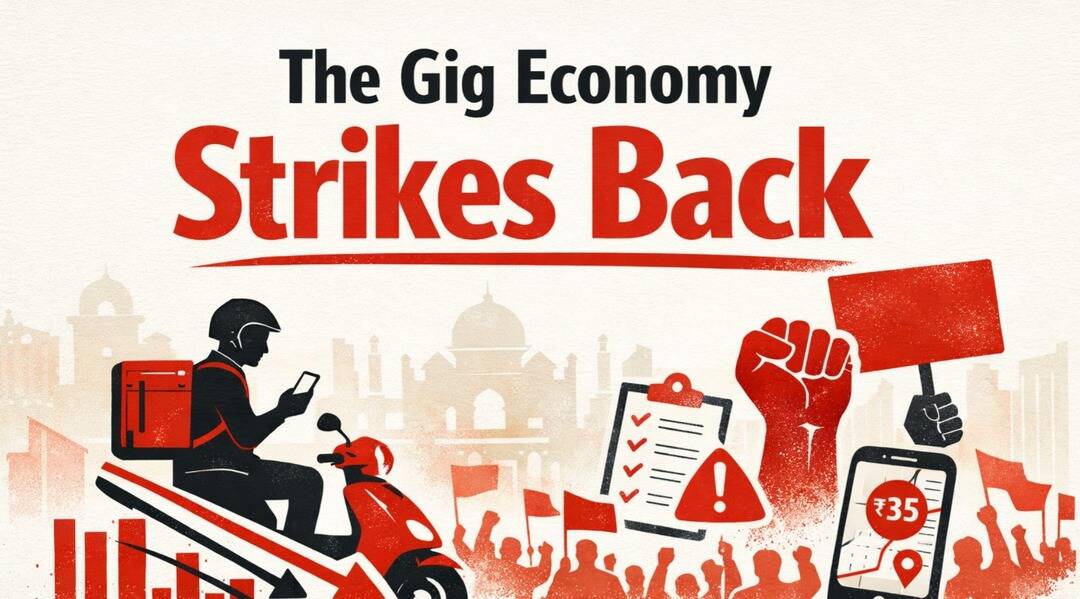
Indian gig economy strikes back, exposing a broken model
The Indian gig economy, which has been touted as a revolutionary force in the country’s job market, is facing a major crisis. In December, around 40,000 delivery workers joined nationwide strikes, disrupting 50-60% of orders in several cities. The workers, who are the backbone of the gig economy, are protesting against low and unstable pay, strict app control, and weak protections. The strikes have brought to the forefront the widening gap between convenience and fairness in India’s digital jobs.
The gig economy, which includes companies such as Zomato, Swiggy, and Uber, has grown exponentially in India over the past few years. These companies have created millions of jobs for workers who are engaged on a freelance or contract basis. However, the workers are not treated as employees and are not entitled to the same benefits and protections as regular employees. This has led to a situation where workers are exploited and are forced to work long hours for low pay.
The strikes, which were organized by various worker unions and associations, are a culmination of the frustrations and grievances of the workers. The workers are demanding better pay, improved working conditions, and greater protections from the companies. They are also demanding that the government intervene and regulate the gig economy to ensure that workers are treated fairly.
One of the main issues that the workers are facing is low and unstable pay. The companies pay the workers on a per-delivery basis, which means that the workers are only paid for the deliveries they make. This has led to a situation where workers are forced to work long hours to make a decent living. The workers are also not entitled to any benefits, such as health insurance or pension, which makes them vulnerable to exploitation.
Another issue that the workers are facing is strict app control. The companies use algorithms to manage the workforce, which means that workers are assigned deliveries based on their ratings and performance. This has led to a situation where workers are forced to work at the mercy of the algorithms, which can be unpredictable and unfair. The workers are also not allowed to negotiate with the customers or to refuse deliveries, which makes them powerless.
The strikes have also highlighted the issue of weak protections for workers. The workers are not entitled to any protections, such as minimum wage or overtime pay, which makes them vulnerable to exploitation. The workers are also not allowed to form unions or to engage in collective bargaining, which makes it difficult for them to negotiate with the companies.
The companies, on the other hand, are defending their growth and profits. They argue that the gig economy has created millions of jobs and has provided workers with the flexibility to work on their own terms. They also argue that the workers are free to choose when and how much they want to work, which gives them greater autonomy and control over their lives.
However, the workers disagree. They argue that the flexibility and autonomy that the companies talk about are illusions. They argue that the workers are forced to work long hours for low pay and are subject to strict app control, which makes them powerless. They also argue that the companies are making huge profits at their expense, which is unfair and unjust.
The government has also intervened in the dispute, with some politicians calling for greater regulation of the gig economy. The government has argued that the gig economy has created new opportunities for workers, but it has also created new challenges and risks. The government has promised to look into the issue and to come up with solutions that balance the needs of the workers with the needs of the companies.
In conclusion, the Indian gig economy is facing a major crisis. The strikes by the delivery workers have highlighted the widening gap between convenience and fairness in India’s digital jobs. The workers are demanding better pay, improved working conditions, and greater protections from the companies. The companies are defending their growth and profits, while the government is intervening to regulate the gig economy. The outcome of the dispute is still uncertain, but one thing is clear: the Indian gig economy needs to be reformed to ensure that workers are treated fairly and with dignity.
As the gig economy continues to grow and evolve, it is essential that we prioritize the needs and rights of the workers. This includes providing them with better pay, improved working conditions, and greater protections. It also includes regulating the gig economy to prevent exploitation and abuse. Only then can we ensure that the gig economy is a force for good, rather than a source of exploitation and injustice.
For more information on this topic, visit: https://ascendants.in/industry_events/indian-gig-economy-strikes-platforms-policy/
News Source: https://ascendants.in/industry_events/indian-gig-economy-strikes-platforms-policy/
About the Author