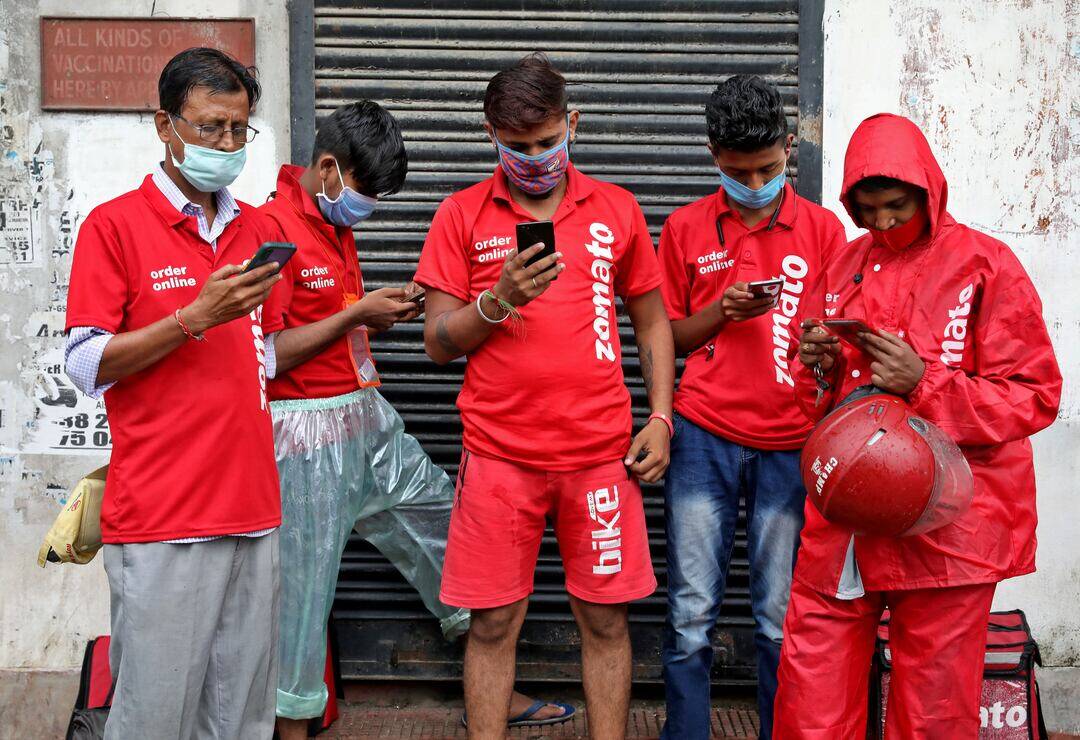
Deepinder claims issue with gig economy is it exposed class divide, says ‘We tip awkwardly’
The gig economy has been a subject of debate for quite some time now, with many experts and commentators weighing in on its pros and cons. While some see it as a liberating force that allows individuals to work on their own terms, others criticize it for perpetuating exploitation and inequality. Recently, billionaire Deepinder Goyal added his voice to the conversation, offering a unique perspective on the issue. According to Goyal, the problem with the gig economy is not its inherent structure or the way it treats workers, but rather the fact that it has brought the prevailing class divide to light.
In a thought-provoking statement, Goyal said, “Suddenly, the poor aren’t hidden away…Now, every doorbell is a reminder of systemic inequality.” He argued that the gig economy has made it impossible for the consuming class to ignore the existence of the working class, who were previously hidden from view. This newfound visibility has led to a sense of discomfort and guilt among those who benefit from the gig economy, but are also aware of the inequalities it perpetuates.
Goyal’s statement highlights the complex and often contradictory nature of the gig economy. On the one hand, it has created new opportunities for people to earn a living and has increased flexibility and convenience for consumers. On the other hand, it has also perpetuated exploitation, with many workers struggling to make ends meet and lacking access to basic benefits and job security.
One of the most striking aspects of Goyal’s statement is his observation that “we aren’t just debating economics, we’re confronting guilt.” This comment gets to the heart of the matter, which is that the gig economy is not just an economic system, but also a social and moral one. It raises questions about our values and priorities as a society, and forces us to confront the consequences of our actions.
The phenomenon of tipping is a case in point. As Goyal noted, “We tip awkwardly…because inequality is no longer abstract.” Tipping has become a way for consumers to acknowledge the inequality that exists between them and the workers who serve them. It is a way of saying, “I know that you are not being paid a living wage, and I want to make up for it in some small way.” However, this practice also perpetuates the problem, as it creates a culture of dependence on tips rather than advocating for fair wages and better working conditions.
The issue of class divide is not limited to the gig economy, of course. It is a pervasive problem that affects many aspects of our society. However, the gig economy has brought it to the forefront, making it impossible to ignore. As Goyal said, every doorbell is a reminder of systemic inequality, and it is up to us to confront this reality and work towards creating a more just and equitable society.
So, what can be done to address the issue of class divide in the gig economy? One possible solution is to advocate for policies that promote fair wages and better working conditions for gig workers. This could include minimum wage laws, benefits, and job security, as well as protections against exploitation and harassment.
Another approach is to support companies that prioritize the well-being of their workers and promote sustainable and equitable practices. This could involve choosing to use services that are committed to fair labor standards, and avoiding those that perpetuate exploitation.
Ultimately, addressing the issue of class divide in the gig economy will require a fundamental shift in our values and priorities as a society. It will require us to recognize the inherent worth and dignity of all workers, regardless of their occupation or income level. It will also require us to confront our own guilt and complicity in perpetuating inequality, and to work towards creating a more just and equitable world for all.
In conclusion, Deepinder Goyal’s statement highlights the complex and often contradictory nature of the gig economy. While it has created new opportunities for workers and increased flexibility and convenience for consumers, it has also perpetuated exploitation and inequality. By acknowledging the class divide that exists in our society and working towards creating a more just and equitable world, we can begin to address the problems that the gig economy has brought to light.
News Source: https://x.com/deepigoyal/status/2007030873711927381
About the Author