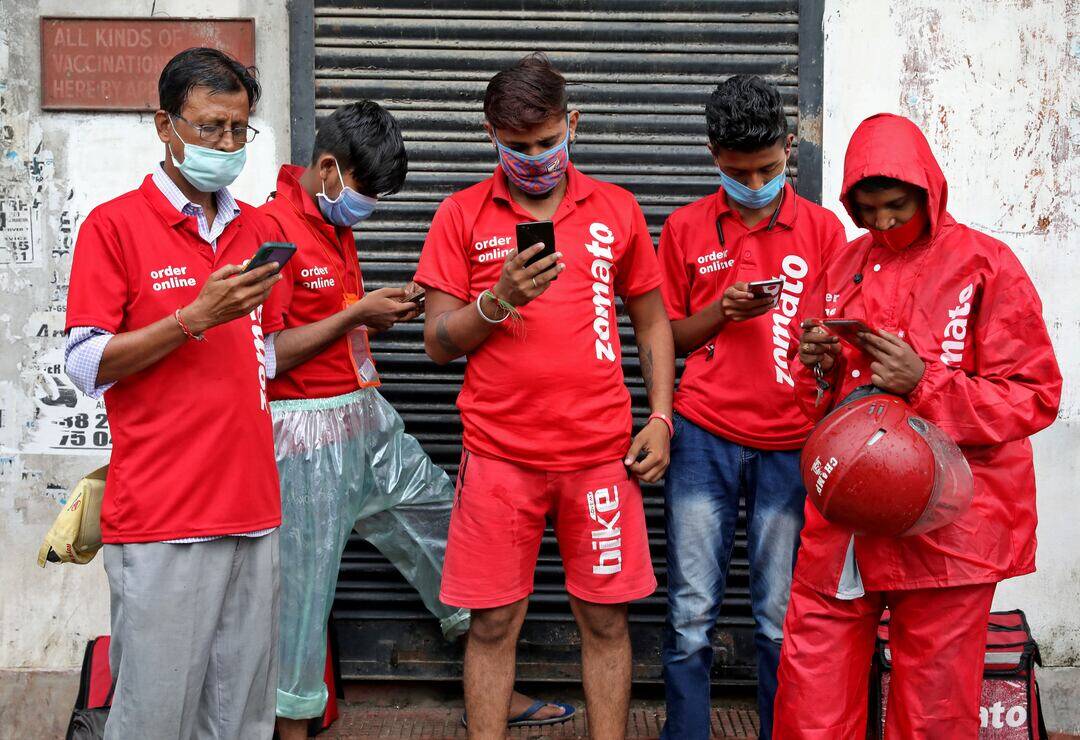
Deepinder claims issue with gig economy is it exposed class divide, says ‘We tip awkwardly’
The gig economy has been a topic of discussion for quite some time now, with many debates surrounding its impact on workers, consumers, and the economy as a whole. Recently, billionaire Deepinder Goyal weighed in on the issue, offering a unique perspective on the problems plaguing the gig economy. According to Goyal, the primary issue with the gig economy is not its economic model or treatment of workers, but rather the fact that it has exposed the prevailing class divide in our society.
Goyal’s statement, which has sparked a lot of discussion on social media, suggests that the gig economy has brought to light the systemic inequality that exists in our society. He argues that by ensuring workers are seen by the consuming class, the gig economy has made it impossible for us to ignore the class divide that has always existed, but was previously hidden from view. “Suddenly, poor aren’t hidden away…Now, every doorbell is a reminder of systemic inequality,” he said.
This statement highlights the uncomfortable truth that the gig economy has forced us to confront. By bringing workers into our homes and making them a visible part of our daily lives, the gig economy has made it impossible for us to pretend that the class divide does not exist. We can no longer ignore the fact that there are people who are struggling to make ends meet, working multiple jobs just to get by, while others are enjoying a life of luxury and comfort.
Goyal’s statement also touches on the guilt that many of us feel when we interact with gig economy workers. We are forced to confront the reality of our own privilege and the fact that we are benefiting from a system that exploits others. This guilt can be uncomfortable and even debilitating, leading to feelings of anxiety and unease. As Goyal so aptly put it, “We aren’t just debating economics, we’re confronting guilt…We tip awkwardly…because inequality is no longer abstract.”
The phenomenon of tipping is a perfect example of this guilt in action. When we tip a delivery person or a ride-hailing driver, we are acknowledging the fact that they are not being paid a living wage and that we are in a position to help them out. However, this act of tipping can also be seen as a way of alleviating our own guilt, rather than addressing the systemic issues that lead to inequality. By throwing a few extra dollars at the problem, we can temporarily assuage our guilt and avoid confronting the deeper issues at play.
Goyal’s statement has sparked a necessary conversation about the gig economy and its impact on our society. It has forced us to confront the uncomfortable truth that the gig economy is not just an economic model, but a reflection of our societal values. By exposing the class divide and forcing us to confront our own guilt, the gig economy has brought to light the need for a more equitable and just system.
As we move forward, it is essential that we take Goyal’s words to heart and work towards creating a more just and equitable society. This will require a fundamental shift in our values and a willingness to confront the systemic issues that lead to inequality. We must recognize that the gig economy is not just a economic model, but a symptom of a larger problem – a problem that requires a comprehensive and nuanced solution.
In conclusion, Deepinder Goyal’s statement has shed light on the uncomfortable truth that the gig economy has exposed the prevailing class divide in our society. By forcing us to confront our own guilt and the systemic inequality that exists, the gig economy has brought to light the need for a more equitable and just system. As we move forward, it is essential that we take Goyal’s words to heart and work towards creating a more just and equitable society.
News source: https://x.com/deepigoyal/status/2007030873711927381
About the Author