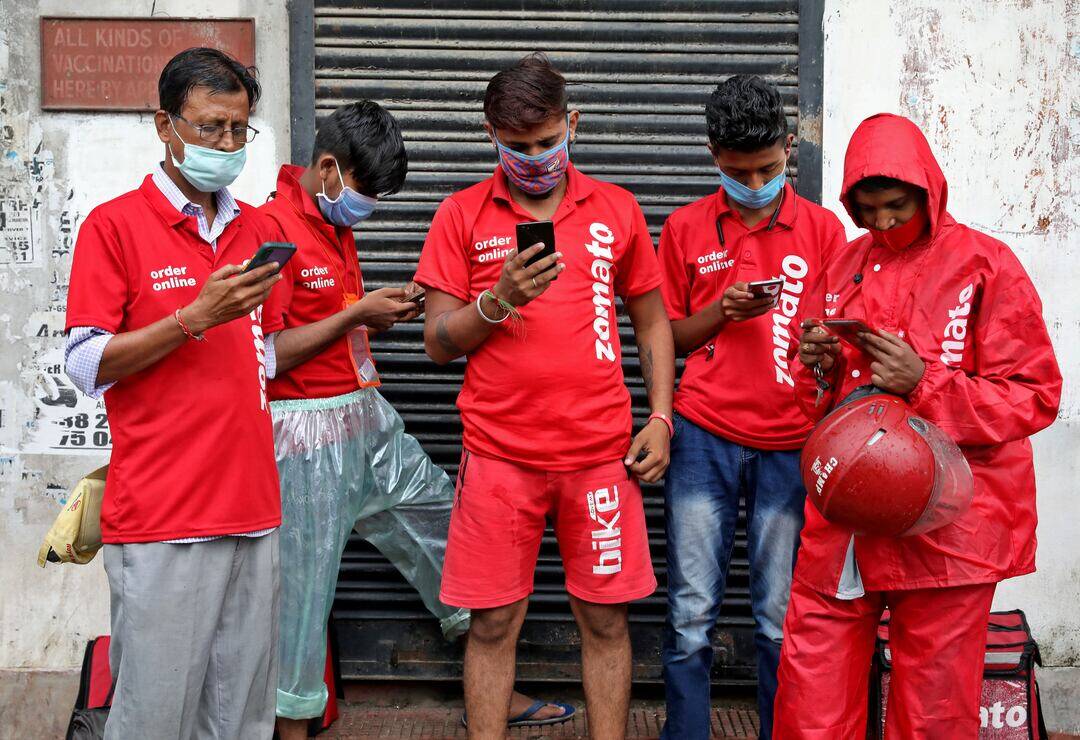
Deepinder claims issue with gig economy is it exposed class divide, says ‘We tip awkwardly’
The gig economy has been a topic of discussion for many years, with proponents arguing that it provides flexibility and opportunities for workers, while critics argue that it perpetuates inequality and exploitation. Recently, billionaire Deepinder Goyal weighed in on the issue, claiming that the problem with the gig economy is not its inherent structure, but rather the fact that it has exposed the prevailing class divide in our society.
According to Goyal, the gig economy has brought to light the stark contrast between the haves and have-nots, making it impossible for the consuming class to ignore the plight of the working class. “Suddenly, the poor aren’t hidden away,” he said. “Now, every doorbell is a reminder of systemic inequality.” This statement highlights the fact that the gig economy has made the poor and marginalized more visible, forcing the consuming class to confront the reality of economic inequality.
Goyal’s comments suggest that the gig economy has disrupted the traditional social norms that allowed the wealthy to remain oblivious to the struggles of the poor. With the rise of food delivery and ride-hailing services, the middle and upper classes are now constantly reminded of the existence of the working class, who are often struggling to make ends meet. This increased visibility has created a sense of discomfort and guilt among the consuming class, who are forced to confront the harsh realities of economic inequality.
As Goyal so aptly put it, “We aren’t just debating economics, we’re confronting guilt.” The fact that we tip our delivery personnel and ride-hailing drivers is a testament to this guilt. Tipping has become a way for us to assuage our conscience, to make up for the fact that we are benefiting from a system that exploits the working class. However, this guilt is not just about economics; it’s also about the social norms that we have created to justify our behavior.
Goyal’s statement, “We tip awkwardly…because inequality is no longer abstract,” highlights the fact that our actions are often driven by a sense of awkwardness and guilt. We tip because we feel uncomfortable with the fact that someone is providing us with a service, often at a very low wage. We tip because we want to make up for the fact that we are benefiting from a system that perpetuates inequality. However, this tipping culture also perpetuates the very inequality that it seeks to address.
The fact that we tip our delivery personnel and ride-hailing drivers creates a power dynamic that is inherently unequal. The consumer has the power to decide how much to tip, and the worker is forced to rely on the generosity of the consumer to make a living wage. This power dynamic is a reminder of the systemic inequality that pervades our society, where the wealthy have the power to dictate the terms of the economy, and the poor are forced to live with the consequences.
Furthermore, the gig economy has also created a culture of precarity, where workers are forced to live with uncertainty and insecurity. Without access to benefits, job security, or a living wage, workers in the gig economy are forced to rely on their wits and their ability to hustle to make a living. This culture of precarity has created a sense of anxiety and stress among workers, who are forced to constantly worry about their next paycheck.
In conclusion, Deepinder Goyal’s comments highlight the fact that the gig economy has exposed the prevailing class divide in our society. The fact that we tip our delivery personnel and ride-hailing drivers is a testament to the guilt and awkwardness that we feel when confronted with the reality of economic inequality. However, this tipping culture also perpetuates the very inequality that it seeks to address. To create a more equitable society, we need to address the systemic issues that perpetuate inequality, rather than just relying on Band-Aid solutions like tipping.
As we move forward, it’s essential to consider the impact of the gig economy on our society and to work towards creating a more equitable system. This requires a fundamental transformation of our economic system, one that prioritizes the needs of workers and the environment over the interests of corporations and the wealthy. Only then can we create a society that is truly just and equitable for all.
Source: https://x.com/deepigoyal/status/2007030873711927381
About the Author