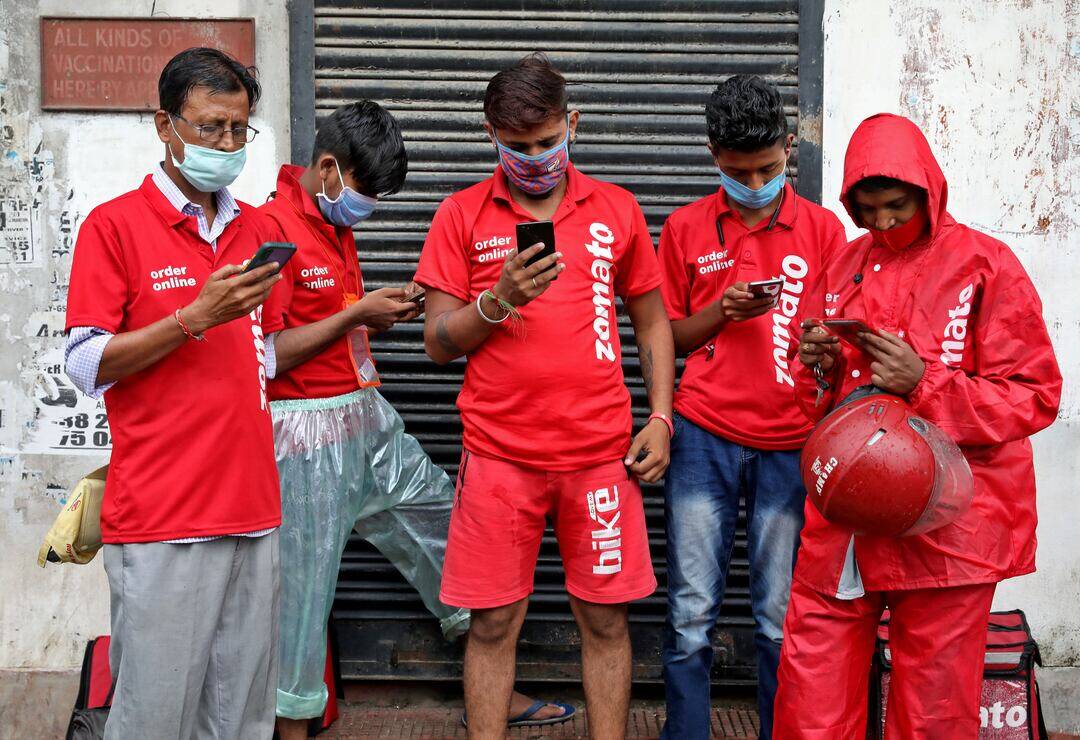
Deepinder claims issue with gig economy is it exposed class divide, says ‘We tip awkwardly’
The gig economy has been a topic of discussion for many years, with proponents arguing that it provides flexibility and autonomy for workers, while critics argue that it perpetuates inequality and exploitation. Recently, billionaire Deepinder Goyal weighed in on the issue, offering a unique perspective on the problems plaguing the gig economy. According to Goyal, the primary issue with the gig economy is not its economic model, but rather the fact that it has exposed the prevailing class divide in our society.
Goyal’s comments were made in response to the growing debate surrounding the gig economy and its impact on workers. He argued that the gig economy has brought the class divide to the forefront, making it impossible to ignore. “Suddenly, the poor aren’t hidden away,” he said. “Now, every doorbell is a reminder of systemic inequality.” This statement highlights the fact that the gig economy has made the poor and marginalized more visible, forcing the consuming class to confront the reality of economic inequality.
Goyal’s comments are particularly insightful, as they acknowledge that the issue with the gig economy is not just economic, but also social and psychological. The fact that we are forced to confront the poverty and inequality that exists in our society makes us uncomfortable, and this discomfort is reflected in the way we interact with gig workers. As Goyal so aptly put it, “We aren’t just debating economics, we’re confronting guilt.” This guilt is a result of the fact that we are faced with the harsh reality of economic inequality, and we are forced to confront our own role in perpetuating it.
One of the most striking aspects of Goyal’s comments is his observation that we tip awkwardly. Tipping is a common practice in the gig economy, particularly in industries such as food delivery and ride-hailing. However, Goyal argues that our tipping habits are not just about showing appreciation for good service, but also about alleviating our own guilt and discomfort. “We tip awkwardly…because inequality is no longer abstract,” he said. This statement highlights the fact that our interactions with gig workers are often tinged with a sense of guilt and obligation, rather than genuine appreciation for their service.
The fact that we tip awkwardly is a reflection of the power dynamics at play in the gig economy. As consumers, we have the power to determine the wages and working conditions of gig workers, and this power is often exercised in arbitrary and unfair ways. By tipping, we are attempting to make up for the fact that gig workers are often underpaid and undervalued, but this gesture is ultimately insufficient. As Goyal’s comments suggest, our tipping habits are a Band-Aid solution to a much deeper problem, one that requires a fundamental transformation of the way we think about work and economic inequality.
Goyal’s comments have sparked a lively debate about the gig economy and its impact on workers. While some have praised his honesty and insight, others have criticized him for oversimplifying the issues at play. However, regardless of where one stands on the issue, it is clear that the gig economy has brought the class divide to the forefront, and it is impossible to ignore. As we move forward, it is essential that we confront the systemic inequality that exists in our society, and work towards creating a more just and equitable economy for all.
In conclusion, Deepinder Goyal’s comments on the gig economy offer a unique perspective on the issues plaguing this sector. By highlighting the fact that the gig economy has exposed the prevailing class divide in our society, Goyal has forced us to confront the harsh reality of economic inequality. As we tip awkwardly, trying to make up for the fact that gig workers are often underpaid and undervalued, we are reminded that the issue is not just economic, but also social and psychological. Ultimately, it is up to us to create a more just and equitable economy, one that values the dignity and worth of all workers, regardless of their occupation or background.
News source: https://x.com/deepigoyal/status/2007030873711927381
About the Author