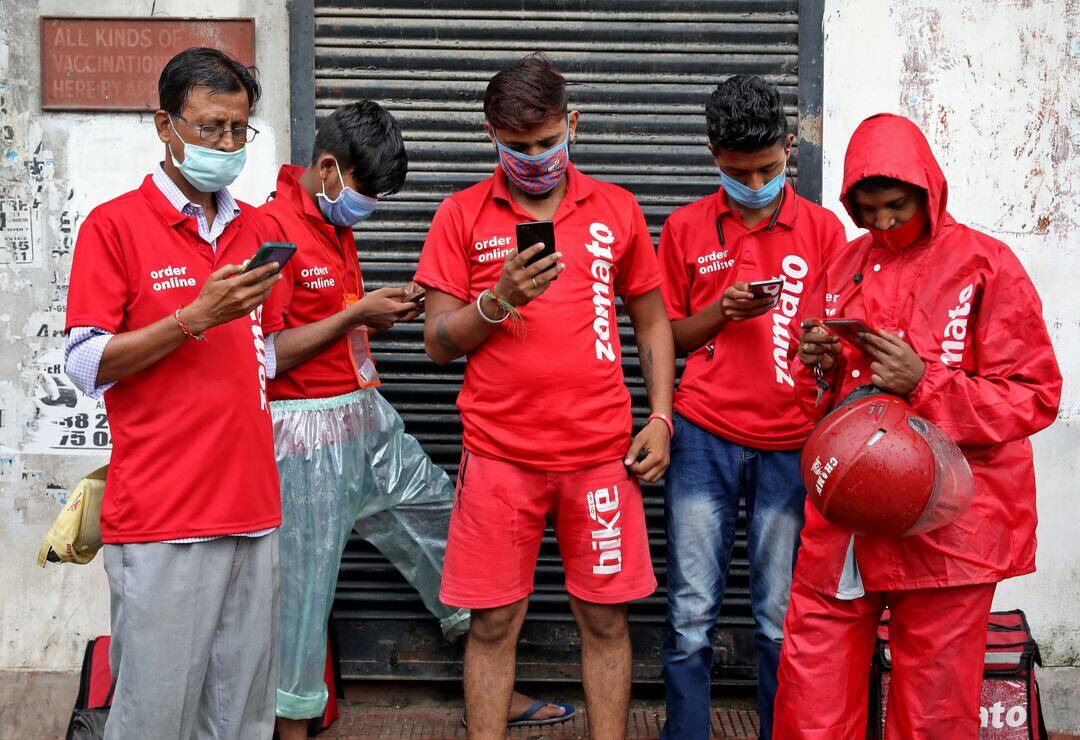
Deepinder claims issue with gig economy is it exposed class divide, says ‘We tip awkwardly’
The gig economy has been a topic of discussion in recent years, with many debating its merits and drawbacks. While some see it as a convenient and flexible way to earn a living, others argue that it perpetuates inequality and exploits workers. Recently, billionaire Deepinder Goyal weighed in on the issue, claiming that the problem with the gig economy is not its inherent structure, but rather the fact that it has brought the prevailing class divide to light.
According to Goyal, the gig economy has made it impossible to ignore the fact that there are people in our society who are struggling to make ends meet. “Suddenly, the poor aren’t hidden away,” he said. “They’re not just statistics or news headlines. Now, every doorbell is a reminder of systemic inequality.” This statement highlights the fact that the gig economy has made the class divide more visible, as workers are now interacting directly with the consuming class.
Goyal’s statement suggests that the issue with the gig economy is not just about economics, but also about the guilt and discomfort that comes with confronting inequality. “We aren’t just debating economics, we’re confronting guilt,” he said. This guilt is evident in the way we interact with gig workers, particularly when it comes to tipping. “We tip awkwardly…because inequality is no longer abstract,” Goyal said. This statement highlights the fact that our interactions with gig workers are often fraught with awkwardness and uncertainty, as we struggle to reconcile our desire for convenience with our awareness of the inequality that underlies the system.
The gig economy has indeed made it impossible to ignore the fact that there are people in our society who are struggling to make ends meet. With the rise of food delivery and ride-hailing apps, we are now interacting directly with workers who are often struggling to earn a living wage. This has made the class divide more visible, as we are forced to confront the fact that there are people in our society who are not earning enough to afford basic necessities.
Moreover, the gig economy has also highlighted the fact that many workers are not protected by traditional labor laws. Gig workers are often classified as independent contractors, which means that they are not entitled to the same benefits and protections as traditional employees. This has led to a lack of job security, as well as limited access to benefits such as healthcare and paid time off.
The fact that we tip awkwardly is a testament to the fact that we are aware of the inequality that underlies the gig economy. When we tip, we are acknowledging that the worker is not earning enough to make a living wage, and that we need to supplement their income in order to ensure that they can afford basic necessities. However, this practice also perpetuates the problem, as it creates a system in which workers are reliant on the whims of consumers rather than being paid a fair wage.
Goyal’s statement highlights the need for a more nuanced discussion about the gig economy and its impact on society. Rather than simply debating the merits and drawbacks of the system, we need to confront the fact that it has exposed a deeper class divide. We need to acknowledge that the gig economy is not just an economic system, but also a social and cultural phenomenon that reflects our values and priorities as a society.
Ultimately, the gig economy is a symptom of a larger problem – a problem of inequality and lack of access to opportunities. Rather than trying to fix the gig economy, we need to address the underlying issues that have led to its rise. This requires a fundamental transformation of our economic system, one that prioritizes fairness, equality, and justice.
In conclusion, Deepinder Goyal’s statement highlights the fact that the gig economy has exposed a deeper class divide in our society. The fact that we tip awkwardly is a testament to the fact that we are aware of the inequality that underlies the system, but are unsure of how to address it. As we move forward, it is essential that we confront this inequality head-on, and work towards creating a more just and equitable society for all.
News source: https://x.com/deepigoyal/status/2007030873711927381
About the Author