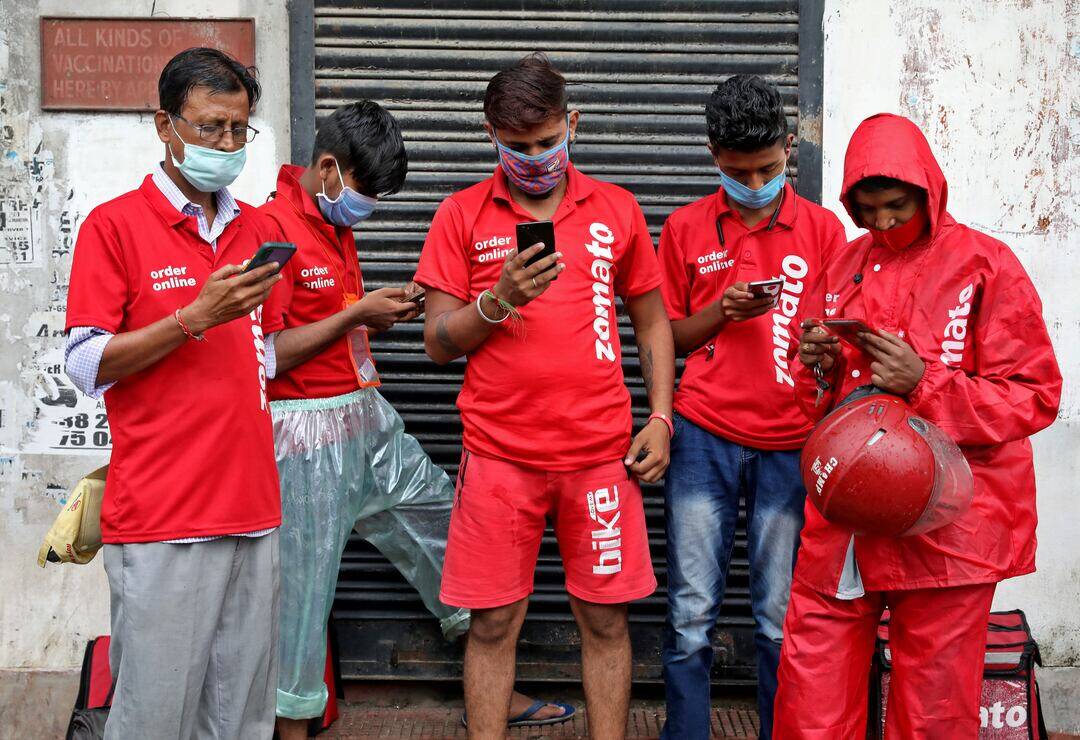
Deepinder claims issue with gig economy is it exposed class divide, says ‘We tip awkwardly’
The gig economy, which has revolutionized the way we work and interact with service providers, has been a subject of intense debate in recent years. While some argue that it has created new opportunities for entrepreneurship and flexibility, others claim that it has exacerbated existing social and economic problems. Recently, billionaire Deepinder Goyal, the founder of Zomato, weighed in on the issue, claiming that the gig economy’s problem is not its inherent nature, but rather the fact that it has brought the prevailing class divide to light.
According to Goyal, the gig economy has made it impossible to ignore the stark contrast between the haves and have-nots. “Suddenly, the poor aren’t hidden away,” he said. “Now, every doorbell is a reminder of systemic inequality.” This statement highlights the uncomfortable truth that the gig economy has made us confront the reality of poverty and inequality in our society. By bringing service providers, such as food delivery personnel and ride-hailing drivers, into our homes and daily lives, the gig economy has made it impossible to ignore the fact that many people are struggling to make ends meet.
Goyal’s statement also touches on the psychological impact of this exposure. “We aren’t just debating economics, we’re confronting guilt,” he said. This guilt arises from the fact that we are forced to confront the reality of poverty and inequality, and the fact that we are benefiting from a system that exploits the vulnerable. The gig economy has made it clear that the wealthy and the poor are not separate entities, but are instead interconnected in complex ways.
One of the most striking aspects of Goyal’s statement is his observation that “we tip awkwardly.” This phrase captures the awkwardness and discomfort that many of us feel when interacting with service providers in the gig economy. We are unsure of how to treat them, how much to pay them, and how to acknowledge their labor. This awkwardness arises from the fact that we are forced to confront the reality of inequality and poverty, and the fact that we are not sure how to respond to it.
The act of tipping is a perfect example of this awkwardness. On the one hand, tipping is a way of showing appreciation for good service and acknowledging the hard work of the service provider. On the other hand, it is also a reminder of the fact that the service provider is not being paid a living wage, and that we are expected to make up for this shortfall through our tips. This creates a sense of discomfort and guilt, as we are forced to confront the fact that the system is not working for everyone.
Goyal’s statement highlights the need for a more nuanced and empathetic approach to the gig economy. Rather than simply debating the economics of the issue, we need to confront the social and psychological implications of a system that exploits the vulnerable. We need to recognize that the gig economy is not just a matter of supply and demand, but also a reflection of our values and our priorities as a society.
Ultimately, Goyal’s statement is a call to action. It is a reminder that we need to take responsibility for the impact of our actions, and to work towards creating a more equitable and just society. By acknowledging the class divide and the systemic inequality that underlies the gig economy, we can begin to build a more compassionate and empathetic world.
In conclusion, Deepinder Goyal’s statement highlights the complex and multifaceted nature of the gig economy. By exposing the class divide and the systemic inequality that underlies this system, we are forced to confront the uncomfortable truth about our society. As Goyal so eloquently put it, “we tip awkwardly” because inequality is no longer abstract, but a harsh reality that we can no longer ignore.
News Source: https://x.com/deepigoyal/status/2007030873711927381
About the Author