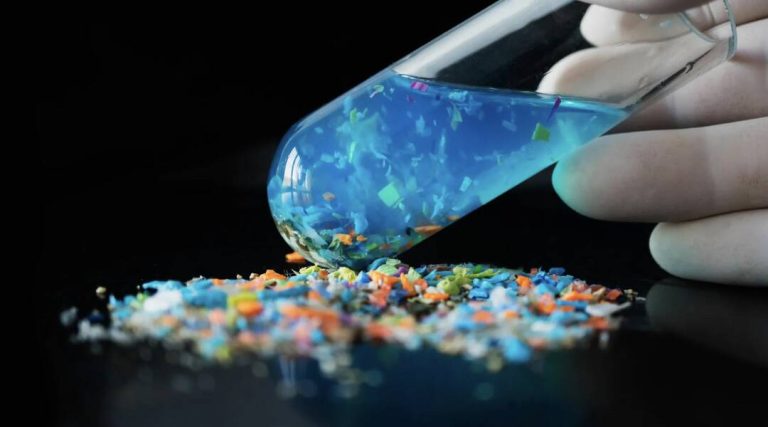
Microplastics leak invisible chemical clouds into water: Study
The world’s oceans, rivers, and lakes are facing a growing threat from microplastics, which are tiny plastic particles that are less than 5 millimeters in size. These microplastics have been found to harm aquatic life, from tiny plankton to large fish, and have even been shown to contaminate the food chain. However, a recent study has revealed a new and previously unknown danger posed by microplastics: they leak invisible chemical clouds into the water, driven by sunlight.
The study, which examined four common types of plastic, found that each type releases its own unique chemical mixture into the water. This chemical mixture is made up of dissolved organic matter (DOM), which is a complex mixture of carbon-based compounds that are created when the plastic breaks down. The researchers were surprised to find that plastics labelled as biodegradable released the most DOM, suggesting that these plastics may not be as environmentally friendly as previously thought.
The study’s findings are significant, as they suggest that microplastics are not just a physical threat to aquatic life, but also a chemical one. The DOM released by microplastics can react with other chemicals in the water, creating new and potentially toxic compounds. This can have serious consequences for aquatic ecosystems, as it can alter the balance of nutrients and chemicals in the water, and even affect the growth and development of aquatic organisms.
The researchers used a combination of laboratory experiments and field measurements to study the release of DOM from microplastics. They exposed the microplastics to sunlight and measured the amount of DOM released, using a range of analytical techniques to characterize the chemical composition of the DOM. They found that the DOM released by microplastics was more biologically active than natural organic matter, which suggests that it could have a significant impact on aquatic ecosystems.
The study’s lead author, a researcher at a leading university, noted that the findings have important implications for our understanding of the impact of microplastics on the environment. “We were surprised to find that microplastics release such a large amount of DOM, and that this DOM is so biologically active,” the researcher said. “This suggests that microplastics could be having a significant impact on aquatic ecosystems, even if they are not ingested by animals.”
The study’s findings also highlight the need for further research into the impact of microplastics on the environment. While the study provides new insights into the chemical threats posed by microplastics, it also raises many questions about the long-term effects of these chemicals on aquatic ecosystems. For example, how do the chemicals released by microplastics interact with other pollutants in the water, and what are the consequences for aquatic life?
The study’s authors also noted that the findings have important implications for efforts to reduce the amount of plastic waste in the environment. While biodegradable plastics may seem like a more environmentally friendly option, the study suggests that these plastics may not be as benign as previously thought. “Our findings suggest that biodegradable plastics may not be the solution to the problem of plastic pollution,” the researcher said. “Instead, we need to focus on reducing the amount of plastic waste that enters the environment in the first place.”
In conclusion, the study’s findings highlight the complex and multifaceted threat posed by microplastics to aquatic ecosystems. While the physical effects of microplastics have been well-documented, the study reveals a new and previously unknown chemical threat. The release of invisible chemical clouds from microplastics, driven by sunlight, has significant implications for our understanding of the impact of microplastics on the environment. As we continue to grapple with the problem of plastic pollution, it is clear that further research is needed to fully understand the effects of microplastics on aquatic ecosystems.
News Source: https://www.sciencedaily.com/releases/2025/12/251224032408.htm
About the Author