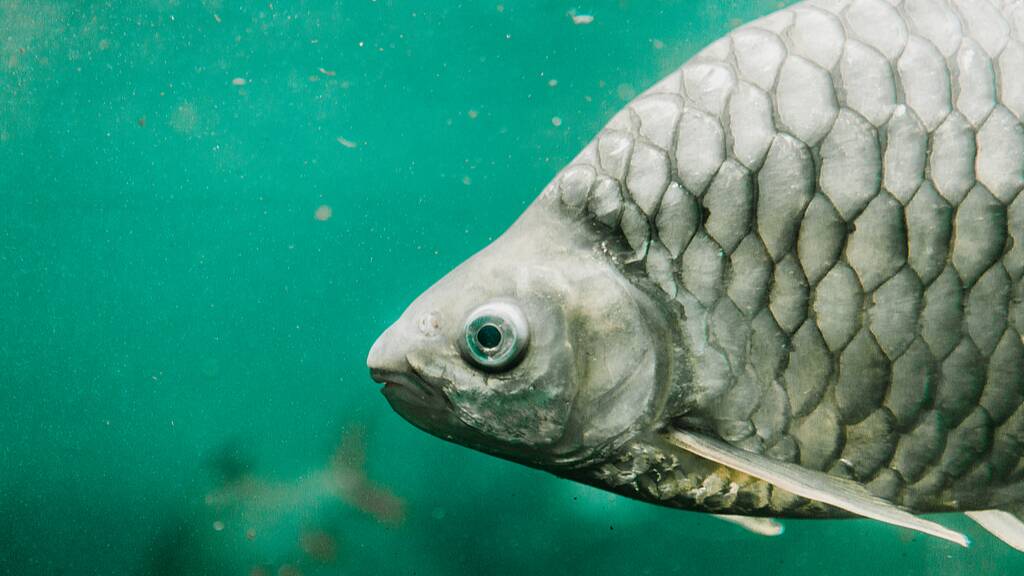
‘Bone-free’ fish created in China
In a groundbreaking achievement, a team of scientists at the Chinese Academy of Sciences has successfully created a new strain of gibel carp fish that is virtually free of intermuscular bones. This innovative breakthrough has the potential to revolutionize the way we consume fish, making it safer and easier to eat. The researchers used CRISPR gene-editing technology to disable a specific gene responsible for the development of these fine bones, while keeping the fish’s main skeleton intact.
The gibel carp fish, a popular species in China, is known for its delicate flavor and firm texture. However, like many other fish species, it contains intermuscular bones that can be a nuisance to eat and even pose a choking hazard. These small bones, also known as pin bones, are embedded in the fish’s flesh and can be difficult to remove completely. The presence of these bones can deter some people from consuming fish, particularly children and the elderly, who may be at a higher risk of choking.
To address this issue, the Chinese scientists turned to CRISPR gene-editing, a powerful tool that allows for precise modifications to an organism’s genome. By disabling the gene responsible for the development of intermuscular bones, the researchers were able to create a strain of gibel carp fish that is virtually bone-free. The CRISPR technology works by locating a specific sequence of DNA and cutting it, which triggers the cell’s natural repair mechanism. By providing a template for repair, scientists can introduce changes to the genome, effectively editing the gene.
The breakthrough has significant implications for the food industry, particularly in China, where fish is a staple food. The creation of bone-free fish could increase consumption and reduce food waste, as more people will be willing to eat fish without the hassle of dealing with bones. Additionally, the technology could be applied to other fish species, making it a game-changer for the global fishing industry.
The use of CRISPR gene-editing in agriculture and aquaculture has been gaining momentum in recent years. The technology has been used to develop crops that are resistant to diseases and pests, as well as to improve the nutritional content of food. In the case of the bone-free fish, the CRISPR technology has been used to modify a specific trait, making it a prime example of the potential of gene-editing in improving food safety and quality.
The creation of bone-free fish is also a testament to the power of scientific collaboration and investment in research. The Chinese Academy of Sciences has been at the forefront of gene-editing research, and the breakthrough is a result of years of dedicated work by the team of scientists. The achievement demonstrates the importance of funding scientific research and the potential for breakthroughs that can benefit society as a whole.
While the creation of bone-free fish is a significant achievement, it also raises questions about the potential impact on the environment and human health. As with any genetically modified organism, there is a need for rigorous testing and evaluation to ensure that the bone-free fish is safe for consumption and does not pose any environmental risks. The scientists behind the breakthrough have already begun conducting tests to assess the safety and nutritional content of the bone-free fish, and the results are expected to be published in the near future.
In conclusion, the creation of bone-free fish in China is a groundbreaking achievement that has the potential to revolutionize the way we consume fish. The use of CRISPR gene-editing technology has made it possible to modify a specific trait, making the fish safer and easier to eat. As the technology continues to advance, we can expect to see more innovative applications of gene-editing in agriculture and aquaculture. The breakthrough is a testament to the power of scientific research and collaboration, and it highlights the importance of investing in science and technology to improve our lives and the world around us.
News source: https://www.republicworld.com/science/boneless-fish-created-by-china-in-lab-after-years-of-research
About the Author