When did allies start dictating us: Congress MP over ‘TN debt’ post row
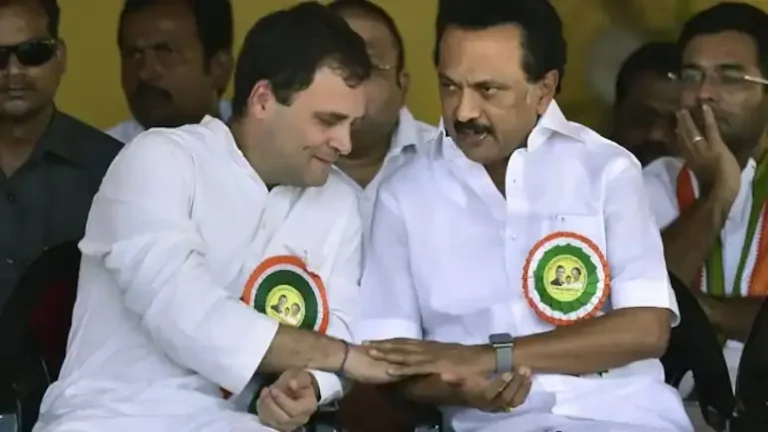
The Indian National Congress has found itself in the midst of a heated controversy after one of its leaders, Praveen Chakravarty, made a statement comparing the debt levels of Tamil Nadu and the BJP-ruled state of Uttar Pradesh. The statement, which highlighted the significant debt burden of Tamil Nadu, was met with widespread criticism from various quarters, including the I.N.D.I.A bloc parties, which have demanded that the Congress take action against Chakravarty. However, the Congress has pushed back against these demands, with party MP Manickam Tagore questioning the authority of its allies to dictate how the party handles its internal matters.
The row began when Chakravarty, a Congress leader, tweeted that Tamil Nadu has the highest outstanding debt among all states. The statement was seen as a criticism of the state’s financial management and sparked a fierce backlash from various sections of the political spectrum. The I.N.D.I.A bloc parties, which include the Dravida Munnetra Kazhagam (DMK) and other regional parties, were particularly vociferous in their criticism of Chakravarty’s statement, with many of them demanding that the Congress take disciplinary action against him.
However, the Congress has refused to back down, with party MP Manickam Tagore asserting that the party will not be dictated to by its allies on how to handle its internal matters. “When did alliance partners start dictating to Congress how it should handle its internal matters?” Tagore asked, emphasizing the party’s autonomy and independence. This statement reflects the Congress’s long-standing commitment to maintaining its internal discipline and decision-making processes, even in the face of external pressure or criticism.
The controversy surrounding Chakravarty’s statement has also sparked a wider debate about the state of Tamil Nadu’s finances and the management of its debt burden. While some have argued that the state’s high debt levels are a result of years of mismanagement and poor financial planning, others have pointed out that the state has made significant progress in recent years in terms of economic development and infrastructure growth. The debate highlights the complexities and challenges of managing a state’s finances, particularly in a federal system where states have significant autonomy to manage their own affairs.
The row has also raised questions about the role of alliance partners in Indian politics and the extent to which they can influence the decision-making processes of their partner parties. The I.N.D.I.A bloc parties, which were formed as a coalition of opposition parties to counter the dominance of the Bharatiya Janata Party (BJP), have been seeking to assert their influence and authority within the coalition. However, the Congress’s refusal to back down in the face of their demands suggests that the party is unlikely to be swayed by external pressure, at least in the short term.
In the context of Indian politics, the controversy surrounding Chakravarty’s statement highlights the challenges of managing coalition politics and the delicate balance of power within alliances. The Congress, as one of the oldest and largest parties in the country, has a long history of navigating complex coalition dynamics and managing the expectations of its allies. However, the party’s refusal to bow to pressure from its allies in this instance suggests that it is seeking to assert its independence and autonomy, at least in matters related to its internal decision-making processes.
The debate also raises questions about the role of social media in Indian politics and the impact of statements made by political leaders on public discourse. Chakravarty’s tweet, which sparked the controversy, highlights the power of social media to shape public opinion and influence political narratives. However, it also underscores the need for political leaders to be mindful of the potential consequences of their statements and to exercise caution and restraint in their public utterances.
In conclusion, the controversy surrounding Chakravarty’s statement on Tamil Nadu’s debt levels has sparked a wider debate about the role of alliance partners in Indian politics, the management of state finances, and the impact of social media on public discourse. The Congress’s refusal to back down in the face of criticism from its allies reflects the party’s commitment to maintaining its autonomy and independence, even in the face of external pressure. As the debate continues to unfold, it will be interesting to see how the party navigates the complex coalition dynamics and manages the expectations of its allies, while also seeking to assert its influence and authority within the political landscape.
News Source: https://www.ndtv.com/india-news/when-did-allies-congress-leader-snaps-over-tamil-nadu-debt-post-row-10139488/amp/1
About the Author