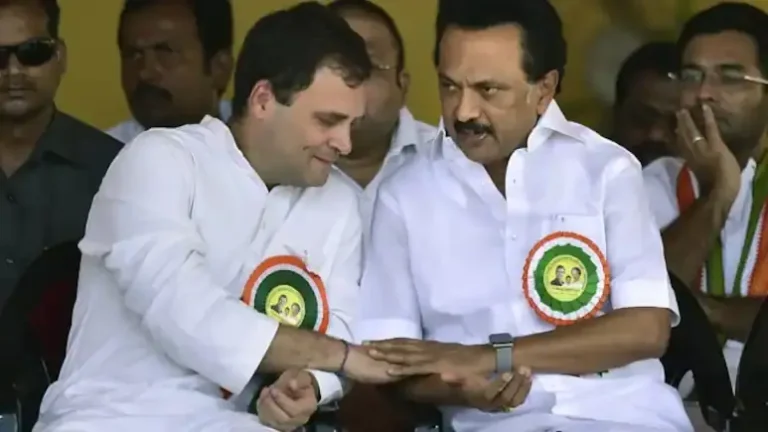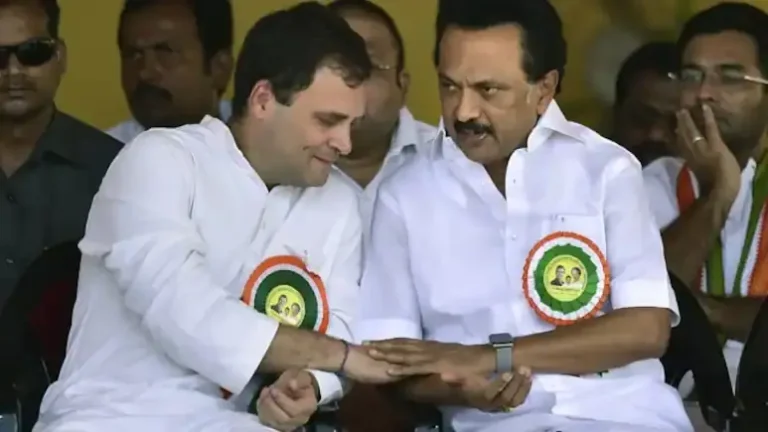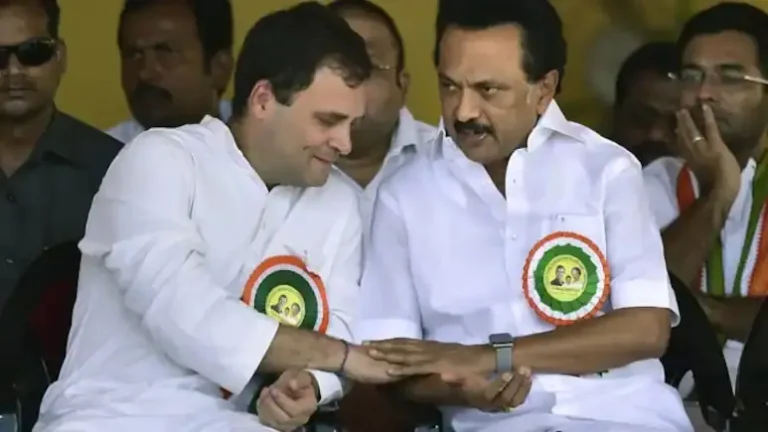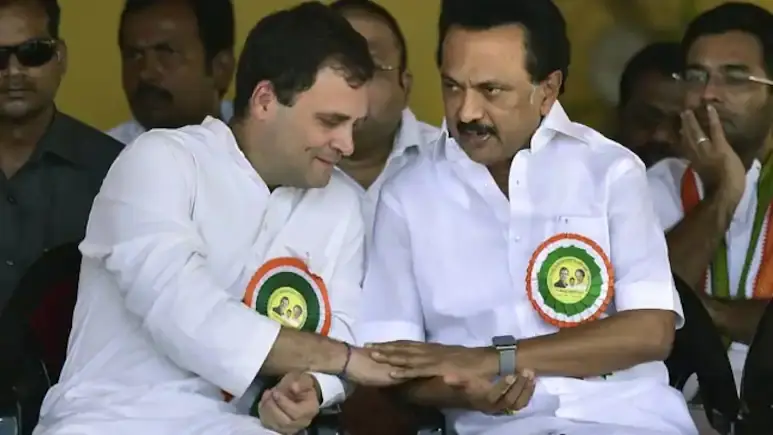
When did allies start dictating us: Congress MP over ‘TN debt’ post row
The Indian National Developmental Inclusive Alliance (I.N.D.I.A) bloc, a coalition of opposition parties, has been at the forefront of Indian politics, with its member parties often taking a united stance on various issues. However, a recent row has erupted within the bloc, with Congress leader Praveen Chakravarty at the center of the controversy. The issue began when Chakravarty, in a social media post, compared the debt levels of Tamil Nadu and the BJP-ruled state of Uttar Pradesh, stating that Tamil Nadu has the highest outstanding debt among all states.
The post sparked a strong reaction from other parties within the I.N.D.I.A bloc, with some demanding that the Congress take action against Chakravarty for his comments. However, Congress MP Manickam Tagore has come to the defense of his party colleague, questioning the right of alliance partners to dictate how the Congress should handle its internal matters. “When did alliance partners start dictating to Congress how it should handle its internal matters?” Tagore asked, highlighting the growing tension within the bloc.
The row has brought to the forefront the complexities of coalition politics in India, where parties with different ideologies and interests are forced to work together to achieve common goals. While the I.N.D.I.A bloc has been successful in presenting a united front against the ruling BJP, the recent controversy highlights the challenges of managing diverse perspectives and opinions within the coalition.
Chakravarty’s comments on Tamil Nadu’s debt levels were seen as a criticism of the state’s financial management, which is currently ruled by the DMK, a key member of the I.N.D.I.A bloc. The DMK and other parties within the bloc took exception to Chakravarty’s remarks, viewing them as an attack on the state’s government. The demand for action against Chakravarty reflects the sensitivity of the issue and the potential for it to damage relationships within the coalition.
However, the Congress has maintained that Chakravarty’s comments were not intended to criticize the DMK or the state government, but rather to highlight the broader issue of debt management in Indian states. The party has argued that the comparison between Tamil Nadu and Uttar Pradesh was meant to illustrate the varying levels of debt across different states, rather than to single out Tamil Nadu for criticism.
The controversy has sparked a wider debate about the role of alliance partners in coalition politics. While the I.N.D.I.A bloc has been successful in presenting a united front against the BJP, the recent row highlights the challenges of managing diverse perspectives and opinions within the coalition. The question of whether alliance partners should have a say in how individual parties handle their internal matters is a complex one, with no easy answers.
On one hand, the I.N.D.I.A bloc is a coalition of parties with shared goals and interests, and it is reasonable to expect that member parties will work together to achieve these objectives. In this context, it is understandable that alliance partners may feel that they have a stake in how individual parties handle their internal matters, particularly if these matters have the potential to impact the broader coalition.
On the other hand, individual parties within the coalition have their own distinct identities, ideologies, and interests. The Congress, as one of the oldest and largest parties in India, has a long history of internal decision-making and a well-established leadership structure. It is reasonable to expect that the party will handle its internal matters without external interference, particularly from alliance partners.
The row over Chakravarty’s comments on Tamil Nadu’s debt levels has brought these tensions to the forefront, highlighting the challenges of managing coalition politics in India. As the I.N.D.I.A bloc continues to navigate these complexities, it is clear that the relationship between alliance partners will be crucial in determining the success of the coalition.
In the end, the controversy surrounding Chakravarty’s comments serves as a reminder of the complexities of Indian politics, where different parties and interests must navigate a delicate balance of power and influence. As the country continues to evolve and grow, it is likely that such controversies will arise, testing the mettle of coalition politics and the relationships between different parties.
For now, the Congress has made it clear that it will not be dictated to by its alliance partners, and that it will handle its internal matters without external interference. Whether this stance will have a positive or negative impact on the I.N.D.I.A bloc remains to be seen, but one thing is certain – the controversy has brought the complexities of coalition politics to the forefront, and will likely have a lasting impact on the relationships between different parties in India.
News Source: https://www.ndtv.com/india-news/when-did-allies-congress-leader-snaps-over-tamil-nadu-debt-post-row-10139488/amp/1
About the Author