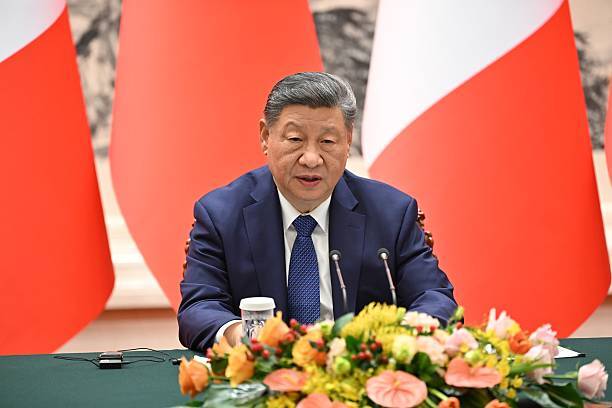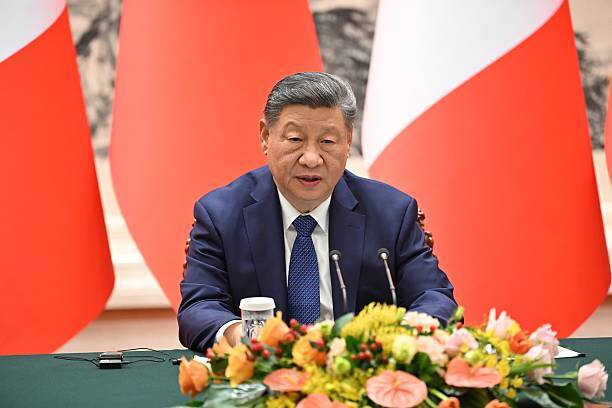
President Xi highlights AI and chip progress in New Year speech
As the world welcomed a new year, Chinese President Xi Jinping used his annual New Year speech to emphasize the country’s significant advances in artificial intelligence (AI), semiconductors, robotics, and defense. Despite facing global tech curbs, Xi expressed confidence in China’s strengthening position, highlighting the importance of manufacturing recovery and self-reliance. With China nearing the end of its 14th Five-Year Plan and preparing for the next cycle beginning in 2026, Xi’s speech underscored the country’s commitment to emerging technologies and its determination to overcome external challenges.
In his speech, Xi stressed the need for China to accelerate its development in key areas, including AI, semiconductors, and robotics. He emphasized the importance of these technologies in driving economic growth, improving living standards, and enhancing national security. Xi also highlighted the progress China has made in these fields, citing notable achievements in AI research, semiconductor manufacturing, and robotics innovation.
One of the key areas Xi focused on was AI, which has become a strategic priority for China. The country has made significant investments in AI research and development, with a focus on applications such as natural language processing, computer vision, and machine learning. Xi emphasized the potential of AI to transform industries, from healthcare and finance to transportation and education. He also highlighted the importance of AI in driving innovation and entrepreneurship, citing the growth of AI-powered startups and the increasing adoption of AI technologies by Chinese companies.
Another area Xi highlighted was semiconductors, which are critical components in a wide range of technologies, from smartphones and computers to autonomous vehicles and medical devices. China has been working to develop its domestic semiconductor industry, with a focus on reducing dependence on foreign suppliers and improving the country’s ability to design and manufacture advanced chips. Xi emphasized the progress China has made in this area, citing the development of advanced semiconductor materials and the establishment of new manufacturing facilities.
In addition to AI and semiconductors, Xi also highlighted China’s progress in robotics, which has become a key area of focus for the country’s manufacturing sector. Chinese companies have made significant investments in robotics research and development, with a focus on applications such as industrial automation, service robotics, and humanoid robots. Xi emphasized the potential of robotics to improve manufacturing efficiency, reduce labor costs, and enhance product quality.
Xi’s speech also touched on the importance of defense and national security, emphasizing the need for China to develop its military capabilities and protect its interests in an increasingly complex and uncertain world. He highlighted the progress China has made in areas such as missile defense, cybersecurity, and space exploration, citing the development of advanced military technologies and the establishment of new defense systems.
Despite the many challenges China faces, including global tech curbs and increasing competition from other countries, Xi expressed confidence in the country’s ability to overcome these obstacles and achieve its goals. He emphasized the importance of self-reliance and innovation, citing the need for Chinese companies to develop their own technologies and reduce their dependence on foreign suppliers.
As China prepares to embark on its next Five-Year Plan, Xi’s speech provided a clear vision for the country’s future development. With a focus on emerging technologies, manufacturing recovery, and self-reliance, China is well-positioned to continue its rapid growth and become a global leader in areas such as AI, semiconductors, and robotics.
The implications of Xi’s speech are significant, both for China and the global economy. As China continues to invest in emerging technologies and develop its domestic industries, it is likely to become an increasingly important player in the global tech landscape. This could have significant implications for companies and countries around the world, from the potential for increased competition and innovation to the risks of technological dependence and cybersecurity threats.
In conclusion, President Xi’s New Year speech highlighted China’s significant advances in AI, semiconductors, robotics, and defense, despite facing global tech curbs. As China prepares for its next Five-Year Plan, the country is well-positioned to continue its rapid growth and become a global leader in emerging technologies. With a focus on self-reliance, innovation, and manufacturing recovery, China is likely to remain a major player in the global economy for years to come.
About the Author