Magnitude 6 earthquake hits Japan on New Year’s Eve
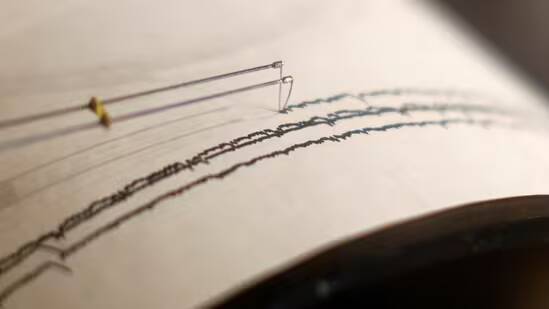
As the world was gearing up to bid farewell to the old year and welcome the new one, Japan was hit by a significant earthquake on New Year’s Eve. According to the United States Geological Survey (USGS), an earthquake with a magnitude of 6 struck the eastern Noda region of Japan. The quake, which occurred at a depth of 19.3 km (11.99 miles), had its epicenter at the exact coordinates of 40.112°N, 142.889°E.
The earthquake, which was reported to have hit the region at a time when people were preparing to celebrate the start of a new year, fortunately did not result in any immediate reports of casualties or injuries. This is a significant relief, given the potential for damage and loss of life that can be caused by earthquakes of this magnitude.
The USGS, which is responsible for monitoring and reporting on seismic activity around the world, provided the details of the earthquake, including its magnitude, depth, and epicenter. The agency’s report is based on data collected from a network of seismic stations located around the world, which provide critical information on the location, size, and characteristics of earthquakes.
The magnitude 6 earthquake that hit Japan on New Year’s Eve is considered to be a moderate to significant seismic event. Earthquakes of this magnitude can cause significant damage to buildings, infrastructure, and other structures, particularly if they are not designed or constructed to withstand seismic activity. However, the fact that no casualties or injuries were reported immediately suggests that the earthquake may not have caused widespread damage or disruption.
Japan is a country that is highly prone to seismic activity, due to its location on the Pacific Ring of Fire. The country is situated on the boundary between several tectonic plates, which are in constant motion, causing stress to build up in the Earth’s crust. This stress is released in the form of earthquakes, which can range from small, minor tremors to large, destructive events.
The eastern Noda region of Japan, where the earthquake occurred, is a rural area located on the coast of the Pacific Ocean. The region is known for its natural beauty, with rugged coastlines, scenic valleys, and picturesque villages. However, it is also an area that is vulnerable to seismic activity, due to its location on the Pacific Ring of Fire.
The earthquake that hit Japan on New Year’s Eve is a reminder of the importance of being prepared for seismic events. Japan is a country that is well-known for its advanced earthquake preparedness and response measures, with a strong emphasis on building codes, emergency planning, and public education. The country’s ability to respond quickly and effectively to earthquakes is critical in minimizing the risk of damage and loss of life.
In addition to its preparedness measures, Japan is also at the forefront of earthquake research and science. The country has a number of world-class research institutions and universities that are dedicated to the study of earthquakes and seismic activity. These institutions are working to improve our understanding of the underlying causes of earthquakes, as well as to develop new technologies and strategies for mitigating their impact.
As the world begins a new year, the earthquake that hit Japan on New Year’s Eve is a reminder of the importance of being prepared for natural disasters. Whether it is an earthquake, a hurricane, or a flood, these events can have a significant impact on communities and individuals, causing damage, disruption, and loss of life. By being prepared, and by working together to build more resilient and sustainable communities, we can reduce the risk of these events and create a safer, more secure world for all.
In conclusion, the magnitude 6 earthquake that hit Japan on New Year’s Eve is a significant seismic event that highlights the importance of being prepared for natural disasters. While the earthquake did not result in any immediate reports of casualties or injuries, it is a reminder of the potential for damage and loss of life that can be caused by earthquakes. By learning from this event, and by working together to build more resilient and sustainable communities, we can reduce the risk of these events and create a safer, more secure world for all.
About the Author