When did allies start dictating us: Congress MP over ‘TN debt’ post row
The Indian National Developmental Inclusive Alliance (I.N.D.I.A) bloc, a coalition of opposition parties, has been at the forefront of demanding action against Congress leader Praveen Chakravarty. The row erupted after Chakravarty made a comment on social media comparing the debt levels of Tamil Nadu and Uttar Pradesh, which is ruled by the Bharatiya Janata Party (BJP). Chakravarty stated that Tamil Nadu has the highest outstanding debt among all states, a claim that has sparked a heated debate.
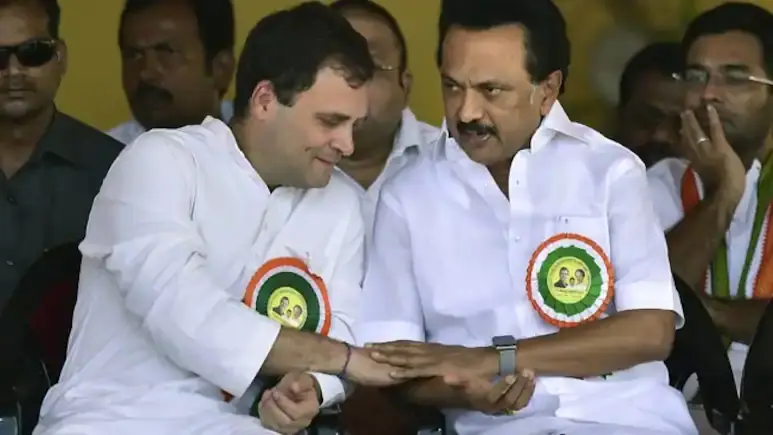
Reacting to the I.N.D.I.A bloc’s demand, Congress MP Manickam Tagore asked, “When did alliance partners start dictating to Congress how it should handle its internal matters?” This response highlights the tension between the Congress party and its allies, with the party pushing back against what it sees as interference in its internal affairs.
The controversy began when Chakravarty posted on social media, saying, “Tamil Nadu has the highest outstanding debt among all states.” This statement was met with criticism from various quarters, with some accusing Chakravarty of spreading misinformation and others demanding that he be held accountable for his comments. The I.N.D.I.A bloc, which includes parties such as the Dravida Munnetra Kazhagam (DMK) and the All India Trinamool Congress (TMC), has been vocal in its criticism of Chakravarty, with some leaders calling for disciplinary action against him.
However, the Congress party has come out in defense of Chakravarty, with Tagore arguing that the party will not be dictated to by its allies. The Congress MP’s response suggests that the party is pushing back against what it sees as an attempt to undermine its autonomy and decision-making processes. By asking when alliance partners started dictating to Congress, Tagore is highlighting the party’s commitment to maintaining its independence and making its own decisions, even in the face of criticism from its allies.
The row over Chakravarty’s comments has sparked a wider debate about the role of allies in Indian politics. The I.N.D.I.A bloc’s demand for action against Chakravarty raises questions about the limits of alliance partners’ influence over each other’s internal affairs. While allies are expected to work together and support each other, the Congress party’s response suggests that there are limits to this cooperation.
In this context, it is worth examining the nature of alliances in Indian politics. Alliances are formed to provide a united front against a common opponent, often the ruling party. However, alliances can also be fragile and prone to tensions, particularly when parties have different ideologies and interests. The I.N.D.I.A bloc’s demand for action against Chakravarty highlights the challenges of managing alliances, where parties may have different views on key issues.
The Congress party’s response to the I.N.D.I.A bloc’s demand also raises questions about the party’s own internal dynamics. By defending Chakravarty and pushing back against the I.N.D.I.A bloc’s demand, the Congress party is asserting its autonomy and independence. This suggests that the party is committed to making its own decisions and setting its own agenda, even if this means going against the views of its allies.
In conclusion, the row over Chakravarty’s comments on Tamil Nadu’s debt levels has sparked a wider debate about the role of allies in Indian politics. The Congress party’s response to the I.N.D.I.A bloc’s demand highlights the tension between the need for cooperation and the need for autonomy and independence. As the Indian political landscape continues to evolve, it will be interesting to see how alliances are managed and how parties balance their own interests with the need to work together.
The controversy surrounding Chakravarty’s comments also raises questions about the use of social media in Indian politics. Social media has become an increasingly important tool for politicians to communicate with their constituents and shape public opinion. However, social media can also be a double-edged sword, with politicians facing criticism and backlash for their comments.
In the case of Chakravarty’s comments on Tamil Nadu’s debt levels, social media played a key role in amplifying the controversy. The comments were widely shared and debated on social media, with many users criticizing Chakravarty for spreading misinformation. The I.N.D.I.A bloc’s demand for action against Chakravarty was also driven in part by the backlash on social media.
As Indian politics continues to evolve, it is likely that social media will play an increasingly important role in shaping public opinion and influencing political discourse. However, politicians will need to be careful about how they use social media, as the platform can be unforgiving and prone to controversy.
Ultimately, the row over Chakravarty’s comments on Tamil Nadu’s debt levels highlights the complexities and challenges of Indian politics. The controversy raises questions about the role of allies, the use of social media, and the balance between cooperation and autonomy. As the Indian political landscape continues to evolve, it will be interesting to see how these challenges are addressed and how parties navigate the complex web of alliances and interests.
News Source: https://www.ndtv.com/india-news/when-did-allies-congress-leader-snaps-over-tamil-nadu-debt-post-row-10139488/amp/1
About the Author