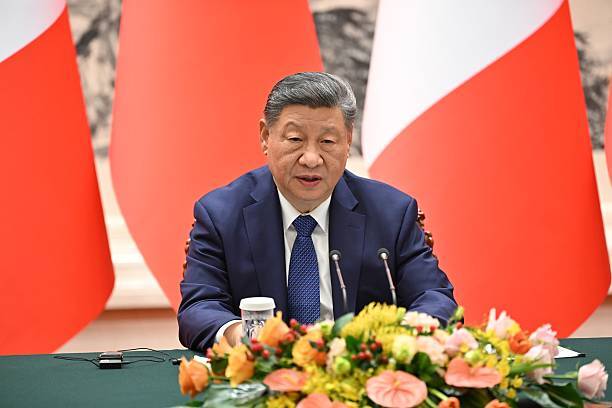
President Xi highlights AI and chip progress in New Year speech
As the world welcomed a new year, Chinese President Xi Jinping took the opportunity to reflect on the country’s progress and outline its future ambitions in his annual New Year speech. This year, Xi’s address was notable for its emphasis on China’s advancements in artificial intelligence (AI), semiconductors, robotics, and defense. Despite facing global tech curbs, Xi expressed confidence in China’s ability to strengthen its position as a technological powerhouse.
The speech, which was broadcast on state television, highlighted the significant strides China has made in recent years in developing cutting-edge technologies. Xi cited the country’s achievements in AI, semiconductors, and robotics, noting that these fields are crucial to China’s future economic growth and global competitiveness. He also emphasized the importance of self-reliance in manufacturing, particularly as the country approaches the end of its 14th Five-Year Plan and prepares for the next cycle beginning in 2026.
China’s 14th Five-Year Plan, which runs from 2021 to 2025, has been focused on transforming the country’s economy through innovation and technological advancement. The plan has set ambitious targets for the development of key technologies, including AI, semiconductors, and renewable energy. As the plan nears its conclusion, Xi’s speech suggested that the country is on track to meet its goals, despite facing challenges from global tech curbs and supply chain disruptions.
One of the key areas of focus in Xi’s speech was China’s progress in AI. The country has been investing heavily in AI research and development, with a focus on applications such as natural language processing, computer vision, and machine learning. Xi noted that China has made significant breakthroughs in these areas, with many Chinese companies now leading the world in AI innovation.
Another area of emphasis in Xi’s speech was China’s semiconductor industry. The country has been working to develop its domestic semiconductor capabilities, with a focus on reducing dependence on foreign suppliers. Xi noted that China has made significant progress in this area, with many Chinese companies now producing high-quality semiconductors for use in a range of applications, from smartphones to automobiles.
In addition to AI and semiconductors, Xi’s speech also highlighted China’s advancements in robotics and defense. The country has been investing heavily in the development of advanced robotics and unmanned systems, with a focus on applications such as manufacturing, logistics, and military operations. Xi noted that China has made significant progress in these areas, with many Chinese companies now leading the world in robotics and defense innovation.
Despite the many challenges facing China’s tech sector, including global curbs and supply chain disruptions, Xi’s speech was optimistic about the country’s future prospects. He emphasized the importance of self-reliance in manufacturing, noting that China must continue to develop its domestic capabilities in order to reduce dependence on foreign suppliers.
Xi’s speech also highlighted the growing demand for Chinese tech products, both at home and abroad. Despite facing challenges from global tech curbs, Chinese companies such as Huawei, Alibaba, and Tencent have continued to innovate and expand their global reach. Xi noted that China’s tech sector is now a major driver of economic growth, with many Chinese companies leading the world in innovation and competitiveness.
As China approaches the end of its 14th Five-Year Plan and prepares for the next cycle beginning in 2026, Xi’s speech suggested that the country is well-positioned for continued growth and development. The next Five-Year Plan is expected to focus on further developing China’s technological capabilities, with a focus on applications such as AI, semiconductors, and renewable energy.
In conclusion, President Xi’s New Year speech highlighted China’s significant progress in AI, semiconductors, robotics, and defense, despite facing global tech curbs. The speech emphasized the importance of self-reliance in manufacturing and noted the growing demand for Chinese tech products, both at home and abroad. As China looks to the future, it is clear that the country will continue to play a major role in shaping the global tech landscape.
About the Author