BJP twisting my comments: K’taka Dy CM on ‘We don’t want Keralites’ remark
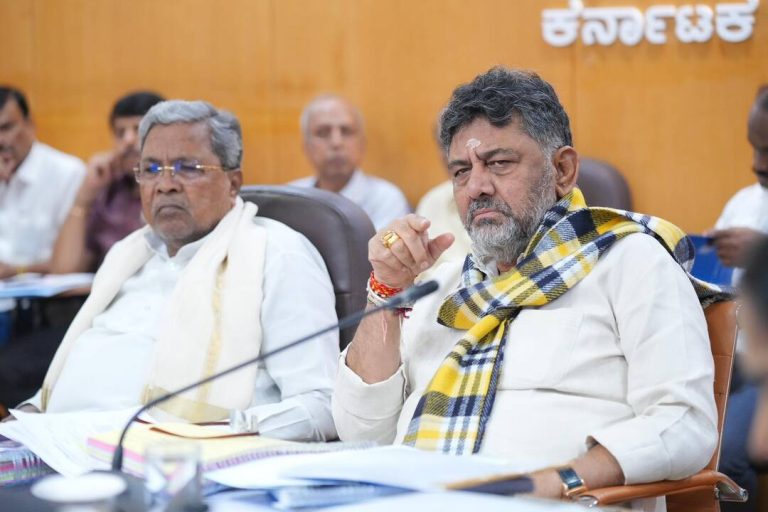
The recent statement by Karnataka Deputy Chief Minister DK Shivakumar has sparked a controversy, with many interpreting his words as a call to exclude Keralites from the state. However, Shivakumar has come forward to clarify his remarks, stating that they were taken out of context and twisted by the BJP to suit their own agenda. In a recent statement, Shivakumar explained that his comments were aimed at the Kerala government’s interference in the Kogilu demolition drive, and not at the people of Kerala.
The controversy began when Shivakumar made a statement that was perceived as anti-Keralite, saying “we don’t want Keralites” in the context of the Kogilu demolition drive. The statement was quickly picked up by the media and opposition parties, who criticized Shivakumar for his alleged anti-Keralite stance. However, Shivakumar has now clarified that his words were aimed at the Kerala government’s attempts to interfere in the affairs of Karnataka, and not at the people of Kerala.
Shivakumar accused Kerala BJP chief Rajeev Chandrasekhar of twisting his words and using them to create a controversy. He stated that the BJP was trying to create a rift between the people of Karnataka and Kerala, and that his comments were not intended to be taken in the way they were. Shivakumar emphasized that he has always had cordial ties with the people of Kerala and respects them greatly.
In fact, Shivakumar went on to say that he will be campaigning in the upcoming Kerala polls, further emphasizing his good relations with the people of the state. This move is seen as an attempt to mend fences and reassure the people of Kerala that his comments were not intended to be derogatory. By campaigning in Kerala, Shivakumar hopes to show that he values the support and friendship of the people of Kerala, and that his comments were not meant to be taken as an insult.
The Kogilu demolition drive has been a contentious issue, with the Karnataka government facing criticism for its handling of the situation. The drive, which aimed to demolish illegal structures in the area, has been seen as an attempt to target certain communities and create divisions between people. Shivakumar’s comments, although aimed at the Kerala government’s interference, were seen as adding fuel to the fire and exacerbating the situation.
The BJP, however, has been quick to capitalize on Shivakumar’s comments, using them to launch a attack on the Karnataka government. The party has accused Shivakumar of being anti-Keralite and of trying to create divisions between people. However, Shivakumar’s clarification has thrown a spanner in the works, and the BJP’s attempts to use the issue to its advantage may ultimately backfire.
The controversy surrounding Shivakumar’s comments is a reminder of the sensitive nature of inter-state relations in India. The country is a diverse and complex entity, with different states and regions having their own unique cultures, languages, and traditions. Any comments or actions that are perceived as being derogatory or discriminatory towards a particular group or community can quickly escalate into a major controversy.
In this context, Shivakumar’s clarification is a welcome move, as it helps to clear the air and reassure the people of Kerala that his comments were not intended to be taken as an insult. The move also highlights the importance of responsible and nuanced communication in politics, where words and actions can have far-reaching consequences.
As the controversy surrounding Shivakumar’s comments dies down, it is clear that the issue has been blown out of proportion. The BJP’s attempts to twist Shivakumar’s words and use them to create a controversy have ultimately failed, and the Karnataka Deputy Chief Minister has emerged with his reputation intact. The incident serves as a reminder of the importance of verifying facts and context before jumping to conclusions, and of the need for responsible and nuanced communication in politics.
In conclusion, the controversy surrounding Shivakumar’s comments has been a storm in a teacup, with the Karnataka Deputy Chief Minister’s clarification helping to clear the air and reassure the people of Kerala. The incident highlights the importance of responsible communication in politics and the need to verify facts and context before jumping to conclusions. As the dust settles, it is clear that Shivakumar’s comments were not intended to be derogatory, and that the BJP’s attempts to use the issue to its advantage have ultimately failed.
About the Author