How Moon altered the orbit of Chandrayaan-3’s propulsion module?
The Indian Space Research Organisation (ISRO) has achieved a significant milestone in the Chandrayaan-3 mission, as the spacecraft’s propulsion module had its Earth orbit significantly altered in November 2025 after passing close to the Moon. This remarkable feat was accomplished without using any fuel, thanks to the gravitational influence of the Moon. In this blog post, we will delve into the details of this incredible achievement and explore how the Moon’s gravity altered the orbit of Chandrayaan-3’s propulsion module.
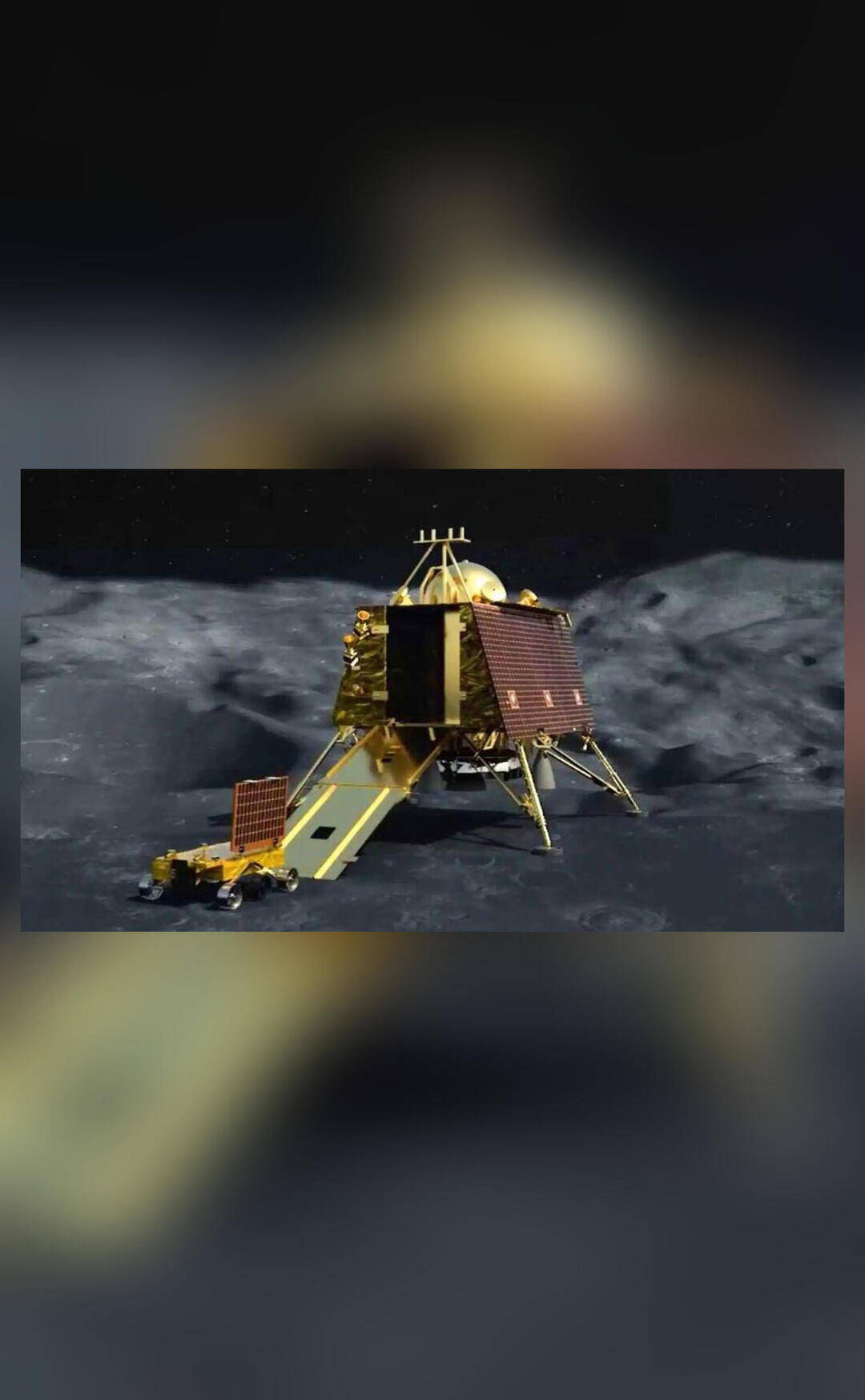
The Chandrayaan-3 mission, launched by ISRO in July 2023, consists of a propulsion module, a lander, and a rover. The propulsion module is responsible for providing the necessary thrust to the spacecraft, while the lander and rover are designed to touch down on the lunar surface. The mission aims to demonstrate India’s capability to soft-land on the Moon and conduct scientific experiments.
On November 6, 2025, the Chandrayaan-3 propulsion module flew by the Moon at an altitude of 3,740 km. During this close approach, the lunar gravity exerted a significant force on the spacecraft, causing its orbit to change. The propulsion module’s velocity and trajectory were altered, resulting in a change in its orbit size and direction. This was followed by another flyby on November 11, 2025, at an altitude of 4,537 km, which further modified the spacecraft’s orbit.
The lunar gravity-assisted maneuver, also known as a gravity slingshot, is a technique used by spacecraft to change their trajectory and gain speed. By flying close to a celestial body, such as the Moon, a spacecraft can harness the object’s gravity to alter its orbit. This technique has been used by numerous spacecraft, including NASA’s Apollo missions, to save fuel and gain momentum.
The successful execution of the lunar gravity-assisted maneuver by the Chandrayaan-3 propulsion module demonstrates ISRO’s expertise in spacecraft navigation and orbital mechanics. The mission team had carefully planned and executed the flybys, taking into account the Moon’s gravity and the spacecraft’s velocity and trajectory. The precise calculations and maneuvering required to achieve this feat are a testament to the team’s skill and dedication.
The alteration of the propulsion module’s orbit has significant implications for the Chandrayaan-3 mission. The changed orbit size and direction will affect the spacecraft’s trajectory and velocity, which in turn will impact the mission’s overall timeline and objectives. However, ISRO has confirmed that the mission is progressing as planned, and the propulsion module is on track to achieve its intended objectives.
The Chandrayaan-3 mission has already achieved several milestones, including the successful launch and deployment of the spacecraft. The mission has also demonstrated India’s capability to design and build complex spacecraft systems, including the propulsion module, lander, and rover. The success of the lunar gravity-assisted maneuver is a significant addition to the mission’s list of achievements.
In conclusion, the alteration of the Chandrayaan-3 propulsion module’s orbit by the Moon’s gravity is a remarkable achievement that demonstrates ISRO’s expertise in spacecraft navigation and orbital mechanics. The successful execution of the lunar gravity-assisted maneuver is a testament to the mission team’s skill and dedication, and it has significant implications for the overall success of the Chandrayaan-3 mission. As the mission continues to progress, we can expect to see more exciting developments and achievements from ISRO.
About the Author