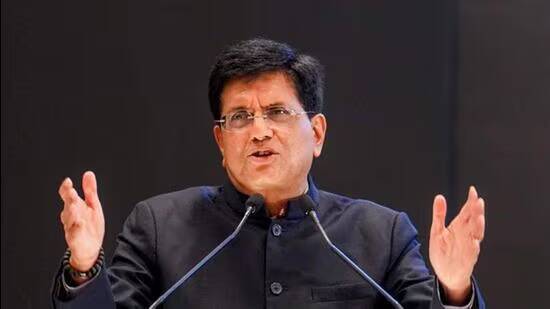
Australia to end tariffs on all Indian exports from January: Goyal
In a significant development that is expected to boost trade relations between India and Australia, Commerce Minister Piyush Goyal announced that Australia will eliminate tariffs on all Indian exports starting January 1, 2026. This move is part of the India-Australia Economic Cooperation and Trade Agreement (ECTA), which was signed three years ago. According to Goyal, 100% of Australian tariff lines will be zero-duty for Indian exports, marking a major milestone in the agreement.
Goyal made this announcement on the third anniversary of the ECTA, stating that the agreement has delivered sustained export growth, deeper market access, and stronger supply-chain resilience. The elimination of tariffs on all Indian exports is a significant step forward in the trade relationship between the two countries, and it is expected to have a positive impact on India’s export sector.
The ECTA was signed on April 2, 2022, with the aim of promoting trade and investment between India and Australia. The agreement covers a wide range of areas, including goods, services, investment, and trade facilitation. One of the key objectives of the agreement was to reduce tariffs and other trade barriers, with the goal of increasing trade between the two countries.
Under the ECTA, Australia has agreed to eliminate tariffs on 85% of Indian goods, including textiles, leather, furniture, and jewelry, among others. In return, India has agreed to reduce tariffs on 90% of Australian goods, including coal, copper, and alumina. The agreement also provides for the elimination of tariffs on all Indian exports to Australia over a period of time.
The elimination of tariffs on all Indian exports to Australia is a major achievement for India, as it will provide Indian exporters with duty-free access to the Australian market. This is expected to increase India’s exports to Australia, particularly in sectors such as textiles, leather, and jewelry, where Indian exporters have a competitive advantage.
Goyal’s announcement has been welcomed by Indian exporters, who see this as a major opportunity to increase their exports to Australia. The elimination of tariffs will not only reduce the cost of exports but also make Indian goods more competitive in the Australian market.
The India-Australia trade relationship has been growing rapidly in recent years, with bilateral trade reaching $27.5 billion in 2022-23. The ECTA is expected to further boost trade between the two countries, with estimates suggesting that bilateral trade could reach $50 billion by 2025.
The agreement has also been praised for its potential to promote investment between the two countries. Australia has already invested heavily in India, particularly in the education and healthcare sectors. Indian companies, on the other hand, have been looking to invest in Australia, particularly in the mining and energy sectors.
In addition to the elimination of tariffs, the ECTA also provides for the promotion of trade facilitation and cooperation between the two countries. This includes the establishment of a joint committee to oversee the implementation of the agreement and to resolve any disputes that may arise.
The agreement has also been praised for its potential to promote economic growth and development in both countries. By reducing trade barriers and increasing trade, the ECTA is expected to create new jobs and opportunities for businesses in both India and Australia.
In conclusion, the announcement by Commerce Minister Piyush Goyal that Australia will eliminate tariffs on all Indian exports starting January 1, 2026, is a significant development that is expected to boost trade relations between India and Australia. The ECTA has already delivered sustained export growth, deeper market access, and stronger supply-chain resilience, and the elimination of tariffs is expected to take the trade relationship to the next level.
As India and Australia continue to work together to promote trade and investment, it is clear that the future of the trade relationship between the two countries is bright. With the elimination of tariffs on all Indian exports, Indian exporters will have duty-free access to the Australian market, which is expected to increase India’s exports to Australia.
Overall, the ECTA is a significant agreement that has the potential to promote economic growth and development in both India and Australia. As the trade relationship between the two countries continues to grow, it is expected that the agreement will have a positive impact on businesses and communities in both countries.
About the Author