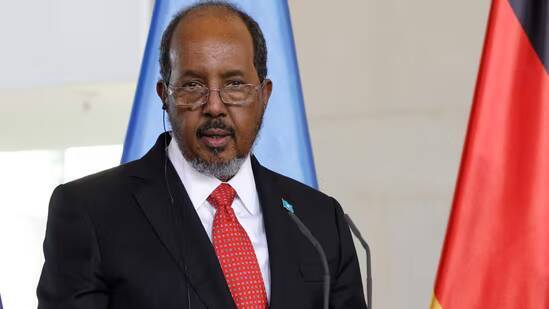
Threat to regional stability: Somalia Prez on Israel recognising Somaliland
The recent recognition of Somaliland by Israel has sent shockwaves across the region, with Somalia President Hassan Sheikh Mohamud condemning the move as a “threat to security and stability of the world and the region.” In an emergency parliamentary session, Mohamud expressed his strong opposition to Israel’s decision, stating that it is “tantamount to blunt aggression against the sovereignty, independence, territorial integrity, and the unity of the people of Somali Republic.” This development has significant implications for regional stability and raises important questions about the future of Somaliland and its relations with neighboring countries.
Somaliland, a self-declared state in East Africa, has been seeking international recognition for decades. Despite its declaration of independence in 1991, the international community has not recognized Somaliland as a sovereign state. However, Israel’s decision to recognize Somaliland has broken this diplomatic embargo, and it remains to be seen how other countries will respond to this move. As the first country to recognize Somaliland, Israel’s decision is likely to have far-reaching consequences for the region.
President Mohamud’s strong reaction to Israel’s recognition of Somaliland is understandable, given the historical and cultural ties between Somalia and Somaliland. The two territories were united under a single government in 1960, but Somaliland declared independence in 1991, following a brutal civil war. Since then, Somalia has considered Somaliland to be a part of its territory, and the two sides have had a complex and often tense relationship. Mohamud’s statement reflects the deep-seated concerns that Somalia has about Somaliland’s independence and the potential implications for regional stability.
The recognition of Somaliland by Israel has also raised questions about the motivations behind this decision. Israel has traditionally been a strong supporter of African countries, and its decision to recognize Somaliland may be seen as an attempt to expand its influence in the region. However, this move is likely to be viewed with skepticism by many African countries, which may see it as an attempt to undermine the territorial integrity of Somalia. The African Union has long maintained that Somaliland is part of Somalia, and Israel’s recognition of Somaliland may be seen as a challenge to this position.
The implications of Israel’s recognition of Somaliland are far-reaching and complex. On the one hand, it may be seen as a positive development for Somaliland, which has long sought international recognition. However, it is also likely to exacerbate tensions between Somalia and Somaliland, and may even lead to increased conflict in the region. The recognition of Somaliland by Israel may also embolden other separatist movements in the region, which could have significant implications for regional stability.
In addition to the regional implications, Israel’s recognition of Somaliland also raises important questions about the role of international law in recognizing sovereign states. The international community has traditionally been cautious in recognizing new states, and the recognition of Somaliland by Israel may be seen as a challenge to this approach. The United Nations has long maintained that the recognition of new states should be based on the principles of international law, including the principle of territorial integrity. Israel’s recognition of Somaliland may be seen as a departure from this approach, and may have significant implications for the future of international relations.
In conclusion, the recognition of Somaliland by Israel is a significant development that has important implications for regional stability. President Mohamud’s strong reaction to this move reflects the deep-seated concerns that Somalia has about Somaliland’s independence and the potential implications for regional stability. As the international community grapples with the implications of this decision, it is essential to consider the complex historical, cultural, and political factors that are at play. The recognition of Somaliland by Israel is a threat to regional stability, and it remains to be seen how the international community will respond to this move.
The situation in Somaliland is complex and multifaceted, and there are no easy solutions to the challenges that the region faces. However, it is essential to approach this issue with caution and sensitivity, recognizing the deep-seated concerns and interests of all parties involved. The international community must work together to promote peace, stability, and cooperation in the region, and to find a solution that respects the sovereignty and territorial integrity of all states involved.
As the situation in Somaliland continues to evolve, it is essential to stay informed about the latest developments. The recognition of Somaliland by Israel is a significant development that has important implications for regional stability, and it remains to be seen how the international community will respond to this move. For the latest news and updates on this issue, readers can follow reputable news sources, such as the Hindustan Times, which has provided extensive coverage of the recognition of Somaliland by Israel.
About the Author