Crocodile Tears: Shivraj on Congress’ ‘MGNREGA Bachao’ Protest
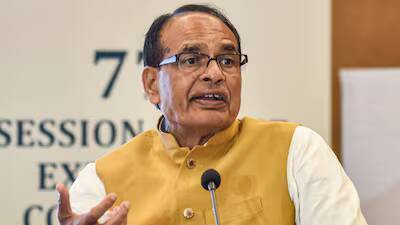
The Indian government’s recent decision to replace the Mahatma Gandhi National Rural Employment Guarantee Act (MGNREGA) with the Vishwakarma Bhavan- Rashtriya Gramin Aajeevika Mission (VB-G RAM G) Act has sparked a heated debate across the country. The opposition party, Congress, has been vocal about its disapproval of the move, announcing plans to launch a nationwide ‘MGNREGA Bachao’ protest from January 5. However, Union Minister Shivraj Singh Chouhan has come down heavily on the Congress, accusing the party of shedding “crocodile tears” over the issue.
According to Chouhan, the Congress’s opposition to the replacement of MGNREGA is purely political and lacks substance. He pointed out that the Congress had, on multiple occasions, reduced the budget for MGNREGA during its tenure, which raises questions about the party’s genuine commitment to the welfare of rural workers. The Minister’s remarks have sparked a fresh row between the ruling Bharatiya Janata Party (BJP) and the Congress, with both parties engaging in a war of words over the MGNREGA revamp.
The MGNREGA, which was introduced in 2006, guarantees 100 days of wage employment per year to rural laborers. The scheme has been instrumental in providing a safety net to millions of rural workers, especially during times of economic distress. However, the government has argued that the scheme has been plagued by corruption, inefficiency, and lack of transparency, which has led to its replacement with the VB-G RAM G Act.
The Congress, on the other hand, has argued that the replacement of MGNREGA is a deliberate attempt by the government to undermine the welfare of rural workers. The party has claimed that the new scheme will lead to a reduction in the number of days of employment guaranteed to rural laborers, which will have a devastating impact on their livelihoods. The Congress has also accused the government of trying to dismantle the MGNREGA scheme, which was introduced by the United Progressive Alliance (UPA) government, without providing any alternative arrangements for rural workers.
Chouhan’s comments have been seen as an attempt to counter the Congress’s criticism of the government’s decision to replace MGNREGA. The Minister has argued that the Congress’s clamor over the issue is purely political and is aimed at gaining mileage in the upcoming elections. He has also pointed out that the Congress had failed to effectively implement the MGNREGA scheme during its tenure, which has led to its replacement with a new scheme.
The ‘MGNREGA Bachao’ protest announced by the Congress is expected to be a major challenge for the government, which is already facing criticism over its handling of the economy. The protest is expected to be launched in several states across the country, with Congress workers and leaders planning to hold rallies, demonstrations, and public meetings to highlight the issue.
The replacement of MGNREGA with the VB-G RAM G Act has also sparked concerns among rural workers, who are worried about their livelihoods. The scheme has been a lifeline for millions of rural workers, who rely on it for their daily bread. The government’s decision to replace the scheme has raised fears that the new scheme may not provide the same level of employment opportunities, which could have a devastating impact on rural workers.
In conclusion, the controversy over the replacement of MGNREGA with the VB-G RAM G Act has sparked a heated debate across the country. While the government has argued that the new scheme will provide better employment opportunities to rural workers, the Congress has accused the government of trying to undermine the welfare of rural workers. Union Minister Shivraj Singh Chouhan’s comments have added fuel to the fire, with the Minister accusing the Congress of shedding “crocodile tears” over the issue. As the ‘MGNREGA Bachao’ protest gets underway, it remains to be seen how the government will respond to the Congress’s criticism and whether the new scheme will provide the same level of employment opportunities to rural workers.
About the Author