Crocodile tears: Shivraj on Congress’ ‘MGNREGA Bachao’ protest
The Indian political landscape is no stranger to protests and demonstrations, with various parties and organizations often taking to the streets to voice their discontent with government policies. Recently, the Congress party announced its plans to launch the ‘MGNREGA Bachao’ protest from January 5, in response to the replacement of the Mahatma Gandhi National Rural Employment Guarantee Act (MGNREGA) with the VB-G RAM G Act. However, Union Minister Shivraj Singh Chouhan has accused the Congress of shedding “crocodile tears” over the issue, stating that their clamour is purely political.
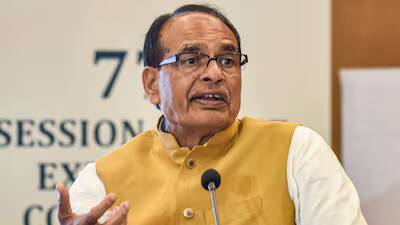
According to Chouhan, the Congress party’s criticism of the MGNREGA revamp is nothing more than a politically motivated attempt to garner attention and sympathy. He pointed out that the Congress party, during its time in power, had consistently reduced the budget for MGNREGA, which raises questions about their sincerity in protesting the current changes. “The Congress’s clamour is purely political…This is the same Congress that, from time to time, reduced the budget for MGNREGA,” he said.
The MGNREGA, which was enacted in 2005, aimed to provide a legal guarantee of employment to rural laborers, ensuring that they received a minimum of 100 days of wage employment in a year. The scheme was designed to alleviate poverty and promote rural development, and has been widely regarded as a crucial social safety net for millions of Indians. However, the recent replacement of MGNREGA with the VB-G RAM G Act has sparked concerns among many, with some arguing that the new legislation will undermine the guarantees provided by the original Act.
The Congress party’s decision to launch the ‘MGNREGA Bachao’ protest is an attempt to capitalize on these concerns and mobilize public support against the government’s move. However, Chouhan’s comments suggest that the party’s motives may not be entirely altruistic. By highlighting the Congress party’s own record on MGNREGA, Chouhan is attempting to expose what he sees as the party’s hypocrisy on the issue.
It is worth noting that the Congress party has a chequered history when it comes to MGNREGA. While the party was instrumental in introducing the legislation, it has also been criticized for its implementation and funding of the scheme. During the United Progressive Alliance (UPA) government’s tenure, the budget for MGNREGA was consistently reduced, which had a negative impact on the scheme’s effectiveness.
In contrast, the current government has argued that the VB-G RAM G Act will improve the implementation and efficiency of the scheme, while also providing more flexibility to states to design their own employment guarantee programs. However, these claims have been met with skepticism by many, who argue that the new legislation will lead to a reduction in the guarantees provided to rural laborers.
As the ‘MGNREGA Bachao’ protest gets underway, it will be interesting to see how the Congress party’s efforts are received by the public. While the party may be able to garner some support for its cause, Chouhan’s comments are likely to resonate with many who are skeptical of the party’s motives. Ultimately, the success of the protest will depend on the Congress party’s ability to convince the public that its concerns about MGNREGA are genuine, and that it is not simply engaging in political posturing.
In conclusion, the debate over MGNREGA and the VB-G RAM G Act is a complex and contentious issue, with both sides presenting valid arguments. While the Congress party’s ‘MGNREGA Bachao’ protest may be seen as a genuine attempt to protect the interests of rural laborers, Chouhan’s comments suggest that the party’s motives may not be entirely pure. As the protest unfolds, it will be important to separate the political rhetoric from the facts, and to consider the potential implications of the MGNREGA revamp on the lives of millions of Indians.
About the Author