No communal angle, he was ‘top criminal’: B’desh on lynching of Hindu man Amrit Mondal
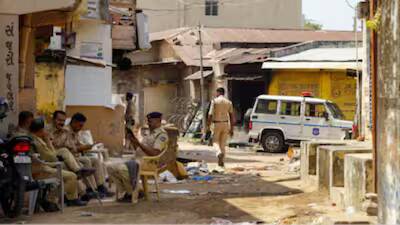
In a shocking turn of events, Bangladesh has come under fire for its handling of the recent lynching of a Hindu man, Amrit Mondal. The incident, which occurred just days after another Hindu man, Dipu Chandra Das, was killed in a similar manner, has sparked widespread outrage and concerns about the safety of minority communities in the country. However, in a statement that has raised eyebrows, the Bangladeshi government has claimed that the lynching of Amrit Mondal was not a communal incident, but rather a consequence of his alleged involvement in criminal activities.
According to reports, Amrit Mondal was beaten to death by a mob in the town of Narinda, in the Dhaka district of Bangladesh. The incident occurred on a day when the country was already reeling from the aftermath of the murder of radical leader Osman Hadi, which had sparked protests and violence across the country. The Bangladeshi government, in an attempt to downplay the communal angle of the incident, has stated that Amrit Mondal was a “top criminal” who was involved in extortion and terrorist activities.
The government’s claim has been met with skepticism by many, who point out that the incident is part of a larger pattern of violence and intimidation against minority communities in Bangladesh. The country has a long history of communal tensions, and the recent spate of attacks on Hindus has raised concerns about the government’s ability to protect its minority populations. The fact that two Hindu men have been lynched within a week of each other has sent shockwaves through the community, and many are demanding that the government take concrete steps to ensure their safety.
The incident has also sparked a debate about the role of radical groups in Bangladesh, and the government’s response to their activities. The murder of Osman Hadi, a radical leader who was known for his anti-government views, has been seen by many as a trigger for the recent violence. The government’s handling of the situation has been criticized, with many arguing that it has not done enough to prevent the spread of radical ideology and to protect minority communities.
The lynching of Amrit Mondal is a stark reminder of the dangers faced by minority communities in Bangladesh. The country has a long history of communal violence, and the recent spate of attacks on Hindus has raised concerns about the government’s ability to protect its citizens. The government’s claim that the incident was not communal in nature, but rather a consequence of Amrit Mondal’s alleged involvement in criminal activities, has been met with skepticism by many.
Many have pointed out that the government’s response to the incident is a classic example of victim-blaming, where the victim is blamed for the violence perpetrated against them. This approach not only trivializes the incident but also ignores the larger pattern of violence and intimidation that minority communities face in Bangladesh. The fact that the government has chosen to focus on Amrit Mondal’s alleged criminal activities, rather than acknowledging the communal nature of the incident, has been seen by many as a cop-out.
The incident has also sparked a debate about the role of the media in reporting on communal violence. Many have pointed out that the media has a tendency to downplay or ignore incidents of communal violence, particularly when they involve minority communities. The fact that the government has chosen to characterize the incident as a non-communal one has been seen by many as an attempt to influence the narrative and to avoid taking responsibility for the violence.
In conclusion, the lynching of Amrit Mondal is a stark reminder of the dangers faced by minority communities in Bangladesh. The government’s handling of the incident has been criticized, with many arguing that it has not done enough to prevent the spread of radical ideology and to protect minority communities. The fact that two Hindu men have been lynched within a week of each other has sent shockwaves through the community, and many are demanding that the government take concrete steps to ensure their safety.
The incident has also sparked a debate about the role of radical groups in Bangladesh, and the government’s response to their activities. The murder of Osman Hadi, a radical leader who was known for his anti-government views, has been seen by many as a trigger for the recent violence. The government’s handling of the situation has been criticized, with many arguing that it has not done enough to prevent the spread of radical ideology and to protect minority communities.
As the situation continues to unfold, it remains to be seen how the government will respond to the incident and to the concerns of minority communities. One thing is certain, however: the lynching of Amrit Mondal is a wake-up call for the government and for civil society, and it highlights the need for concrete action to protect minority communities and to prevent the spread of radical ideology.
About the Author