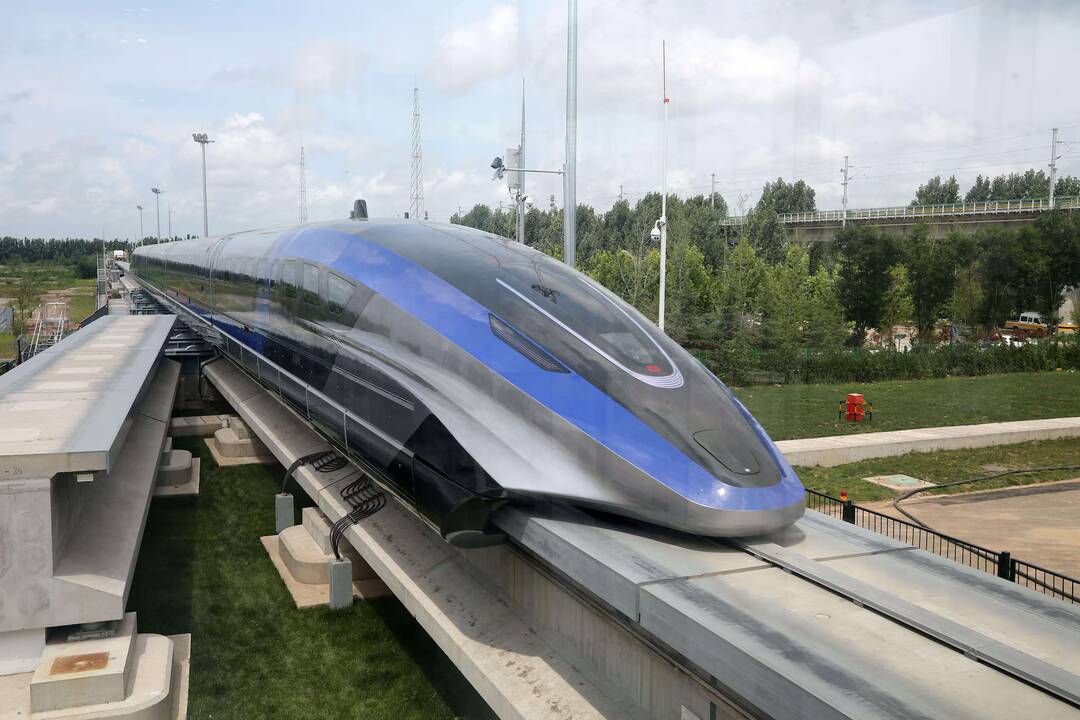
China accelerates vehicle to 700 km/h in 2 secs in magnetic levitation test
In a groundbreaking achievement, researchers in China have successfully accelerated a tonne-class vehicle to a staggering speed of 700 km/h within a mere two seconds on a magnetic levitation (maglev) test line. This remarkable feat makes it the fastest superconductive electric maglev system in the world, according to state broadcaster China Central Television. The test was conducted by China’s National University of Defense Technology using a 1,310-foot track, marking a significant milestone in the development of high-speed transportation technology.
The magnetic levitation technology used in the test utilizes electromagnetic forces to suspend and propel the vehicle, eliminating the need for physical contact with the track. This allows for smoother and more efficient travel, with reduced friction and wear on the vehicle and track. The superconductive electric maglev system used in the test is capable of generating powerful magnetic fields, enabling the vehicle to reach incredible speeds in a remarkably short period.
The test was conducted on a specially designed track, measuring 1,310 feet in length. The vehicle, weighing approximately one tonne, was accelerated from a standstill to 700 km/h in just two seconds, demonstrating the immense power and potential of the maglev technology. The test results have been hailed as a major breakthrough in the field of high-speed transportation, with significant implications for the development of future transportation systems.
The achievement is a testament to China’s commitment to advancing its transportation technology and infrastructure. The country has been investing heavily in the development of high-speed rail networks, with the goal of creating a comprehensive and efficient transportation system. The successful test of the maglev system is a significant step towards achieving this goal, and is expected to pave the way for the development of even faster and more efficient transportation systems in the future.
The maglev technology has numerous potential applications, including high-speed rail, urban transportation, and even space exploration. The ability to accelerate vehicles to high speeds in a short period has significant implications for the development of transportation systems, particularly in countries with large populations and dense urban areas. The technology could potentially be used to create high-speed rail networks, reducing travel times and increasing efficiency, while also minimizing the environmental impact of transportation.
The test also demonstrates the potential of superconductive electric maglev systems, which are capable of generating powerful magnetic fields and achieving high speeds with minimal energy consumption. The technology has the potential to revolutionize the transportation industry, enabling the creation of high-speed transportation systems that are not only fast and efficient but also environmentally friendly.
China’s achievement is a significant milestone in the development of maglev technology, and is expected to inspire further research and innovation in the field. The country’s commitment to advancing its transportation technology and infrastructure is evident in its significant investments in high-speed rail networks and other transportation systems. The successful test of the maglev system is a testament to China’s capabilities in the field of transportation technology, and is expected to have a significant impact on the development of future transportation systems.
In conclusion, the successful test of the maglev system in China is a groundbreaking achievement that has significant implications for the development of high-speed transportation technology. The ability to accelerate a vehicle to 700 km/h in just two seconds is a remarkable feat, and demonstrates the immense power and potential of the maglev technology. As China continues to advance its transportation technology and infrastructure, it is likely that we will see further innovations and breakthroughs in the field, with significant implications for the future of transportation.
The development of high-speed transportation systems is a critical component of China’s economic and social development strategy. The country’s investments in transportation infrastructure have been significant, with a focus on creating a comprehensive and efficient transportation network. The successful test of the maglev system is a significant step towards achieving this goal, and is expected to have a major impact on the development of future transportation systems.
As the world continues to urbanize and populations grow, the need for efficient and sustainable transportation systems will become increasingly important. The development of maglev technology and other high-speed transportation systems will play a critical role in meeting this need, and China’s achievement is a significant step towards achieving this goal. The country’s commitment to advancing its transportation technology and infrastructure is evident in its significant investments in the field, and is expected to have a major impact on the development of future transportation systems.
The test of the maglev system is a significant milestone in the development of high-speed transportation technology, and is expected to inspire further research and innovation in the field. The achievement demonstrates the immense power and potential of the maglev technology, and has significant implications for the development of future transportation systems. As China continues to advance its transportation technology and infrastructure, it is likely that we will see further innovations and breakthroughs in the field, with significant implications for the future of transportation.
News source: https://www.newsbytesapp.com/news/science/china-s-high-speed-maglev-reaches-700-km-h-in-2-seconds/story
About the Author