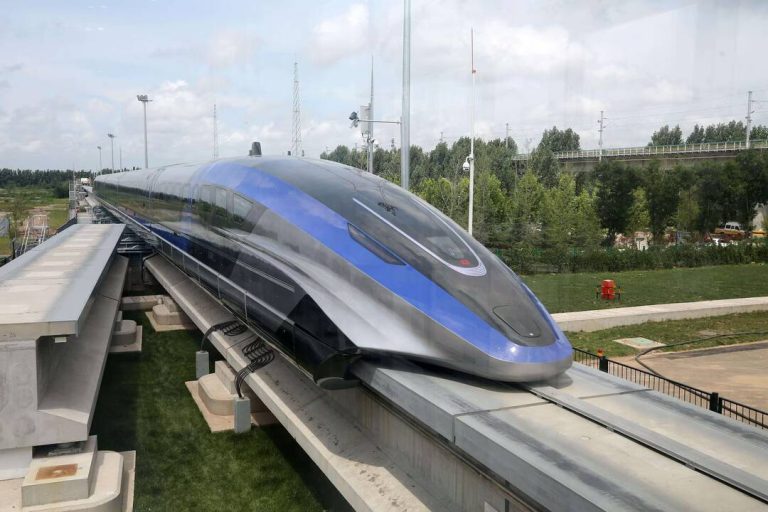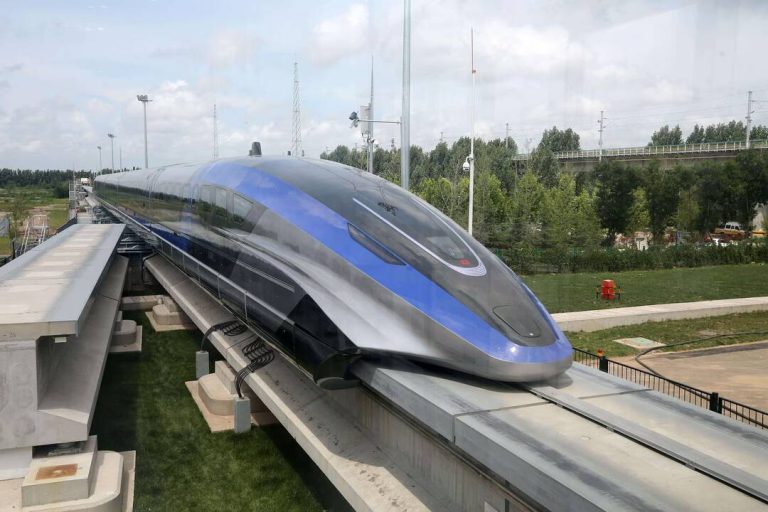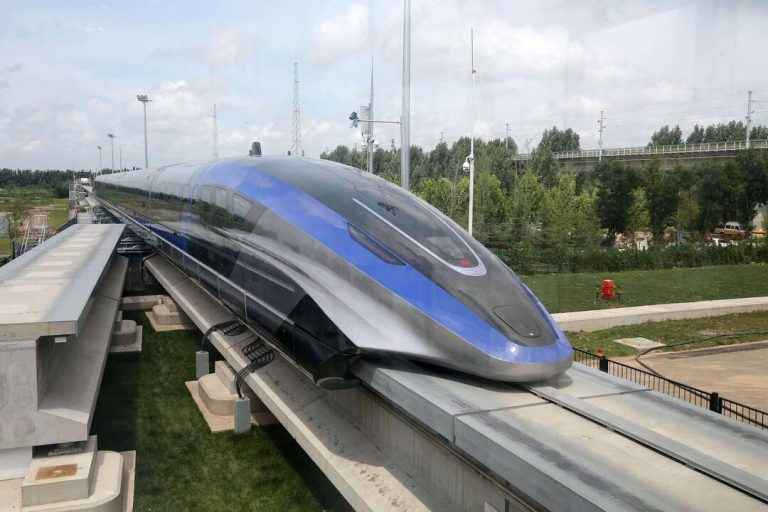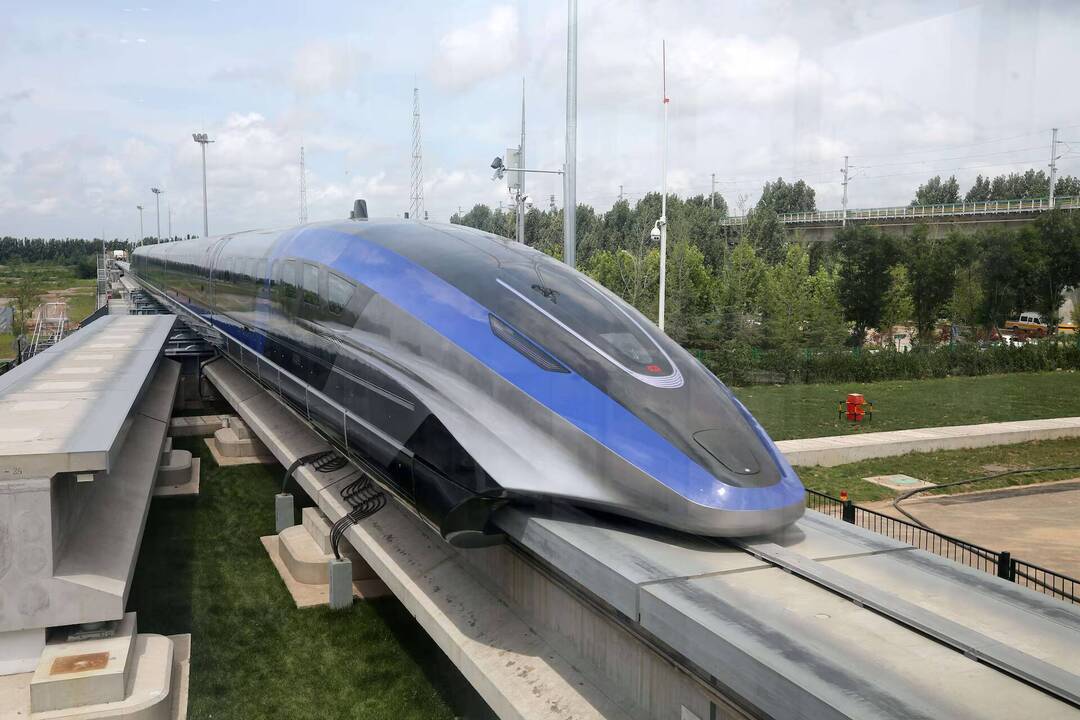
China accelerates vehicle to 700 km/h in 2 secs in magnetic levitation test
In a groundbreaking achievement, researchers in China have successfully accelerated a tonne-class vehicle to a staggering speed of 700 km/h within a mere two seconds on a magnetic levitation (maglev) test line. This remarkable feat makes it the fastest superconductive electric maglev system in the world, as reported by state broadcaster China Central Television. The test was conducted by China’s National University of Defense Technology using a 1,310-foot track, pushing the boundaries of what is thought to be possible in the field of transportation technology.
The concept of magnetic levitation, or maglev, has been around for several decades. It involves the use of magnetic forces to suspend and propel vehicles at high speeds, eliminating the need for traditional wheels and tracks. This technology has the potential to revolutionize the way we travel, offering a cleaner, faster, and more efficient mode of transportation. China has been at the forefront of maglev technology, with several test lines and commercial operations already in place.
The recent test, conducted by the National University of Defense Technology, demonstrates the significant progress China has made in this field. The vehicle, weighing around a tonne, was accelerated to 700 km/h in just two seconds, showcasing the incredible power and efficiency of the maglev system. This achievement is not only a testament to China’s technological prowess but also highlights the potential for maglev technology to transform the transportation sector.
The test track, measuring 1,310 feet in length, was specially designed to test the limits of the maglev system. The vehicle was propelled using a superconductive electric maglev system, which uses electromagnetic forces to levitate and accelerate the vehicle. The use of superconducting materials allows for the creation of powerful magnetic fields, enabling the vehicle to reach such high speeds in a relatively short distance.
The implications of this achievement are significant. With the ability to accelerate vehicles to such high speeds in a short amount of time, maglev technology could potentially revolutionize the way we travel. Imagine being able to travel from one city to another in a fraction of the time it takes today, with minimal environmental impact. The potential for maglev technology to reduce travel times, increase efficiency, and decrease emissions is vast.
China’s advancements in maglev technology also have significant implications for the country’s transportation infrastructure. With a large and growing population, China needs efficient and sustainable transportation systems to meet the demands of its citizens. Maglev technology could play a key role in addressing these needs, providing a fast, efficient, and environmentally friendly mode of transportation.
The success of this test also underscores China’s commitment to investing in research and development. The country has been actively promoting innovation and technological advancement, with a focus on areas such as artificial intelligence, renewable energy, and transportation technology. The development of maglev technology is a prime example of this commitment, with significant resources being dedicated to research and testing.
As China continues to push the boundaries of maglev technology, the world watches with interest. The potential for this technology to transform the transportation sector is vast, and other countries are likely to take note of China’s achievements. The development of maglev technology could also lead to increased collaboration and knowledge sharing between nations, driving innovation and progress in the field.
In conclusion, the recent test of China’s maglev system, which accelerated a vehicle to 700 km/h in just two seconds, is a remarkable achievement that highlights the country’s technological prowess. The potential for maglev technology to transform the transportation sector is vast, and China’s commitment to investing in research and development is paying dividends. As the world continues to watch China’s progress in this field, one thing is clear: the future of transportation is looking faster, cleaner, and more efficient than ever before.
News Source: https://www.newsbytesapp.com/news/science/china-s-high-speed-maglev-reaches-700-km-h-in-2-seconds/story
About the Author