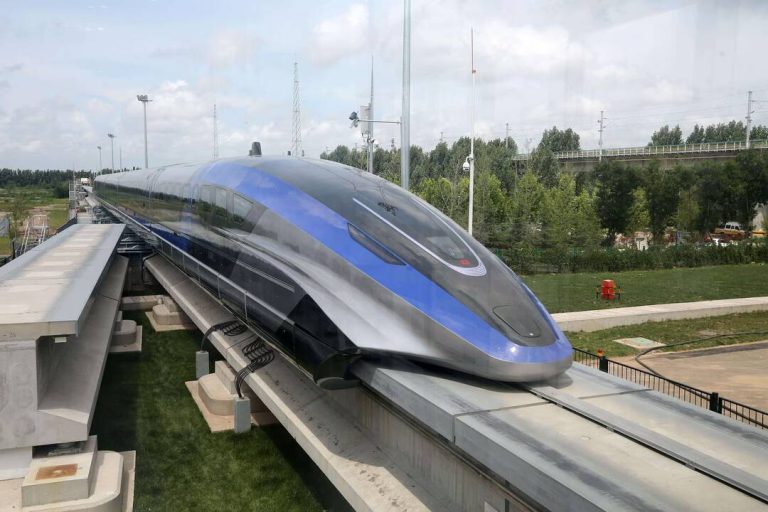
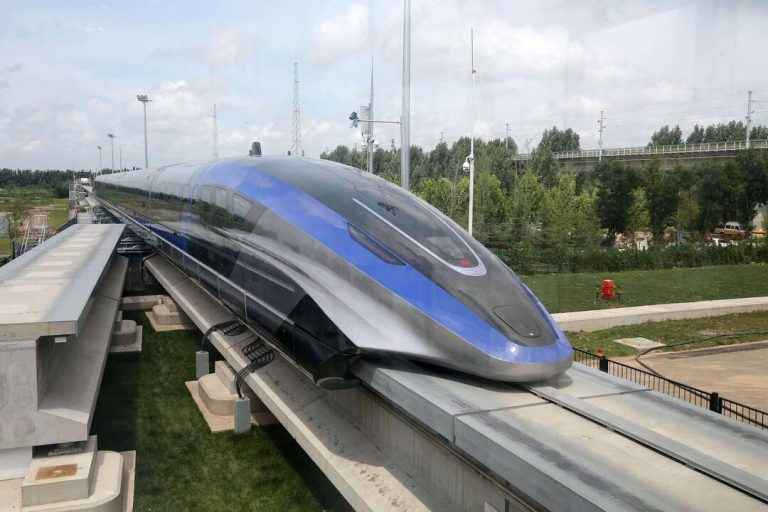
China accelerates vehicle to 700 km/h in 2 secs in magnetic levitation test
In a groundbreaking achievement, researchers in China have successfully accelerated a tonne-class vehicle to a speed of 700 km/h within a mere two seconds on a magnetic levitation (maglev) test line. This remarkable feat makes it the fastest superconductive electric maglev system in the world, as reported by state broadcaster China Central Television. The test was conducted by China’s National University of Defense Technology using a 1,310-foot track, showcasing the country’s rapid advancements in transportation technology.
The concept of magnetic levitation, or maglev, has been around for decades, but China’s recent breakthrough has taken it to unprecedented heights. Maglev systems use magnetic forces to lift and propel vehicles, eliminating the need for traditional wheels and tracks. This allows for smoother, quieter, and more efficient travel, with the potential to revolutionize the way we move people and goods.
The test, which was conducted on a specially designed track, demonstrated the incredible acceleration capabilities of the maglev system. Reaching speeds of 700 km/h in just two seconds is a staggering achievement, especially considering that most commercial airplanes take several minutes to reach similar speeds during takeoff. The vehicle used in the test was a tonne-class vehicle, which is a significant size, making the achievement even more impressive.
The implications of this technology are vast and far-reaching. With the ability to accelerate vehicles to such high speeds in a short amount of time, China’s maglev system has the potential to transform the country’s transportation infrastructure. Imagine being able to travel from one city to another in a fraction of the time it takes today, with the added benefit of reduced energy consumption and lower emissions.
China’s National University of Defense Technology has been at the forefront of maglev research and development, and this latest achievement is a testament to their hard work and dedication. The university’s team has been working tirelessly to push the boundaries of what is possible with maglev technology, and their efforts have paid off in a big way.
The use of superconductive materials in the maglev system is a key factor in its success. Superconductors are materials that can conduct electricity with zero resistance, allowing for the efficient transfer of energy and enabling the system to reach high speeds. China’s researchers have made significant advancements in the development of superconductive materials, which has been crucial in achieving the high speeds demonstrated in the test.
The maglev system has numerous potential applications, from high-speed transportation to medical research and even space exploration. The ability to accelerate vehicles to high speeds in a short amount of time could also have significant implications for the development of new technologies, such as advanced propulsion systems and high-speed testing facilities.
As China continues to push the boundaries of maglev technology, the rest of the world is taking notice. Other countries, including Japan and the United States, are also investing heavily in maglev research and development, recognizing the potential of this technology to transform the transportation landscape.
While there are still many challenges to overcome before maglev technology becomes a reality for commercial use, China’s latest achievement is a significant step forward. The country’s commitment to investing in research and development has paid off, and the world is now watching with great interest as China continues to advance its maglev program.
In conclusion, China’s acceleration of a vehicle to 700 km/h in 2 seconds on a magnetic levitation test line is a remarkable achievement that has the potential to revolutionize the transportation industry. With its superconductive electric maglev system, China has demonstrated its capabilities in pushing the boundaries of what is possible with maglev technology. As the world continues to watch and learn from China’s advancements, one thing is certain – the future of transportation is looking brighter and faster than ever before.
News Source: https://www.newsbytesapp.com/news/science/china-s-high-speed-maglev-reaches-700-km-h-in-2-seconds/story
About the Author