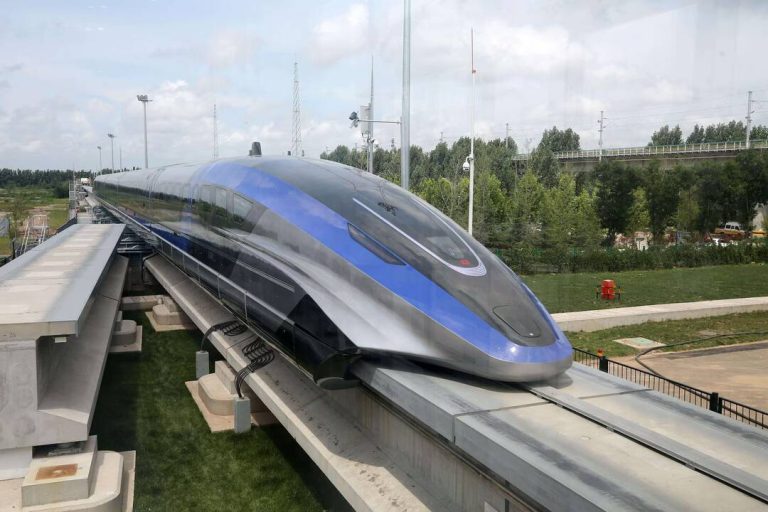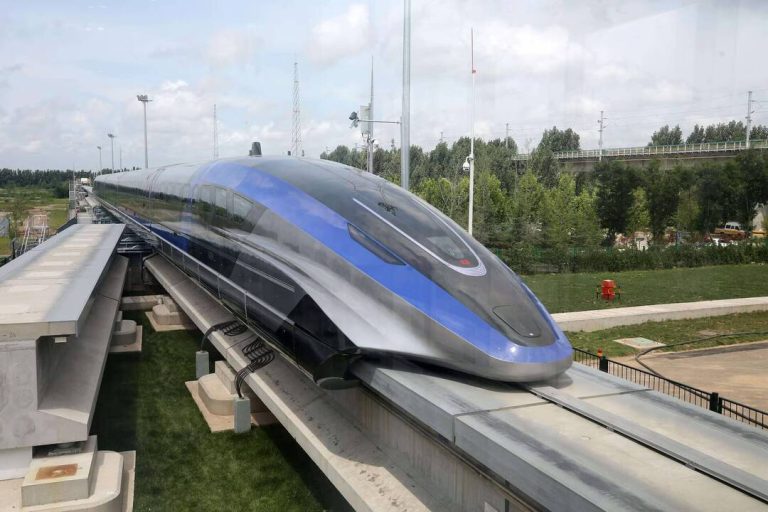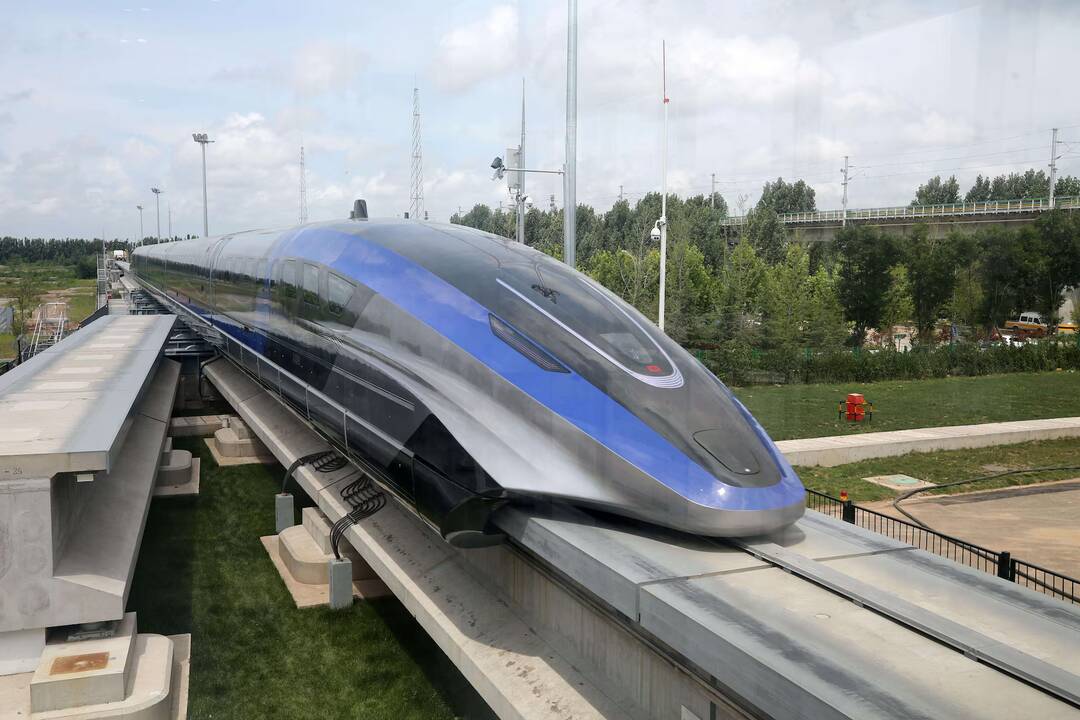
China accelerates vehicle to 700 km/h in 2 secs in magnetic levitation test
In a groundbreaking achievement, researchers in China have successfully accelerated a tonne-class vehicle to a staggering speed of 700 km/h within a mere two seconds. This remarkable feat was accomplished using a magnetic levitation (maglev) test line, making it the fastest superconductive electric maglev system in the world. According to state broadcaster China Central Television, this achievement showcases the country’s significant advancements in transportation technology.
The test was conducted by China’s National University of Defense Technology, utilizing a 1,310-foot track specifically designed for magnetic levitation experiments. The vehicle, weighing around a tonne, was propelled using a superconductive electric maglev system, which employs magnetic forces to lift and propel the vehicle at incredibly high speeds. This technology has the potential to revolutionize the transportation sector, enabling faster, more efficient, and environmentally friendly travel.
Magnetic levitation, or maglev, is a transportation technology that uses magnetic forces to lift and propel vehicles at high speeds, reducing friction and allowing for smoother, more efficient travel. The technology has been in development for several decades, with various countries, including Japan and Germany, investing heavily in its research and development. However, China’s recent achievement marks a significant milestone in the field, demonstrating the country’s capabilities in advancing this technology.
The test, conducted by the National University of Defense Technology, was a major success, with the vehicle reaching speeds of 700 km/h in just two seconds. This is an incredible achievement, considering that most high-speed trains, such as the Shanghai Maglev Train, have a top speed of around 431 km/h. The Chinese maglev system’s ability to accelerate a vehicle to such high speeds in a short time frame is a testament to the country’s advancements in magnetic levitation technology.
The implications of this achievement are significant, with potential applications in various fields, including transportation, logistics, and even space exploration. For instance, the technology could be used to develop high-speed transportation systems, such as vacuum tube transportation, which could revolutionize the way people travel. Additionally, the technology could be used to improve the efficiency of logistics and supply chain management, enabling faster and more efficient transportation of goods.
China’s investment in magnetic levitation technology is part of the country’s broader efforts to develop its transportation sector. The government has been actively promoting the development of high-speed rail networks, with the goal of creating a comprehensive and efficient transportation system. The country’s high-speed rail network, which already spans over 29,000 kilometers, is one of the longest in the world, and the government plans to expand it further in the coming years.
The success of the maglev test is also a reflection of China’s growing capabilities in scientific research and development. The country has been investing heavily in research and development, with a focus on emerging technologies such as artificial intelligence, renewable energy, and advanced materials. The government has also established various research institutions and universities, such as the National University of Defense Technology, to promote scientific research and innovation.
In conclusion, China’s achievement in accelerating a vehicle to 700 km/h in 2 seconds using a magnetic levitation test line is a significant milestone in the development of transportation technology. The country’s advancements in magnetic levitation technology have the potential to revolutionize the transportation sector, enabling faster, more efficient, and environmentally friendly travel. As China continues to invest in research and development, it is likely that we will see further breakthroughs in this field, with potential applications in various industries.
News Source: https://www.newsbytesapp.com/news/science/china-s-high-speed-maglev-reaches-700-km-h-in-2-seconds/story
About the Author