China Accelerates Vehicle to 700 km/h in 2 Secs in Magnetic Levitation Test
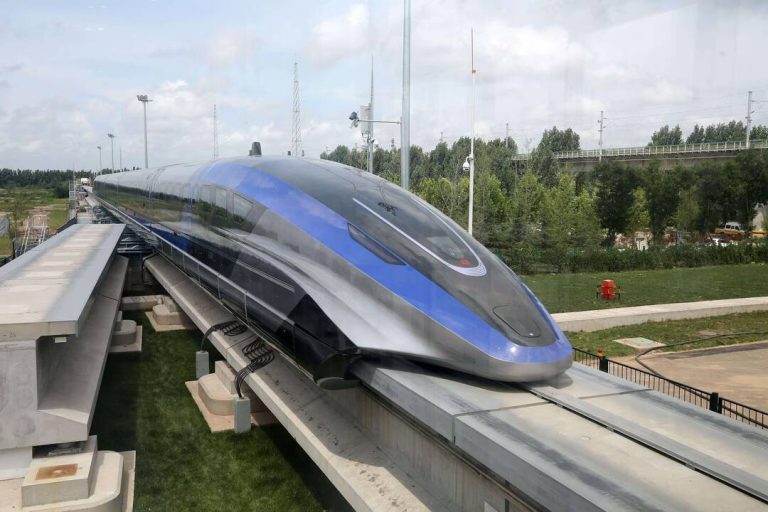
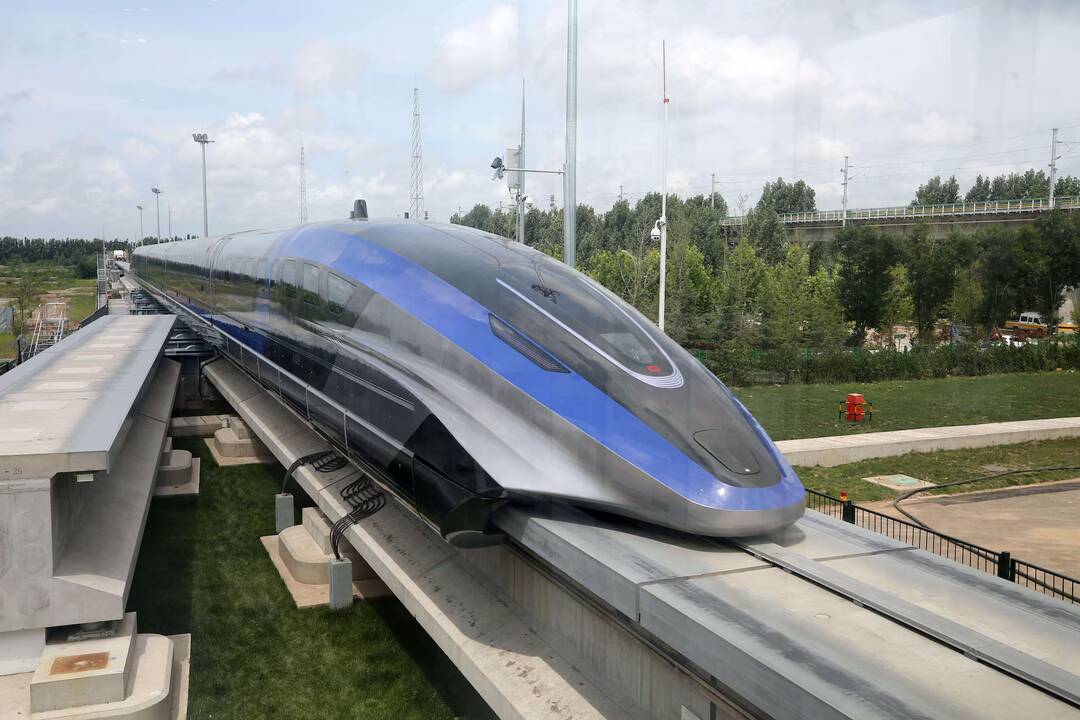
In a groundbreaking achievement, researchers in China have successfully accelerated a tonne-class vehicle to a staggering speed of 700 km/h within a mere two seconds. This remarkable feat was accomplished using a magnetic levitation (maglev) test line, setting a new benchmark for superconductive electric maglev systems worldwide. According to state broadcaster China Central Television, this achievement makes China’s maglev system the fastest in the world.
The test was conducted by China’s National University of Defense Technology, utilizing a 1,310-foot track to push the vehicle to unprecedented speeds. Magnetic levitation technology uses electromagnetic forces to suspend and propel vehicles at high speeds, eliminating the need for traditional wheels and tracks. This innovative approach enables maglev systems to achieve remarkable acceleration and deceleration rates, making them ideal for high-speed transportation applications.
The test vehicle, weighing approximately one tonne, was accelerated from a standstill to 700 km/h in just two seconds, showcasing the immense power and efficiency of China’s maglev system. To put this achievement into perspective, the fastest commercial maglev train in operation today, the Shanghai Maglev Train, can reach speeds of up to 431 km/h. China’s new maglev system has nearly doubled this speed, demonstrating the significant advancements made in the field of magnetic levitation technology.
The implications of this breakthrough are substantial, with potential applications in various industries, including transportation, aerospace, and energy. High-speed maglev systems can revolutionize land transportation, enabling faster and more efficient travel over long distances. This, in turn, can have a significant impact on the economy, environment, and society as a whole.
China has been at the forefront of maglev technology development, investing heavily in research and development to create cutting-edge transportation systems. The country’s National University of Defense Technology has been instrumental in driving innovation in this field, collaborating with industry partners and government agencies to push the boundaries of what is possible.
The successful test of China’s maglev system is a testament to the country’s commitment to advancing transportation technology. As the world’s population continues to urbanize, the need for efficient, sustainable, and high-speed transportation solutions has never been more pressing. China’s achievement serves as a beacon of hope for the future of transportation, demonstrating the potential for maglev technology to transform the way we travel.
While this achievement is undoubtedly impressive, it is essential to note that significant technical and engineering challenges must be overcome before such systems can be deployed commercially. The development of maglev technology requires careful consideration of factors such as safety, energy efficiency, and cost-effectiveness. Nevertheless, China’s breakthrough serves as a significant milestone in the evolution of maglev systems, paving the way for further innovation and progress.
As the world watches with interest, China’s National University of Defense Technology and its partners will likely continue to refine and improve their maglev system, pushing the boundaries of speed and efficiency. The potential applications of this technology are vast, and it will be exciting to see how it develops in the coming years.
In conclusion, China’s achievement in accelerating a vehicle to 700 km/h in just two seconds using a magnetic levitation test line is a remarkable feat that showcases the country’s commitment to advancing transportation technology. As the world’s fastest superconductive electric maglev system, this breakthrough has significant implications for the future of transportation, and it will be fascinating to see how it evolves in the years to come.
News Source: https://www.newsbytesapp.com/news/science/china-s-high-speed-maglev-reaches-700-km-h-in-2-seconds/story
About the Author