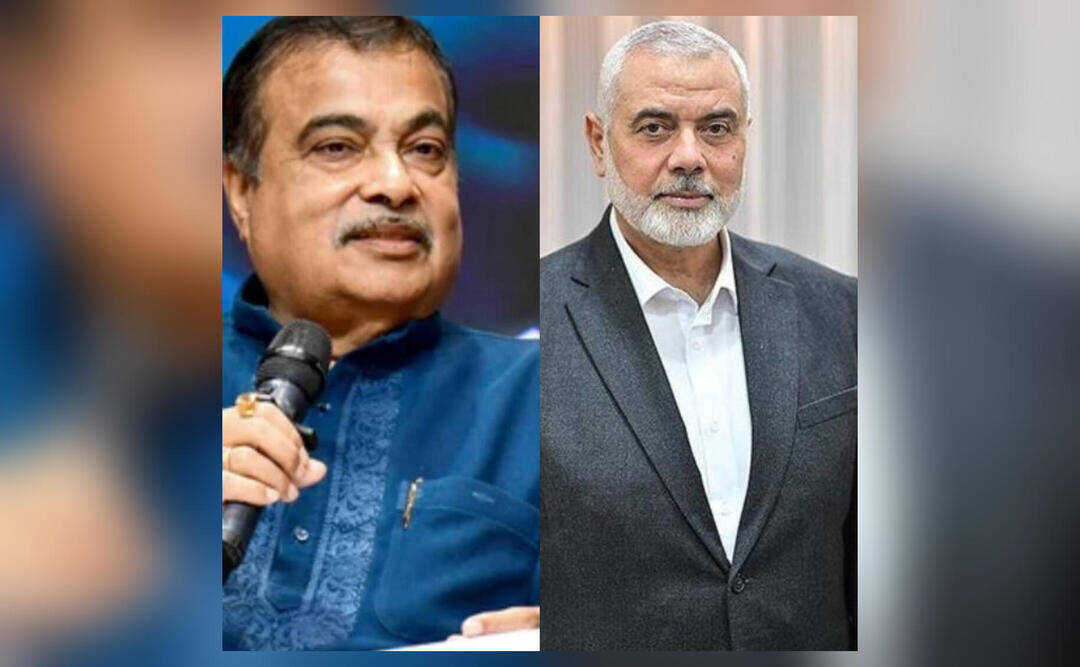
Nitin Gadkari says he met Hamas leader Ismail Haniyeh hours before his murder in Iran
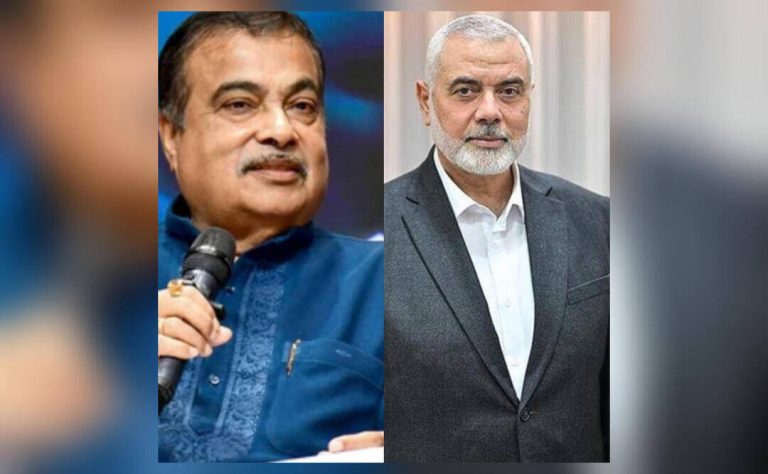
In a shocking revelation, Union Minister Nitin Gadkari has disclosed that he met with Hamas political chief Ismail Haniyeh in Tehran, Iran, just hours before the latter’s assassination in 2024. The meeting took place during the inauguration ceremony of Masoud Pezeshkian, where both Gadkari and Haniyeh were in attendance. This unexpected encounter has sent shockwaves across the globe, leaving many to wonder about the circumstances surrounding Haniyeh’s murder.
According to Gadkari, after attending the inauguration ceremony, he returned to his hotel, unaware of the tragic events that were about to unfold. It was only later, when the Indian ambassador informed him that they would have to leave the country immediately due to the assassination, that Gadkari became aware of the shocking news. The sudden turn of events has raised questions about the security situation in Iran and the potential involvement of external agencies in Haniyeh’s assassination.
The assassination of Ismail Haniyeh, a prominent leader of the Palestinian Islamist group Hamas, has been attributed to the Israeli intelligence agency Mossad, with some reports suggesting that the Iranian Revolutionary Guard Corps (IRGC) may have been involved. The incident has sparked a diplomatic row between Israel and Iran, with both countries exchanging accusations and denials. The international community is closely watching the developments, as the situation has the potential to escalate into a full-blown conflict.
Gadkari’s meeting with Haniyeh has added a new dimension to the story, as it highlights the complex web of relationships between different countries and organizations in the region. As a senior minister in the Indian government, Gadkari’s presence at the inauguration ceremony and his meeting with Haniyeh suggest that India may have been seeking to strengthen its ties with Iran and other countries in the region.
The revelation of Gadkari’s meeting with Haniyeh has also raised questions about the role of India in the regional geopolitics. India has traditionally maintained good relations with both Iran and Israel, and has been seeking to balance its relationships with both countries. However, the recent developments may force India to re-evaluate its approach and take a more nuanced stance on the issues affecting the region.
The assassination of Ismail Haniyeh has also sparked a wave of condemnation from across the globe, with many countries and organizations expressing their outrage and sadness at the tragic event. The United Nations has called for a thorough investigation into the incident, and has urged all parties to exercise restraint and avoid any actions that could escalate the situation.
As the situation continues to unfold, it is clear that the assassination of Ismail Haniyeh has far-reaching implications for the region and the world at large. The involvement of external agencies, the complex web of relationships between different countries and organizations, and the potential for escalation into a full-blown conflict all contribute to a highly volatile and uncertain situation.
In conclusion, the revelation of Nitin Gadkari’s meeting with Ismail Haniyeh hours before his assassination has added a new dimension to the story, highlighting the complex geopolitics of the region and the potential implications for India and the world at large. As the situation continues to evolve, it is essential to stay informed and up-to-date with the latest developments, and to hope for a peaceful resolution to the crisis.
About the Author