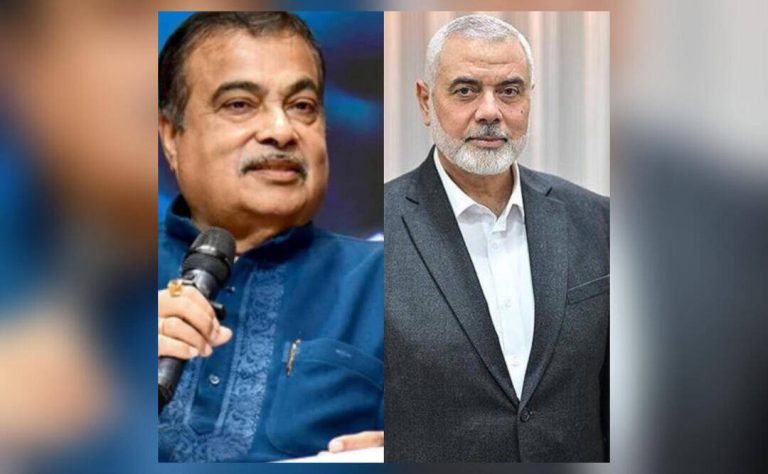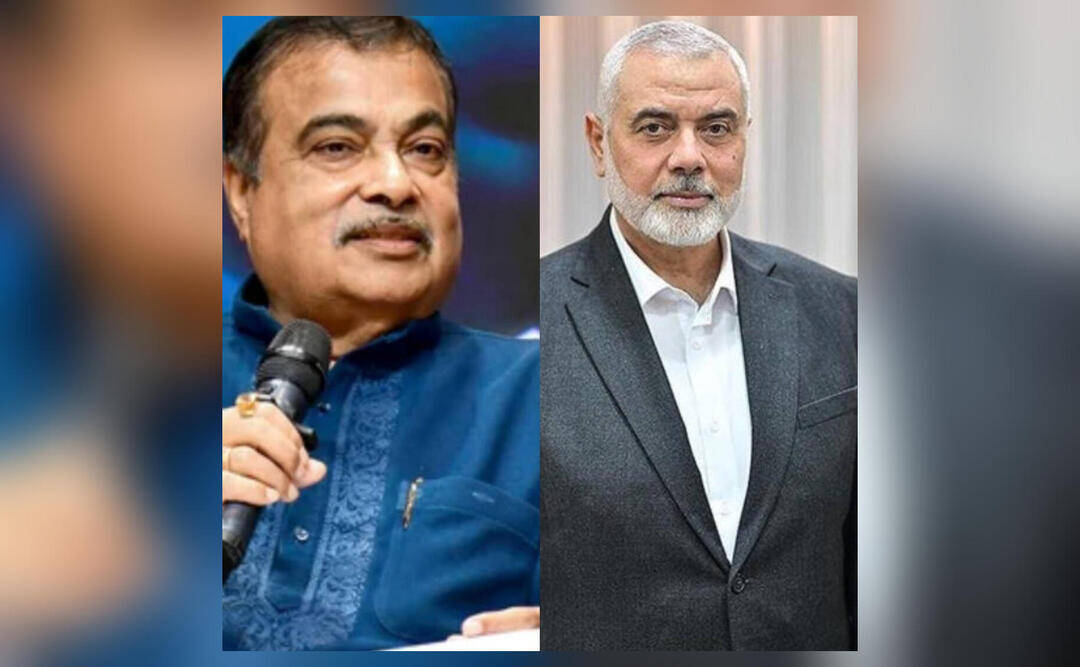
Nitin Gadkari says he met Hamas leader Ismail Haniyeh hours before his murder in Iran
In a shocking revelation, Union Minister Nitin Gadkari has disclosed that he met Hamas political chief Ismail Haniyeh in Tehran, just hours before the latter’s assassination in 2024. This extraordinary encounter has sent shockwaves across the globe, raising questions about the circumstances surrounding Haniyeh’s murder and the potential implications for international relations.
According to Gadkari, he and Haniyeh were both in attendance at the inauguration ceremony of Masoud Pezeshkian, a prominent Iranian politician. The event, which took place in the Iranian capital, brought together dignitaries from various countries, including India and Palestine. It was during this ceremony that Gadkari and Haniyeh had a brief meeting, which has now become a significant footnote in the history of international diplomacy.
Gadkari has revealed that after the ceremony, he returned to his hotel, unaware of the dramatic events that were about to unfold. It was only later, when the Indian ambassador informed him of the situation, that he learned about Haniyeh’s assassination. The news must have come as a shock to Gadkari, who had met the Hamas leader just hours earlier.
The circumstances surrounding Haniyeh’s murder are still shrouded in mystery, with various theories emerging about the possible perpetrators and their motives. While some have pointed fingers at the Israeli intelligence agency Mossad, others have suggested that the Iranian Revolutionary Guard Corps (IRGC) might have been involved. The truth, however, remains elusive, and it may take time for the full facts to emerge.
Gadkari’s revelation has sparked a flurry of interest in the international community, with many seeking to understand the context and implications of his meeting with Haniyeh. The fact that the two leaders met in Tehran, a city that has been at the center of regional politics for decades, adds to the intrigue. Iran’s complex relationships with various countries, including India, Palestine, and Israel, make this development all the more significant.
As the investigation into Haniyeh’s assassination continues, Gadkari’s account of his meeting with the Hamas leader has raised more questions than answers. What was the purpose of their meeting, and what did they discuss? Did they touch upon sensitive topics, such as the Israeli-Palestinian conflict or regional security concerns? The details of their conversation, if revealed, could provide valuable insights into the motivations behind Haniyeh’s murder.
Furthermore, Gadkari’s presence in Tehran, alongside other dignitaries, highlights the complexities of international diplomacy. The inauguration ceremony, which brought together leaders from different countries, demonstrates the intricate web of relationships that exists between nations. In this context, the meeting between Gadkari and Haniyeh can be seen as a symbol of the delicate balance of power in the region.
The aftermath of Haniyeh’s assassination has seen a flurry of diplomatic activity, with various countries issuing statements and condemnations. The international community is watching closely, as the situation unfolds and the truth about the circumstances surrounding Haniyeh’s murder begins to emerge.
In conclusion, the revelation by Union Minister Nitin Gadkari that he met Hamas leader Ismail Haniyeh hours before his assassination in Iran has sent shockwaves across the globe. The circumstances surrounding this extraordinary encounter, and the events that followed, have raised more questions than answers. As the investigation into Haniyeh’s murder continues, the international community remains vigilant, seeking to understand the implications of this dramatic development.
About the Author