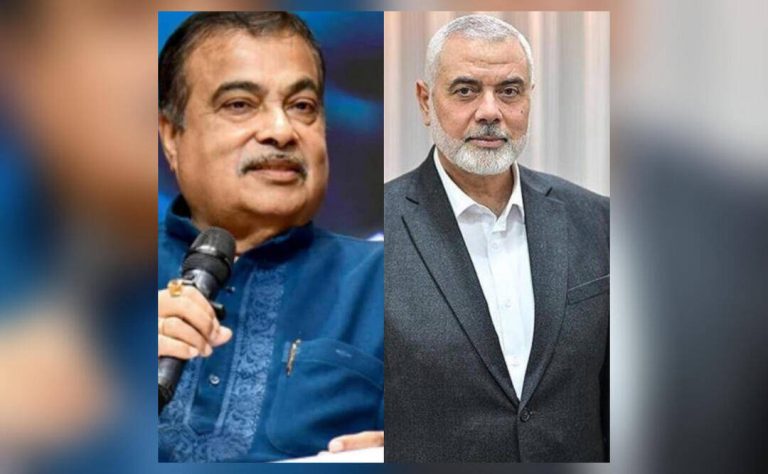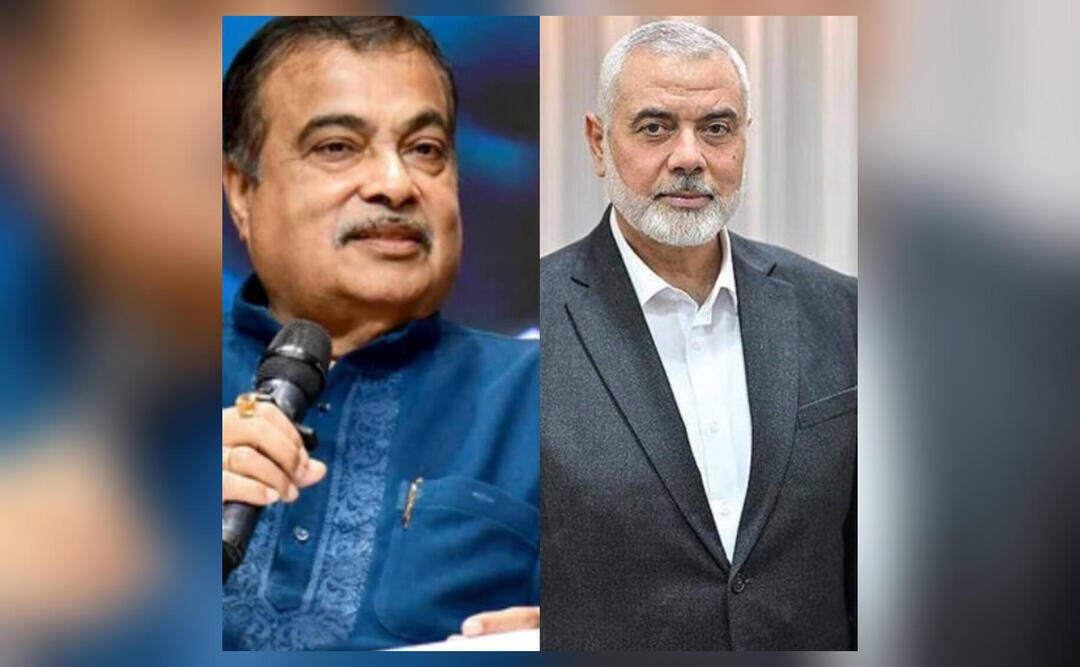
Nitin Gadkari says he met Hamas leader Ismail Haniyeh hours before his murder in Iran
In a shocking revelation, Union Minister Nitin Gadkari has disclosed that he met Hamas political chief Ismail Haniyeh in Tehran, just hours before the latter was assassinated in 2024. The meeting took place when both Gadkari and Haniyeh were in Iran to attend the inauguration of Masoud Pezeshkian, a prominent Iranian politician. This unexpected encounter has sent shockwaves across the globe, given the sensitive nature of Haniyeh’s position and the geopolitical implications of his assassination.
As reported by various sources, Gadkari and Haniyeh were both present at the inauguration ceremony, which was attended by several high-profile dignitaries from across the world. After the ceremony, Gadkari returned to his hotel, unaware of the tragic events that were about to unfold. It was only later, when the Indian ambassador informed him of the assassination, that Gadkari realized the gravity of the situation and the potential implications for his own safety.
The assassination of Ismail Haniyeh has sent shockwaves across the Middle East, with many speculating about the identity of the perpetrators and the motives behind the attack. As the political chief of Hamas, Haniyeh was a key figure in the Palestinian resistance movement, and his death is likely to have significant repercussions for the region. The fact that Gadkari, a senior Indian minister, was in close proximity to Haniyeh just hours before his murder has raised questions about the security situation in Iran and the potential risks faced by high-profile visitors to the country.
Gadkari’s revelation has also sparked interest in the circumstances surrounding the assassination. According to reports, Haniyeh was killed in a targeted attack, with some speculating that Israeli intelligence agency Mossad may have been involved. The Iranian government has blamed Israel for the assassination, while Israel has denied any involvement. The incident has highlighted the complex and volatile nature of Middle Eastern politics, where alliances and rivalries are constantly shifting.
The fact that Gadkari, a senior Indian minister, was able to meet with Haniyeh, a key figure in the Palestinian resistance movement, is also significant. It highlights the growing diplomatic engagement between India and the Middle East, as well as India’s efforts to navigate the complex web of alliances and rivalries in the region. India has traditionally maintained good relations with both Israel and the Palestinian Authority, and Gadkari’s meeting with Haniyeh is seen as a reflection of India’s commitment to engaging with all parties in the region.
The assassination of Ismail Haniyeh has also raised questions about the role of Iran in the region. As a key supporter of Hamas and other Palestinian militant groups, Iran has been accused of fueling tensions in the Middle East. The fact that Haniyeh was assassinated on Iranian soil has raised questions about the ability of the Iranian government to protect its guests, as well as the potential risks faced by high-profile visitors to the country.
In the aftermath of the assassination, there have been widespread condemnations from across the globe. The Indian government has expressed its condolences to the Palestinian people, while also calling for restraint and calm in the region. The incident has highlighted the need for diplomacy and dialogue in resolving the complex conflicts of the Middle East, as well as the importance of protecting human life and dignity.
As the investigation into the assassination continues, many questions remain unanswered. Who was behind the attack, and what were their motives? How will the assassination affect the balance of power in the Middle East, and what implications will it have for regional and global security? As the world waits for answers, one thing is clear: the assassination of Ismail Haniyeh is a tragic reminder of the ongoing conflicts and tensions in the Middle East, and the need for sustained efforts to promote peace, dialogue, and understanding in the region.
In conclusion, the revelation by Union Minister Nitin Gadkari that he met Hamas leader Ismail Haniyeh hours before his murder in Iran is a shocking and significant development. The incident highlights the complex and volatile nature of Middle Eastern politics, as well as the growing diplomatic engagement between India and the region. As the world grapples with the implications of the assassination, it is clear that sustained efforts are needed to promote peace, dialogue, and understanding in the Middle East.
About the Author