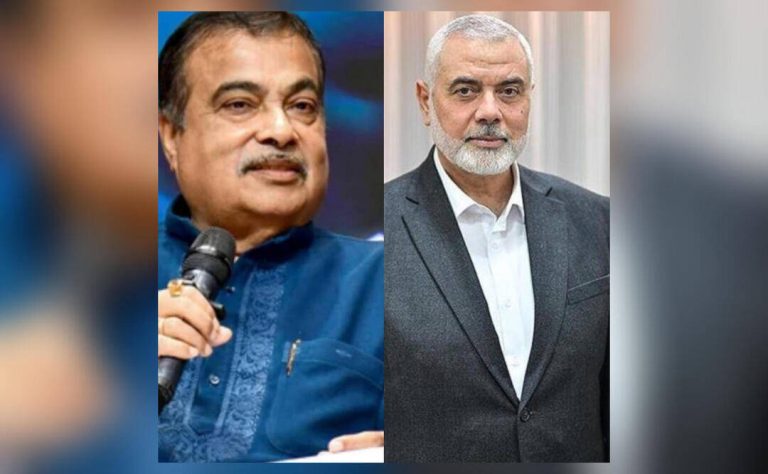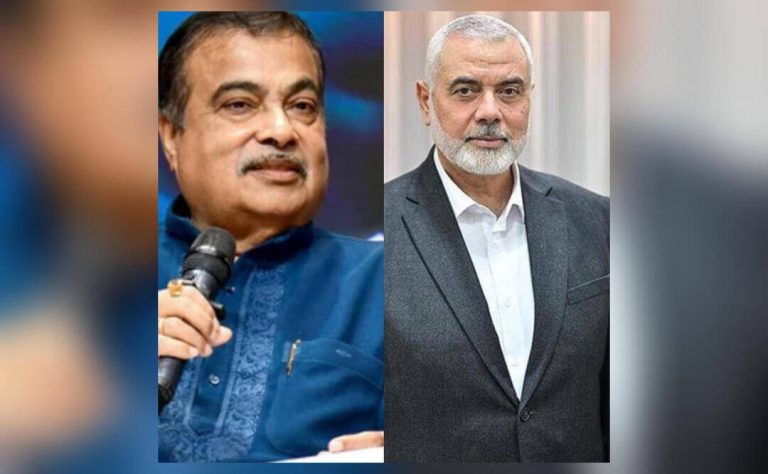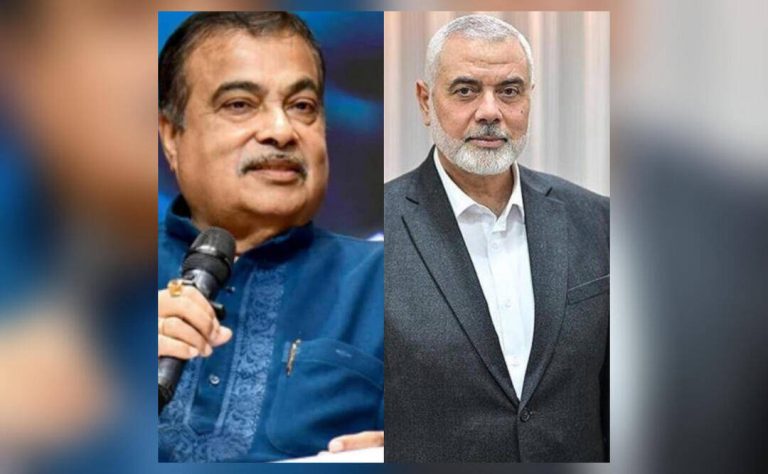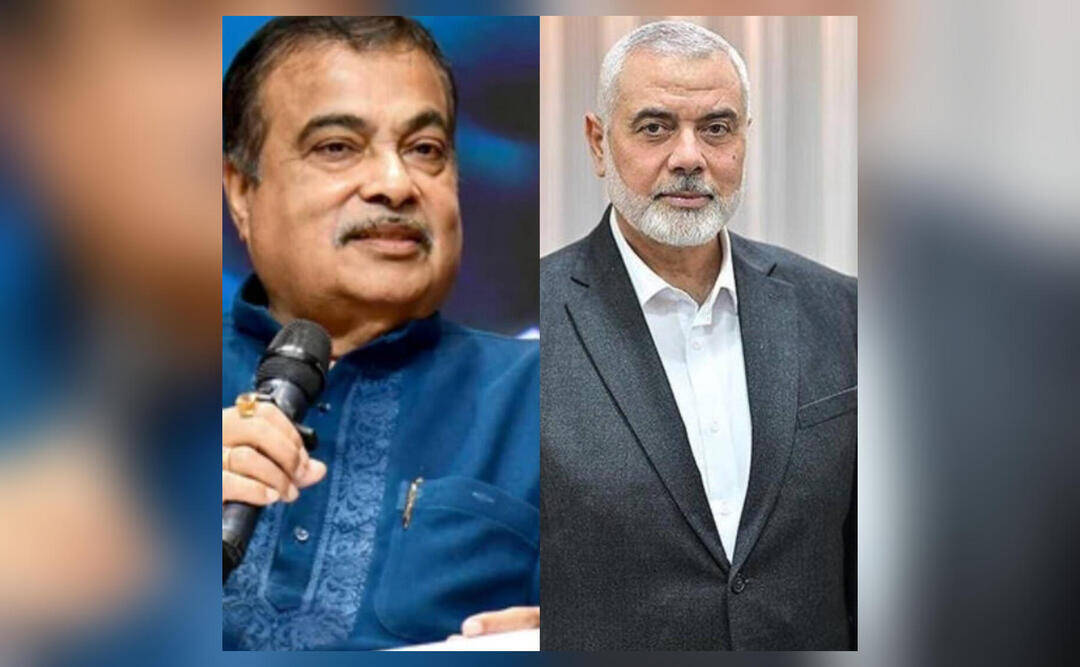
Nitin Gadkari says he met Hamas leader Ismail Haniyeh hours before his murder in Iran
In a shocking revelation, Union Minister Nitin Gadkari has disclosed that he met Hamas political chief Ismail Haniyeh in Tehran, just hours before the latter’s assassination in 2024. The meeting took place in Iran, where both Gadkari and Haniyeh were present for the inauguration of Masoud Pezeshkian. This unexpected encounter has sent shockwaves across the globe, given the sensitive nature of Haniyeh’s position and the circumstances surrounding his death.
According to Gadkari, he attended the inauguration ceremony, where he had the opportunity to meet with Haniyeh. After the event, Gadkari returned to his hotel, unaware of the dramatic turn of events that would unfold in the hours to come. It was only when the Indian ambassador informed him that they would need to leave immediately due to the assassination that Gadkari became aware of the shocking news.
The assassination of Ismail Haniyeh has sparked widespread outrage and condemnation, with many pointing fingers at Israel’s Mossad and the IRGC (Islamic Revolutionary Guard Corps) for their alleged involvement in the killing. The incident has significant implications for the already fragile Middle East peace process and is likely to escalate tensions between Israel and Palestine.
Gadkari’s revelation has raised several questions about the circumstances surrounding the meeting and the events that followed. What was the purpose of the meeting between Gadkari and Haniyeh, and did they discuss any sensitive topics? Was Gadkari aware of the potential risks involved in meeting with a high-profile figure like Haniyeh, given the volatile nature of the region?
The meeting between Gadkari and Haniyeh is also significant in the context of India’s diplomatic relations with Iran and Palestine. India has traditionally maintained good relations with both countries, and the meeting could be seen as an attempt to strengthen ties with the region. However, the assassination of Haniyeh has complicated matters, and India will need to tread carefully to avoid being drawn into the conflict.
The Iranian government has vowed to investigate the assassination and bring those responsible to justice. The Iranian Foreign Ministry has issued a statement condemning the killing and calling it a “terrorist act.” The international community is watching the situation closely, with many calling for calm and restraint in the face of escalating tensions.
As the situation continues to unfold, it is clear that the assassination of Ismail Haniyeh will have far-reaching consequences for the region and the world at large. The meeting between Gadkari and Haniyeh, just hours before the latter’s death, adds a new layer of complexity to the situation, and it remains to be seen how India will navigate this sensitive diplomatic landscape.
In conclusion, the revelation by Nitin Gadkari that he met Hamas leader Ismail Haniyeh hours before his assassination in Iran has sent shockwaves across the globe. The incident has significant implications for the Middle East peace process and India’s diplomatic relations with the region. As the situation continues to unfold, it is essential to monitor developments closely and consider the potential consequences of this dramatic turn of events.
About the Author