Would disown my son if he had Pakistan links: Assam CM
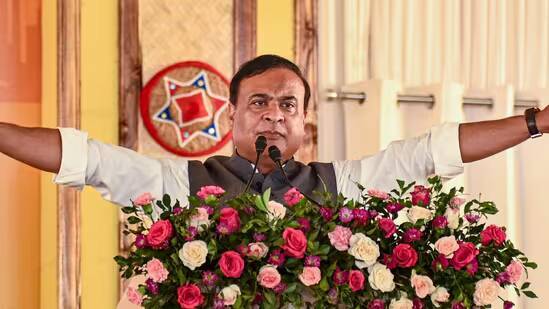
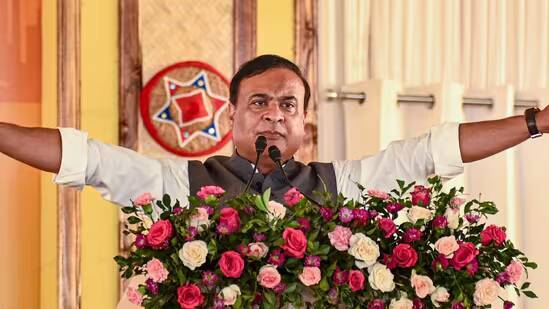
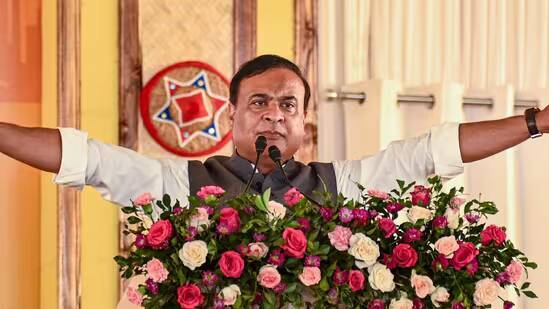
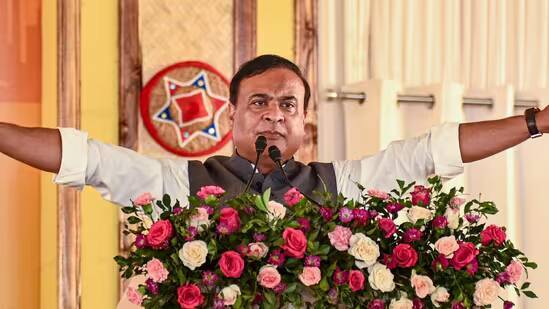
In a shocking statement, Assam Chief Minister Himanta Biswa Sarma has said that he would disown his own son if he had any ties with Pakistan. This statement comes amidst a backdrop of rising tensions between India and Pakistan, with the two countries having a long and complex history of conflict. The Assam CM’s statement has sparked a heated debate, with many questioning the wisdom and implications of such a stance.
Speaking at a public event, Sarma made an apparent reference to Congress MP Gaurav Gogoi’s wife, Elizabeth, who has been reported to have links with Pakistan. Sarma asked whether the Congress leader would have the courage to disown his wife, given her alleged connections with the neighboring country. “If one becomes Pakistani…how can I have relation with them?” Sarma added, emphasizing the gravity of the situation.
Sarma’s statement has been seen as a reflection of the deep-seated mistrust and animosity that exists between India and Pakistan. The two countries have been at odds for decades, with numerous conflicts and skirmishes along their shared border. The tensions between the two nations have been further exacerbated by issues such as terrorism, Kashmir, and border disputes.
The Assam CM’s statement has also raised questions about the role of family ties and personal relationships in the context of national loyalty and security. Can a person’s love and loyalty for their family members be separated from their loyalty to their country? Is it possible for an individual to maintain a relationship with someone who has ties to a country that is perceived as a threat to national security?
Sarma’s statement has been criticized by some as being overly dramatic and simplistic. They argue that the issue of national loyalty and security is far more complex and nuanced than a simple matter of disowning a family member. Others have praised Sarma’s statement, seeing it as a reflection of his commitment to national security and his willingness to take a tough stance on issues that affect the country.
The Congress party has responded to Sarma’s statement, accusing him of trying to politicize a personal issue. They have also questioned the Assam CM’s motives, suggesting that he is trying to divert attention from other pressing issues in the state. The party has also pointed out that Sarma’s statement is not in line with the principles of secularism and inclusivity that are enshrined in the Indian Constitution.
The incident has also sparked a debate about the role of politicians in shaping public discourse and opinion. Should politicians be making statements that can be seen as divisive and inflammatory, or should they be working to promote unity and understanding? Is it the responsibility of politicians to take a stance on issues that affect national security, or should they be focusing on other pressing issues such as economic development and social welfare?
In conclusion, the Assam CM’s statement has sparked a heated debate about national loyalty, family ties, and personal relationships. While some have praised Sarma’s stance, others have criticized it as being simplistic and divisive. The incident highlights the complex and nuanced nature of issues related to national security and loyalty, and the need for a more thoughtful and informed public discourse.
As the debate continues, it is essential to consider the implications of Sarma’s statement and the potential consequences of such a stance. Can a person’s love and loyalty for their family members be separated from their loyalty to their country? Is it possible for an individual to maintain a relationship with someone who has ties to a country that is perceived as a threat to national security? These are questions that require careful consideration and reflection, and ones that highlight the need for a more nuanced and informed approach to issues related to national loyalty and security.
About the Author