Would disown my son if he had Pakistan links: Assam CM
In a shocking statement, Assam Chief Minister Himanta Biswa Sarma has declared that he would disown his own son if he had any ties with Pakistan. This bold claim has sparked a heated debate in the country, with many questioning the extremity of his stance. The statement was made in an apparent reference to Congress MP Gaurav Gogoi’s wife, Elizabeth, who has been reported to have links with Pakistan.
Sarma’s statement has been met with a mix of reactions, with some hailing his patriotism and others condemning his stance as extreme and unacceptable. The Assam CM’s words have also raised questions about the implications of having ties with Pakistan and how it affects one’s relationship with their family and community.
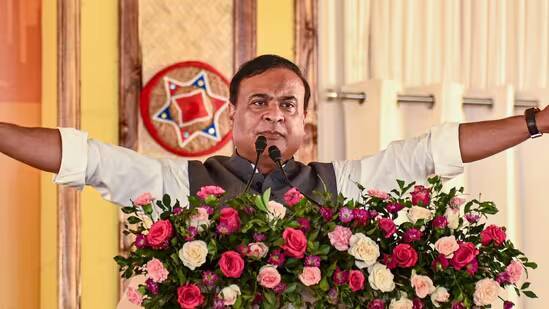
During a public address, Sarma asked whether a Congress leader, whose wife has links with Pakistan, would have the courage to disown her. He further added, “If one becomes Pakistani…how can I have relation with them?” This statement has been seen as a direct attack on Gaurav Gogoi and his family, and has sparked a war of words between the two parties.
The controversy surrounding Gaurav Gogoi’s wife, Elizabeth, and her alleged links with Pakistan has been ongoing for some time. While the Congress MP has maintained that his wife’s connections are purely professional and do not pose a threat to national security, others have raised concerns about the potential implications of her ties with Pakistan.
Sarma’s statement has also raised questions about the role of family and relationships in the context of national loyalty. Can a person’s ties with their family members be severed simply because of their connections with another country? Is it fair to expect individuals to disown their loved ones because of their associations, no matter how tenuous they may be?
On one hand, Sarma’s statement can be seen as a reflection of his unwavering commitment to nationalism and his desire to protect the country from any potential threats. His willingness to disown his own son if he had ties with Pakistan demonstrates the extent to which he prioritizes national loyalty over personal relationships.
On the other hand, Sarma’s stance has been criticized for being overly extreme and rigid. Critics argue that his statement is an example of intolerant nationalism, where individuals are expected to conform to a narrow and rigid definition of patriotism. They also point out that having ties with Pakistan does not necessarily mean that one is a threat to national security or that they are disloyal to their country.
Furthermore, Sarma’s statement has also been seen as a form of political posturing, aimed at scoring points against his political opponents. By making such a bold claim, Sarma is attempting to project himself as a strong and uncompromising leader who will stop at nothing to protect the country’s interests.
In conclusion, Assam CM Himanta Biswa Sarma’s statement that he would disown his son if he had ties with Pakistan has sparked a heated debate about nationalism, loyalty, and the role of family and relationships in the context of national security. While some have hailed his patriotism, others have condemned his stance as extreme and unacceptable. Ultimately, the implications of Sarma’s statement will depend on how it is received by the public and the political establishment.
As the debate continues to unfold, one thing is clear: the issue of nationalism and loyalty is complex and multifaceted, and cannot be reduced to simplistic or extreme statements. It requires a nuanced and thoughtful approach, one that takes into account the complexities of human relationships and the diverse perspectives of individuals.
For now, the country will continue to watch with interest as this controversy plays out, and as politicians and citizens grapple with the implications of Sarma’s statement. One thing is certain, however: the issue of nationalism and loyalty will remain a contentious and highly debated topic in the days and weeks to come.
About the Author