Would disown my son if he had Pakistan links: Assam CM
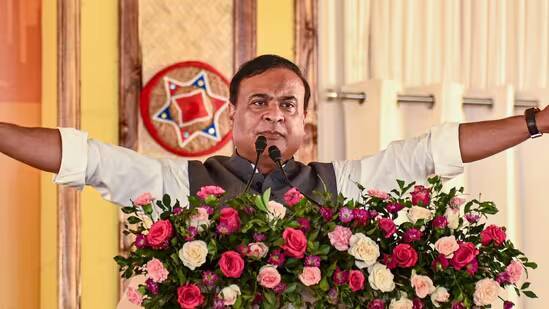
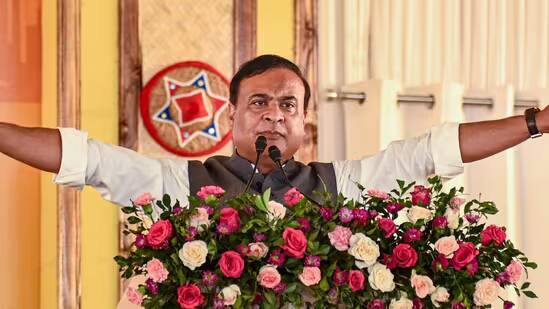
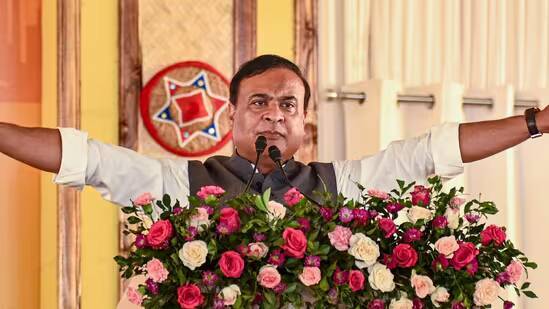
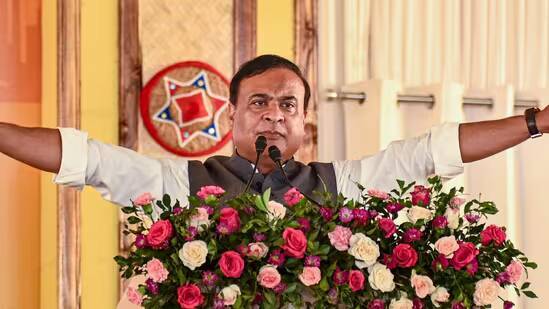
In a shocking statement, Assam Chief Minister Himanta Biswa Sarma has said that he would disown his own son if he had any ties with Pakistan. This statement comes amidst a wave of controversy surrounding the alleged links of some Indian politicians with Pakistan. The Assam CM made this statement while addressing a public gathering, where he also made an apparent reference to Congress MP Gaurav Gogoi’s wife, Elizabeth, who has been accused of having links with Pakistan.
Sarma’s statement has sparked a heated debate in the country, with many questioning the validity of his claim. The Assam CM asked whether a Congress leader, whose wife has links with Pakistan, would have the courage to disown her. He further added, “If one becomes Pakistani…how can I have relation with them?” This statement has been seen as a clear attack on the Congress party and its leaders, who have been accused of having ties with Pakistan.
The controversy surrounding Gaurav Gogoi’s wife, Elizabeth, began when it was alleged that she had links with a Pakistani national. The Congress MP has denied these allegations, but the issue has continued to be a topic of debate in the country. Sarma’s statement has now added fuel to the fire, with many demanding that the Congress party take action against its leaders who have been accused of having ties with Pakistan.
The Assam CM’s statement has also raised questions about the loyalty of Indian citizens who have ties with Pakistan. Sarma’s claim that he would disown his own son if he had ties with Pakistan has been seen as a extreme statement, and many have questioned whether it is realistic to expect people to disown their family members simply because of their ties with another country.
However, Sarma’s statement has also been seen as a reflection of the growing nationalism in the country. Many Indians have become increasingly suspicious of Pakistan and its intentions, and there is a growing demand for Indian citizens to prove their loyalty to the country. Sarma’s statement has been seen as a attempt to tap into this sentiment, and to project himself as a strong nationalist leader.
The controversy surrounding Pakistan links has also raised questions about the role of foreign nationals in Indian politics. There have been allegations that many foreign nationals, including those from Pakistan, have been influencing Indian politics and policymakers. This has led to a growing demand for greater scrutiny of foreign nationals who are involved in Indian politics, and for stricter laws to prevent foreign interference in Indian affairs.
In conclusion, the Assam CM’s statement has sparked a heated debate in the country, and has raised important questions about loyalty, nationalism, and foreign interference in Indian politics. While Sarma’s claim that he would disown his own son if he had ties with Pakistan may be seen as an extreme statement, it reflects the growing nationalism in the country and the demand for Indian citizens to prove their loyalty to the country.
As the debate surrounding Pakistan links continues to grow, it is likely that we will see more politicians making similar statements. However, it is also important to remember that loyalty and nationalism are complex issues, and that we need to approach them with nuance and sensitivity. We must also ensure that our pursuit of nationalism does not lead to xenophobia and intolerance, and that we continue to uphold the values of secularism and diversity that are enshrined in our Constitution.
The Assam CM’s statement has also highlighted the need for greater transparency and scrutiny in Indian politics. We need to ensure that our politicians are accountable to the people, and that they are not influenced by foreign powers or interests. This requires a free and independent media, as well as a robust and effective electoral system.
Ultimately, the controversy surrounding Pakistan links is a reminder that Indian politics is complex and multifaceted, and that we need to approach it with caution and sensitivity. We must avoid making sweeping statements or generalizations, and must instead seek to understand the nuances and complexities of the issue. By doing so, we can work towards creating a more informed and engaged citizenry, and a more robust and effective democracy.
About the Author