Would Disown My Son if He Had Pakistan Links: Assam CM
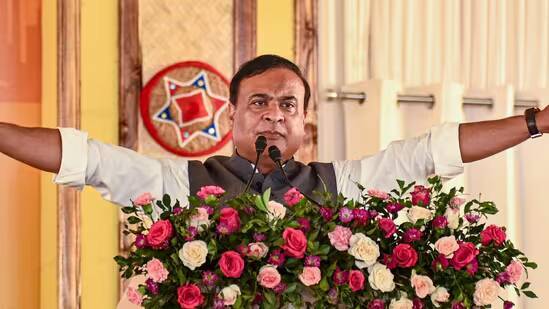
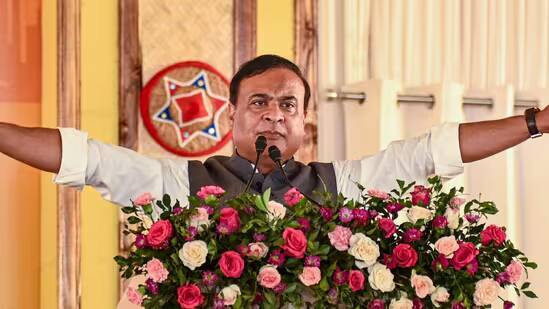
In a recent statement, Assam Chief Minister Himanta Biswa Sarma sparked controversy by declaring that he would disown his own son if he had any ties with Pakistan. This statement comes amidst a backdrop of increasing tensions between India and Pakistan, with the former consistently maintaining a strong stance against its neighboring country. Sarma’s remarks have been seen as a reflection of the prevailing sentiment in the country, where any association with Pakistan is viewed with suspicion and distrust.
The Assam CM’s statement was made in an apparent reference to Congress MP Gaurav Gogoi’s wife, Elizabeth, who allegedly has links with Pakistan. Sarma questioned whether the Congress leader would have the courage to disown his wife, given her supposed connections with Pakistan. He further emphasized that if someone becomes a Pakistani, it is impossible for him to have any relation with them. This statement has ignited a heated debate, with many interpreting it as a call to sever all ties with individuals who have any connection with Pakistan.
Sarma’s comments have been seen as a manifestation of the deep-seated animosity towards Pakistan that exists in India. The two countries have been embroiled in a longstanding dispute over issues such as Kashmir, terrorism, and border conflicts. The Indian government has consistently maintained that Pakistan is a hub of terrorism and has been involved in promoting anti-India activities. As a result, any association with Pakistan is viewed with skepticism, and individuals with ties to the country are often subject to scrutiny and suspicion.
The Assam CM’s statement has also raised questions about the limits of patriotism and national loyalty. While it is understandable that Sarma, as a public figure, feels a strong sense of duty towards his country, his willingness to disown his own son for having Pakistan links has been seen as an extreme stance. It highlights the complexities of nationalism and the challenges of navigating individual relationships in the face of geopolitical tensions.
Furthermore, Sarma’s comments have been criticized for being divisive and discriminatory. By implying that anyone with ties to Pakistan is unworthy of association, he is perpetuating a narrative that is exclusionary and intolerant. This kind of rhetoric can have far-reaching consequences, contributing to a climate of fear and mistrust that can have devastating effects on individuals and communities.
In addition, the Assam CM’s statement has also been seen as a reflection of the growing trend of hyper-nationalism in India. In recent years, there has been a surge in nationalist sentiment, with many Indians expressing a strong sense of pride and loyalty towards their country. While this sentiment is not inherently problematic, it can sometimes manifest in ways that are exclusionary and intolerant. Sarma’s comments, in this context, can be seen as a manifestation of this hyper-nationalism, where the boundaries between patriotism and intolerance become increasingly blurred.
It is also worth noting that Sarma’s statement has been made in the context of a broader political narrative. The Assam CM is a member of the Bharatiya Janata Party (BJP), which has consistently positioned itself as a strong nationalist force. The party has often used the issue of Pakistan to mobilize public opinion and to project itself as a champion of Indian interests. In this context, Sarma’s comments can be seen as a attempt to further this narrative, by emphasizing the need for loyalty and patriotism in the face of perceived external threats.
In conclusion, Assam CM Himanta Biswa Sarma’s statement that he would disown his son if he had Pakistan links reflects the deep-seated tensions between India and Pakistan. While it is understandable that Sarma, as a public figure, feels a strong sense of duty towards his country, his willingness to disown his own son for having Pakistan links is an extreme stance that raises important questions about nationalism, loyalty, and individual relationships. As India continues to navigate its complex relationships with its neighboring countries, it is essential to promote a narrative of inclusivity, tolerance, and understanding, rather than one of exclusion and intolerance.
About the Author