Would disown my son if he had Pakistan links: Assam CM
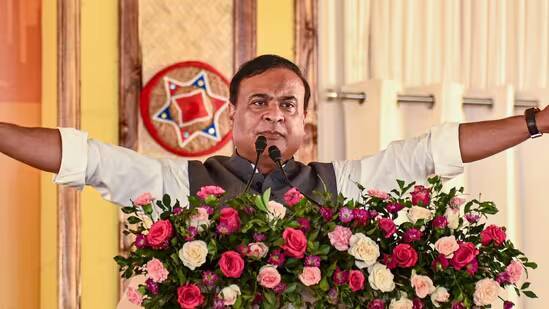
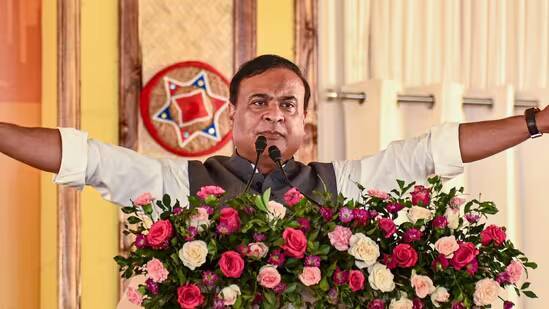
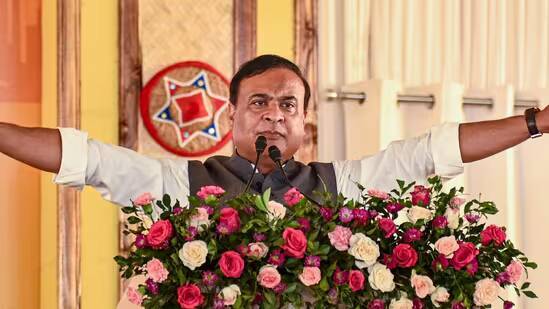
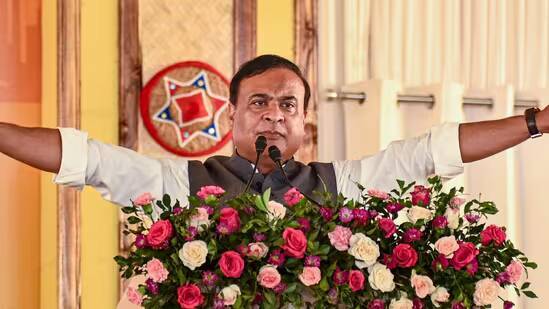
In a recent statement, Assam Chief Minister Himanta Biswa Sarma sparked controversy by declaring that he would disown his own son if he had any ties with Pakistan. This statement was made in an apparent reference to Congress MP Gaurav Gogoi’s wife, Elizabeth, who has been alleged to have links with Pakistan. The Assam CM’s comment has raised eyebrows and ignited a heated debate on the issue of nationalism and loyalty to one’s country.
During a public gathering, Sarma posed a question to the audience, asking whether a Congress leader, whose wife has links with Pakistan, would have the courage to disown her. He furtheradded, “If one becomes Pakistani…how can I have relation with them?” This statement has been seen as a clear attack on the Congress party and its leaders, particularly Gaurav Gogoi, whose wife has been at the center of the controversy.
Sarma’s statement has been criticized by many as being overly dramatic and insensitive. Critics argue that a person’s relationships and associations cannot be dictated by their political affiliations or nationality. Moreover, the idea of disowning a family member based on their ties with another country is seen as extreme and unreasonable.
However, Sarma’s supporters argue that his statement reflects his strong sense of nationalism and commitment to the country’s interests. They claim that his willingness to disown his own son if he had ties with Pakistan demonstrates his unwavering dedication to India’s sovereignty and security.
The controversy surrounding Gaurav Gogoi’s wife, Elizabeth, began when it was alleged that she had links with Pakistani nationals. The Congress MP has denied these allegations, stating that his wife is a citizen of the United States and has no connections with Pakistan. However, the issue has continued to simmer, with many questioning the authenticity of Gogoi’s claims.
The Assam CM’s statement has also raised questions about the role of nationalism in Indian politics. While patriotism is an essential aspect of any country’s political discourse, it can sometimes be used as a tool to divide people and create unnecessary tensions. The issue of Pakistan has long been a sensitive topic in India, with many Indians viewing their neighboring country as a threat to national security.
In recent years, the Indian government has taken a tough stance on Pakistan, with many politicians and leaders calling for a boycott of Pakistani goods and services. The tensions between the two countries have been further exacerbated by the ongoing conflict in Kashmir, which has been a point of contention between India and Pakistan for decades.
In this context, Sarma’s statement can be seen as a reflection of the prevailing sentiment in India, where many people view Pakistan with suspicion and distrust. However, it is also important to recognize that such statements can be counterproductive, creating unnecessary divisions and fueling hatred towards people who may have ties with Pakistan.
Ultimately, the issue of nationalism and loyalty to one’s country is complex and multifaceted. While it is essential to prioritize national interests and security, it is also important to recognize the diversity of human relationships and associations. Rather than making sweeping statements or taking extreme positions, it is crucial to engage in nuanced and informed discussions about the issues that matter most to our country and its people.
As the debate surrounding Sarma’s statement continues, it is essential to remember that our country’s strength lies in its diversity and inclusivity. Rather than creating divisions and fuelling hatred, we must work towards building a more harmonious and equitable society, where everyone can live with dignity and respect.
In conclusion, the Assam CM’s statement has sparked a heated debate on the issue of nationalism and loyalty to one’s country. While his willingness to disown his son if he had ties with Pakistan reflects his strong sense of nationalism, it is also important to recognize the complexity of human relationships and associations. As we move forward, it is crucial to engage in nuanced and informed discussions about the issues that matter most to our country and its people.
About the Author