Congress posts AI video of PM talking to Mahatma Gandhi on MGNREGA
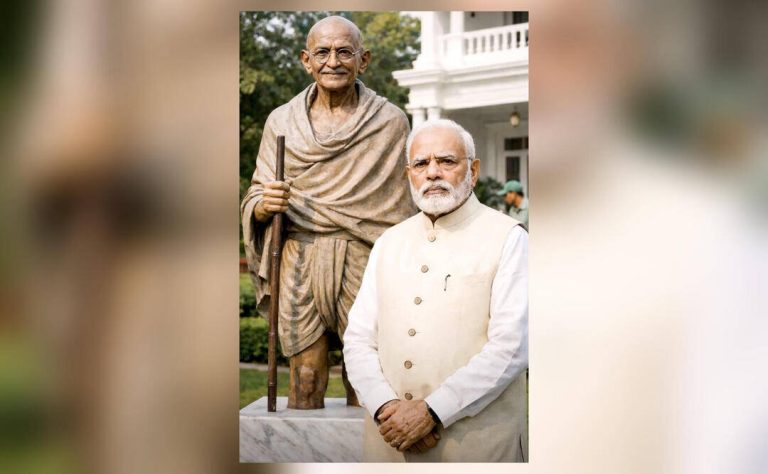
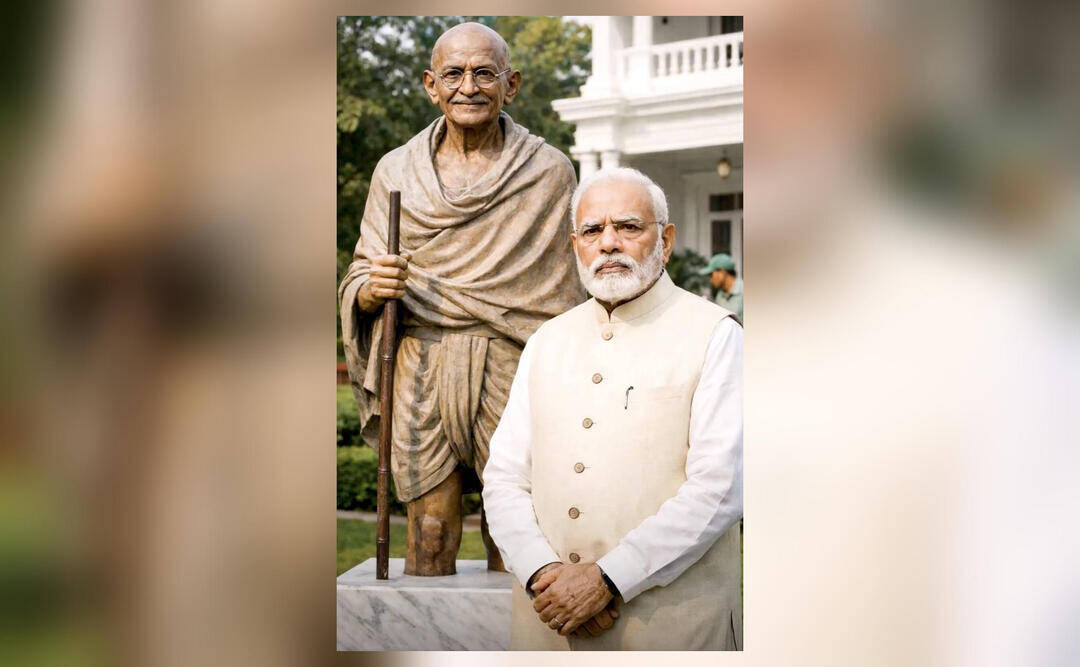
In a shocking turn of events, the Indian National Congress has posted an AI-generated video that has taken the internet by storm. The video, which has been shared on the party’s social media handles, shows Prime Minister Narendra Modi engaging in a conversation with a statue of Mahatma Gandhi. The topic of discussion is the proposed replacement of the Mahatma Gandhi National Rural Employment Guarantee Act (MGNREGA) with the Vishwa Bharati Garib Ramgath (VB-G RAM G) Act.
The clip, which has been created using advanced artificial intelligence technology, shows PM Modi standing in front of a statue of Mahatma Gandhi, looking rather uncomfortable. He begins by saying that he doesn’t like the fact that the world recognizes India through him and not through the Rashtriya Swayamsevak Sangh (RSS), a right-wing nationalist organization that is closely associated with the Bharatiya Janata Party (BJP).
To this, the statue of Mahatma Gandhi responds, “RSS can erase Gandhi, but his thoughts will always live.” The response is a clear reference to the Congress party’s allegations that the BJP is trying to erase Mahatma Gandhi’s legacy and replace it with its own ideology.
The video has sparked a heated debate on social media, with many users praising the Congress party for its creativity and others criticizing it for using AI technology to create a fake conversation. While some have argued that the video is a masterpiece of political satire, others have accused the Congress party of resorting to cheap tactics to gain publicity.
The MGNREGA, which was introduced by the Congress-led United Progressive Alliance (UPA) government in 2006, provides a guarantee of 100 days of wage employment to rural laborers. The scheme has been widely praised for its role in reducing poverty and promoting rural development. However, the BJP has been critical of the scheme, alleging that it is corrupt and inefficient.
The proposed replacement of the MGNREGA with the VB-G RAM G Act has been met with widespread criticism from opposition parties and social activists. They argue that the new scheme is designed to benefit the BJP’s corporate friends and will only exacerbate the problems of rural poverty and unemployment.
The Congress party has been at the forefront of the opposition to the proposed scheme, alleging that it is a part of the BJP’s larger agenda to dismantle the social welfare schemes introduced by the UPA government. The party has also accused the BJP of trying to erase Mahatma Gandhi’s legacy and replace it with its own ideology.
The AI-generated video is the latest salvo in the Congress party’s campaign against the BJP’s proposed scheme. While it is unclear how effective the video will be in swaying public opinion, it has certainly generated a lot of buzz on social media.
The use of AI technology to create fake conversations is a relatively new phenomenon in Indian politics. While it has been used in the past to create humorous videos and memes, this is the first time it has been used to create a serious political message.
The implications of this technology are far-reaching and have significant implications for the future of political discourse in India. On the one hand, it allows political parties to create engaging and persuasive content that can reach a wide audience. On the other hand, it also raises concerns about the spread of misinformation and the erosion of trust in political institutions.
As the debate over the MGNREGA and the proposed VB-G RAM G Act continues to rage on, it is clear that the use of AI technology will play an increasingly important role in shaping the narrative. While the Congress party’s AI-generated video may be seen as a clever tactic, it also raises important questions about the limits of political satire and the need for transparency and accountability in political discourse.
In conclusion, the Congress party’s AI-generated video is a significant development in the ongoing debate over the MGNREGA and the proposed VB-G RAM G Act. While it may be seen as a clever tactic, it also raises important questions about the use of AI technology in political discourse and the need for transparency and accountability.
Source: https://x.com/INCIndia/status/2003054650417893420
About the Author