Scientists discover fossils of ancient sea cow species near Qatar
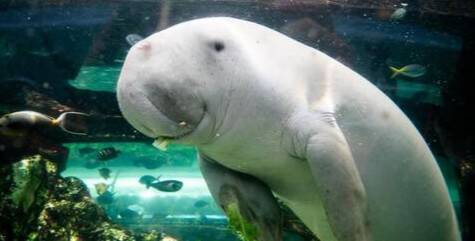
In a groundbreaking discovery, scientists have unearthed fossils of an unknown sea cow species near Qatar’s coastal waters. According to a report by Moneycontrol, the animal lived millions of years ago in warm seas, and its body structure bears a striking resemblance to modern sea cows. This remarkable finding confirms that sea cows inhabited the Arabian waters and that seagrass ecosystems have supported large marine herbivores for millions of years.
The discovery of the ancient sea cow species has sent shockwaves of excitement throughout the scientific community. Sea cows, also known as dugongs or Steller’s sea cows, are large marine mammals that feed on seagrass and other aquatic plants. They are found in shallow, tropical waters around the world and are known for their distinctive body shape, which resembles a cross between a seal and a manatee.
The fossils discovered near Qatar’s coastal waters are believed to be millions of years old, dating back to a time when the Arabian Peninsula was still forming. The region’s unique geology, with its combination of coral reefs, seagrass beds, and coastal plains, created a perfect environment for sea cows to thrive. The warm, shallow waters provided an ideal habitat for these gentle giants, which could grow up to 8 meters in length and weigh several tons.
The discovery of the ancient sea cow species is significant not only because it sheds new light on the evolutionary history of these fascinating creatures but also because it highlights the importance of seagrass ecosystems in supporting large marine herbivores. Seagrass beds are crucial habitats for many marine species, providing food, shelter, and breeding grounds for countless animals. They also play a vital role in maintaining the health of our oceans, helping to regulate the water quality, prevent erosion, and mitigate the effects of climate change.
The discovery of the ancient sea cow species near Qatar’s coastal waters is a testament to the region’s rich geological history. The Arabian Peninsula has undergone significant changes over the past few million years, with the formation of the Gulf of Arabia and the creation of the coastal plains. These changes have created a unique landscape, with a combination of coral reefs, seagrass beds, and coastal plains that support a diverse range of marine life.
The scientific team behind the discovery used a combination of geological and paleontological techniques to uncover the fossils of the ancient sea cow species. The team, led by a group of international researchers, conducted extensive fieldwork in the region, collecting and analyzing fossil samples from various locations along the Qatari coast. The fossils were then dated using radiometric techniques, which revealed that they were millions of years old.
The discovery of the ancient sea cow species has significant implications for our understanding of the evolutionary history of these creatures. It suggests that sea cows have been present in the Arabian waters for millions of years, and that they have played a crucial role in shaping the region’s marine ecosystems. The finding also highlights the importance of preserving our marine heritage, including the seagrass ecosystems that support these incredible animals.
In conclusion, the discovery of the ancient sea cow species near Qatar’s coastal waters is a remarkable finding that sheds new light on the evolutionary history of these fascinating creatures. The discovery confirms that sea cows lived across Arabian waters and that seagrass ecosystems have supported large marine herbivores for millions of years. As we continue to learn more about these incredible animals and their habitats, we are reminded of the importance of preserving our marine heritage and protecting the delicate balance of our ocean ecosystems.
About the Author