Scientists discover fossils of ancient sea cow species near Qatar
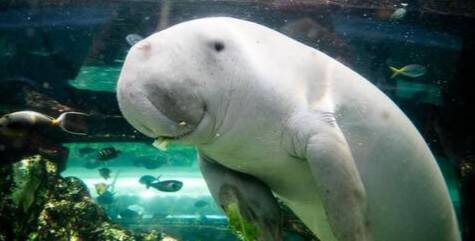
In a groundbreaking discovery, scientists have unearthed fossils of an unknown sea cow species near Qatar’s coastal waters. According to a recent report, the ancient animal lived millions of years ago in warm seas, and its body structure bears a striking resemblance to modern sea cows. This remarkable finding not only sheds light on the evolution of sea cows but also provides evidence of the existence of seagrass ecosystems in the region for millions of years, supporting large marine herbivores.
The discovery of the ancient sea cow species is a significant one, as it confirms that these marine mammals were once widespread across the Arabian waters. Sea cows, also known as dugongs or Steller’s sea cows, are large aquatic mammals that feed on seagrass and other marine vegetation. They are found in shallow, tropical, and subtropical waters around the world, and are known for their distinctive body shape and gentle nature.
The fossils discovered near Qatar’s coastal waters are believed to be millions of years old, dating back to a time when the Arabian Peninsula was still forming. The region’s unique geology, with its combination of coral reefs, mangroves, and seagrass beds, provided a perfect habitat for these ancient sea cows to thrive. The discovery of the fossils is a testament to the region’s rich marine biodiversity, and highlights the importance of preserving these ecosystems for future generations.
The ancient sea cow species discovered near Qatar is remarkably similar to modern sea cows, with a few notable differences. The fossils reveal a larger body size, with estimates suggesting that the ancient sea cows could grow up to 3-4 meters in length, significantly larger than their modern counterparts. The body structure, however, is almost identical, with a streamlined body, flippers, and a flat tail. This suggests that the basic design of the sea cow has remained largely unchanged over millions of years, a testament to the success of their evolutionary adaptations.
The discovery of the ancient sea cow species is not only significant for its insights into the evolution of these marine mammals but also for its implications for our understanding of seagrass ecosystems. Seagrass beds are crucial habitats for many marine species, providing food, shelter, and breeding grounds for countless animals. The fact that these ecosystems have been present in the Arabian waters for millions of years, supporting large marine herbivores like sea cows, highlights the importance of preserving these habitats for future generations.
The discovery of the ancient sea cow species near Qatar is a reminder of the importance of continued exploration and research into the natural world. By studying the fossils and habitats of ancient species, scientists can gain valuable insights into the evolution of life on Earth and the complex relationships between species and their environments. This knowledge can, in turn, inform our conservation efforts, helping us to protect and preserve the natural world for future generations.
In conclusion, the discovery of the ancient sea cow species near Qatar is a significant one, providing insights into the evolution of these marine mammals and the ecosystems they inhabit. The fact that sea cows lived across Arabian waters millions of years ago, and that seagrass ecosystems have been present in the region for just as long, highlights the importance of preserving these habitats for future generations. As we continue to explore and learn more about the natural world, we are reminded of the importance of conservation and the need to protect the delicate balance of our planet’s ecosystems.
News Source: https://www.moneycontrol.com/science/lost-sea-cow-species-emerges-from-qatar-s-ancient-seas-article-13735607.html/amp
About the Author