Scientists discover fossils of ancient sea cow species near Qatar
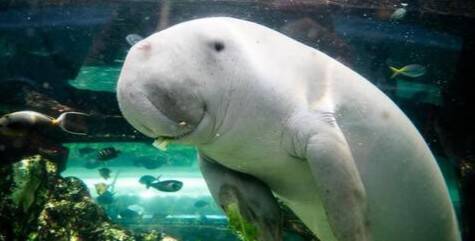
In a groundbreaking discovery, scientists have unearthed fossils of an unknown sea cow species near Qatar’s coastal waters. According to a report by Moneycontrol, the ancient animal lived millions of years ago in warm seas, and its body structure bears a striking resemblance to modern sea cows. This remarkable finding confirms that sea cows inhabited the Arabian waters and that seagrass ecosystems have been supporting large marine herbivores for millions of years.
The discovery of the ancient sea cow species has sent shockwaves throughout the scientific community, as it provides valuable insights into the evolution and diversity of marine life in the region. The fossils, which were found in the coastal waters of Qatar, are believed to be from the Miocene epoch, a period that spanned from approximately 23 to 5.3 million years ago. During this time, the Arabian Peninsula was largely submerged underwater, creating a vast network of shallow seas and coastal ecosystems that supported a wide range of marine life.
The ancient sea cow species, which has been identified as a previously unknown member of the Dugongidae family, is characterized by its distinctive body shape and skeletal structure. According to the researchers, the fossils show a remarkable similarity to modern sea cows, with a robust body, a flat tail, and a pair of flippers. The discovery of these fossils provides strong evidence that sea cows have been inhabiting the Arabian waters for millions of years, and that they played a crucial role in shaping the region’s marine ecosystems.
One of the most significant implications of this discovery is the confirmation that seagrass ecosystems have been present in the Arabian waters for millions of years. Seagrass beds are vital habitats that provide food, shelter, and breeding grounds for a wide range of marine species, including sea cows, turtles, and fish. The discovery of the ancient sea cow species suggests that these ecosystems have been supporting large marine herbivores for millions of years, highlighting the importance of preserving and protecting these critical habitats.
The discovery of the ancient sea cow species is also significant because it highlights the importance of Qatar’s coastal waters as a hub for marine biodiversity. The country’s unique geography, with its shallow seas and coastal ecosystems, has created a haven for a wide range of marine species. The discovery of the ancient sea cow species is a testament to the region’s rich marine heritage, and it underscores the need for continued conservation efforts to protect these critical ecosystems.
The researchers involved in the discovery have hailed the finding as a major breakthrough, and they believe that it will have significant implications for our understanding of marine evolution and diversity. The discovery of the ancient sea cow species is a reminder that there is still much to be learned about the natural world, and that continued exploration and research are essential for uncovering the secrets of the past.
In conclusion, the discovery of the ancient sea cow species near Qatar’s coastal waters is a groundbreaking finding that has significant implications for our understanding of marine evolution and diversity. The discovery confirms that sea cows lived across Arabian waters and that seagrass ecosystems have been supporting large marine herbivores for millions of years. As we continue to explore and learn more about the natural world, it is essential that we prioritize conservation efforts to protect these critical ecosystems and preserve the rich marine heritage of the region.
News Source: https://www.moneycontrol.com/science/lost-sea-cow-species-emerges-from-qatar-s-ancient-seas-article-13735607.html/amp
About the Author