Scientists discover fossils of ancient sea cow species near Qatar
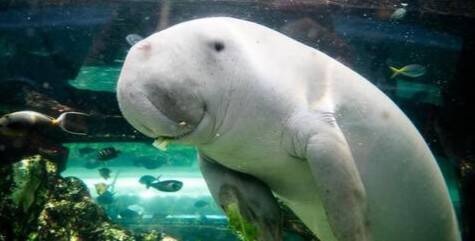
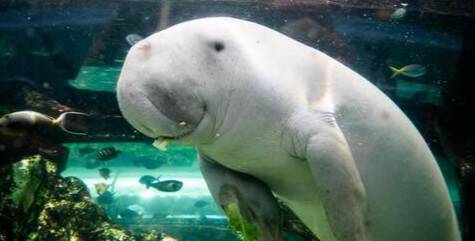
In a groundbreaking discovery, scientists have unearthed fossils of an unknown sea cow species near Qatar’s coastal waters. According to a report by Moneycontrol, the ancient animal lived millions of years ago in warm seas, and its body structure bears a striking resemblance to modern sea cows. This remarkable find not only sheds light on the evolution of sea cows but also provides evidence of the existence of seagrass ecosystems in the Arabian waters for millions of years.
The discovery of the ancient sea cow species is a significant one, as it confirms that these large marine herbivores lived across the Arabian waters. Sea cows, also known as dugongs, are gentle creatures that feed on seagrass and are found in warm, shallow waters. The fact that they existed in the Arabian waters millions of years ago suggests that the region’s coastal ecosystem has remained relatively unchanged over time.
The fossils of the ancient sea cow species were discovered in the coastal waters of Qatar, a country located on the northeastern coast of the Arabian Peninsula. The discovery was made by a team of scientists who were conducting a thorough examination of the region’s coastal geology. The team was able to identify the fossils as belonging to a previously unknown species of sea cow, which they believe lived during the late Eocene epoch, around 34-23 million years ago.
The body structure of the ancient sea cow species is remarkably similar to that of modern sea cows. The fossils reveal a large, bulky animal with a flat, paddle-like tail and a pair of flippers. The animal’s snout is long and pointed, and its teeth are shaped like a pair of tusks. The fossils also show that the ancient sea cow had a thick, insulating layer of blubber, which would have helped it to regulate its body temperature in the warm waters of the Arabian Sea.
The discovery of the ancient sea cow species provides important insights into the evolution of these animals. Sea cows are thought to have evolved from land-dwelling mammals that returned to the water millions of years ago. The fact that the ancient sea cow species is so similar to modern sea cows suggests that these animals have undergone relatively little change over time. This is likely due to the fact that the coastal ecosystem of the Arabian waters has remained relatively stable, providing a consistent source of food and habitat for the sea cows.
The discovery also highlights the importance of seagrass ecosystems in supporting large marine herbivores. Seagrass is a type of underwater grass that grows in shallow, coastal waters. It provides a vital source of food for many marine animals, including sea cows, turtles, and fish. The fact that seagrass ecosystems have existed in the Arabian waters for millions of years suggests that these ecosystems have played a crucial role in supporting the region’s marine biodiversity.
The discovery of the ancient sea cow species is a significant one, and it has important implications for our understanding of the evolution of marine ecosystems. It also highlights the importance of preserving these ecosystems for future generations. The Arabian waters are home to a diverse range of marine life, including sea cows, turtles, and fish. However, these ecosystems are facing numerous threats, including pollution, overfishing, and climate change.
In conclusion, the discovery of the ancient sea cow species near Qatar’s coastal waters is a remarkable find that sheds light on the evolution of these animals and the importance of seagrass ecosystems in supporting large marine herbivores. The fact that sea cows lived in the Arabian waters millions of years ago suggests that the region’s coastal ecosystem has remained relatively unchanged over time. The discovery also highlights the importance of preserving these ecosystems for future generations.
As we continue to learn more about the ancient sea cow species and its place in the marine ecosystem, we are reminded of the importance of protecting our planet’s natural wonders. The discovery of this ancient species is a significant one, and it will undoubtedly have a lasting impact on our understanding of the evolution of marine life.
For more information on this discovery, you can read the full article on Moneycontrol: https://www.moneycontrol.com/science/lost-sea-cow-species-emerges-from-qatar-s-ancient-seas-article-13735607.html/amp
News Source: https://www.moneycontrol.com/science/lost-sea-cow-species-emerges-from-qatar-s-ancient-seas-article-13735607.html/amp
About the Author