Scientists discover fossils of ancient sea cow species near Qatar
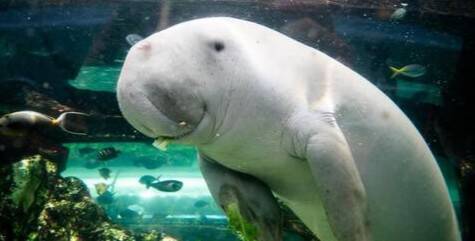
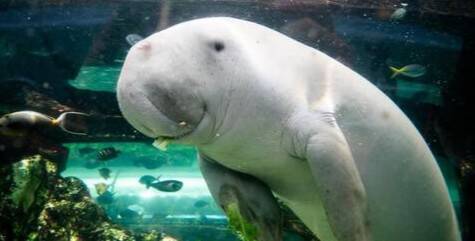
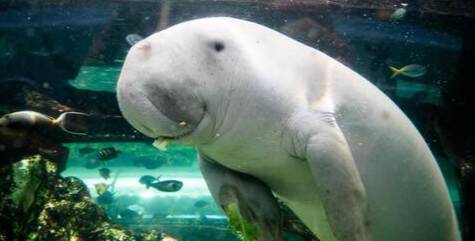
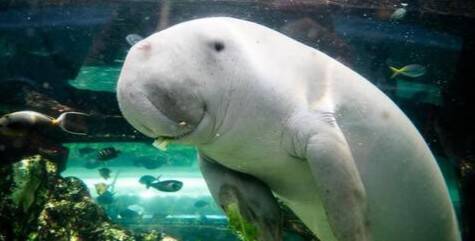
In a groundbreaking discovery, scientists have unearthed fossils of an unknown sea cow species near Qatar’s coastal waters. According to a report by Moneycontrol, the ancient animal lived millions of years ago in warm seas, and its body structure bears a striking resemblance to modern sea cows. This remarkable find not only sheds light on the evolutionary history of sea cows but also provides evidence of the existence of seagrass ecosystems in the Arabian waters for millions of years, supporting large marine herbivores.
The discovery of the ancient sea cow species is a significant one, as it confirms that these marine mammals inhabited the Arabian waters, which were previously thought to be devoid of such species. The fossils, which were found in the coastal waters of Qatar, are believed to be from the Miocene epoch, a period that spanned from around 23 to 5.3 million years ago. During this time, the Arabian Peninsula was largely submerged under water, and the sea levels were much higher than they are today.
The researchers who made the discovery were thrilled to find that the fossils of the ancient sea cow species were remarkably well-preserved, with many of its skeletal remains intact. The team was able to study the fossils in detail, which revealed that the ancient sea cow had a body structure that was very similar to that of modern sea cows. This suggests that the evolution of sea cows has been a gradual process, with many of their characteristics remaining unchanged over millions of years.
One of the most significant aspects of this discovery is the evidence it provides of the existence of seagrass ecosystems in the Arabian waters for millions of years. Seagrass beds are crucial habitats for many marine species, including sea cows, which feed on the grasses and other vegetation that grow in these areas. The discovery of the ancient sea cow species suggests that these ecosystems have been supporting large marine herbivores for millions of years, which has significant implications for our understanding of the evolution of marine life.
The discovery of the ancient sea cow species is also important for our understanding of the geological history of the Arabian Peninsula. The region has undergone significant changes over the past few million years, with the sea levels rising and falling, and the climate changing. The discovery of the fossils provides a unique window into the past, allowing scientists to reconstruct the environmental conditions that existed in the region during the Miocene epoch.
The researchers who made the discovery used a combination of traditional fossil hunting techniques and advanced technologies, such as CT scans and 3D printing, to study the fossils. The team was able to create detailed 3D models of the fossils, which allowed them to examine the skeletal remains in exquisite detail. This approach has revolutionized the field of paleontology, allowing scientists to study fossils in ways that were previously impossible.
The discovery of the ancient sea cow species is a significant one, and it has important implications for our understanding of the evolution of marine life. The find also highlights the importance of preserving our natural heritage, including the many fossil sites that exist around the world. These sites provide a unique window into the past, allowing us to learn about the history of our planet and the creatures that have lived here.
In conclusion, the discovery of the ancient sea cow species near Qatar’s coastal waters is a remarkable find that has significant implications for our understanding of the evolutionary history of sea cows and the existence of seagrass ecosystems in the Arabian waters. The discovery confirms that sea cows lived across Arabian waters and that seagrass ecosystems existed for millions of years, supporting large marine herbivores. This find is a testament to the importance of continued exploration and research into the natural world, and it highlights the many secrets that still remain to be uncovered.
News Source: https://www.moneycontrol.com/science/lost-sea-cow-species-emerges-from-qatar-s-ancient-seas-article-13735607.html/amp
About the Author