Class 5 Girl Blocks Road for 3 Hrs After School Van Fails to Arrive in MP
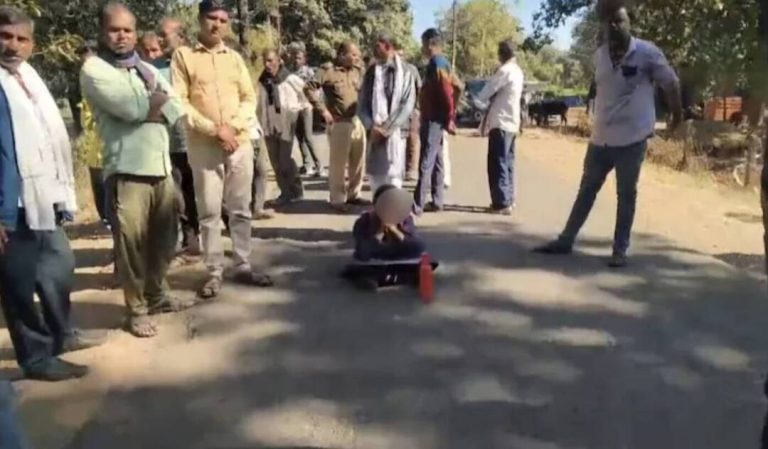
In a shocking incident, a 10-year-old girl blocked a road in Madhya Pradesh’s Betul district for nearly three hours after her school van failed to arrive. The girl, identified as Surabhi Yadav, a Class 5 student, sat on the road holding her school bag, causing traffic disruption and bringing the entire area to a standstill. The incident has sparked a heated debate about the responsibility of schools towards their students and the plight of families who struggle to make ends meet.
According to eyewitnesses, Surabhi was waiting for her school van to arrive, but when it failed to show up, she decided to take matters into her own hands. She sat down on the road, holding her school bag, and refused to move, causing a huge traffic jam. The incident occurred in the morning, when the roads were already congested with vehicles heading to school and work. The blockade continued for nearly three hours, with Surabhi remaining steadfast in her protest.
The reason behind Surabhi’s drastic action was the school management’s decision to discontinue the van service for her. The school had allegedly stopped providing transportation to Surabhi after her family failed to pay the transportation fees for the last two years. The family, which is reportedly struggling to make ends meet, had been unable to pay the fees, leading to the school’s decision to withdraw the van service.
Surabhi’s protest was not just about her own plight, but also about the struggles faced by her family. The incident highlights the difficulties faced by many families in India, who struggle to provide basic amenities to their children, including education and transportation. The fact that Surabhi’s family was unable to pay the transportation fees for two years is a stark reminder of the economic hardships faced by many families in the country.
The incident has sparked a heated debate about the responsibility of schools towards their students. While the school management may have been within its rights to discontinue the van service, the question remains whether the school could have explored alternative solutions to help Surabhi and her family. Could the school have offered a payment plan or a waiver for the transportation fees? Could the school have provided alternative transportation arrangements for Surabhi?
The incident also raises questions about the support systems in place for families who struggle to make ends meet. Are there adequate support systems in place to help families who are struggling to provide basic amenities to their children? Are there government schemes or NGOs that can provide assistance to families who are struggling to pay school fees or transportation costs?
Surabhi’s protest may have been a desperate attempt to draw attention to her family’s plight, but it has also sparked a wider debate about the issues faced by many families in India. The incident highlights the need for schools, governments, and NGOs to work together to provide support to families who are struggling to make ends meet.
In conclusion, Surabhi’s protest is a stark reminder of the challenges faced by many families in India. While the school management may have been within its rights to discontinue the van service, the incident highlights the need for schools and governments to explore alternative solutions to help families who are struggling. The incident also sparks a wider debate about the support systems in place for families who are struggling to provide basic amenities to their children.
As we reflect on Surabhi’s protest, we are reminded of the importance of empathy and understanding in our society. We are reminded of the need to support families who are struggling to make ends meet and to provide basic amenities to their children. We are reminded of the importance of working together to create a more equitable and just society, where every child has access to education and opportunities, regardless of their family’s economic background.
About the Author