Class 5 Girl Blocks Road for 3 Hrs After School Van Fails to Arrive in MP
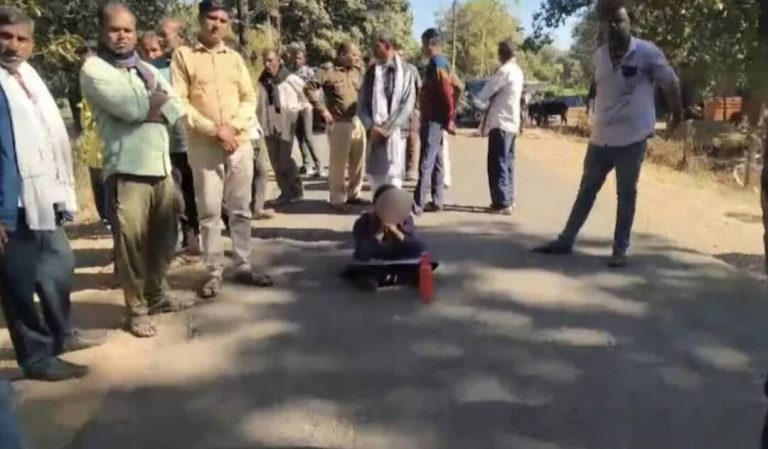
In a shocking incident that has garnered attention across the country, a 10-year-old girl from Madhya Pradesh’s Betul district took a stand against the school management by blocking a road for nearly three hours. The incident occurred when Surabhi Yadav, a Class 5 student, was left stranded after her school van failed to arrive to pick her up. The young girl’s courageous act of protest has sparked a debate about the responsibilities of educational institutions towards their students and the importance of addressing the concerns of parents and guardians.
According to reports, Surabhi Yadav was supposed to be picked up by her school van, but it did not arrive. The school management had reportedly discontinued the van service for Surabhi after her family allegedly failed to pay the transportation fees for the last two years. The decision to stop the van service left Surabhi with no other option but to find an alternative mode of transportation to attend school. However, on this particular day, she decided to take a stand and protest against the school management’s decision.
Surabhi sat on the road, holding her school bag, and refused to budge, causing a significant disruption to traffic. The incident drew the attention of passersby, who were shocked to see a young girl blocking the road. Despite the commotion, Surabhi remained firm in her resolve, determined to make her point heard. The protest continued for nearly three hours, during which time Surabhi’s family and school authorities were informed about the situation.
The incident highlights the plight of many families who struggle to pay school fees, including transportation costs. The discontinuation of the van service by the school management has put Surabhi’s family in a difficult situation, forcing them to find alternative and often expensive modes of transportation. The decision to stop the van service also raises questions about the school’s responsibility towards its students, particularly those from economically weaker backgrounds.
The incident has sparked a debate about the need for schools to be more considerate and flexible when it comes to addressing the concerns of parents and guardians. While schools have the right to charge fees and expect timely payments, they also have a responsibility to ensure that their students are not unfairly penalized or disadvantaged due to circumstances beyond their control. In this case, the school management’s decision to discontinue the van service has had a direct impact on Surabhi’s ability to attend school, which is a fundamental right of every child.
The incident has also raised questions about the role of the government in regulating school fees and ensuring that educational institutions are accountable to their students and parents. The government has a responsibility to ensure that schools are providing a fair and equitable education to all students, regardless of their economic background. This includes regulating school fees, ensuring that schools are transparent about their fee structures, and providing support to families who are struggling to pay fees.
In conclusion, the incident of Surabhi Yadav blocking the road in protest against the school management’s decision is a wake-up call for educational institutions and the government to take a closer look at their policies and practices. It highlights the need for schools to be more considerate and flexible when it comes to addressing the concerns of parents and guardians, particularly those from economically weaker backgrounds. The government must also play a more active role in regulating school fees and ensuring that educational institutions are accountable to their students and parents.
As the incident continues to garner attention, it is hoped that Surabhi’s courageous act of protest will lead to a positive outcome, not just for her but for many other students who are facing similar challenges. The incident serves as a reminder that every child has the right to education, and it is the responsibility of educational institutions and the government to ensure that this right is protected and upheld.
About the Author